Last updated: August 21, 2026
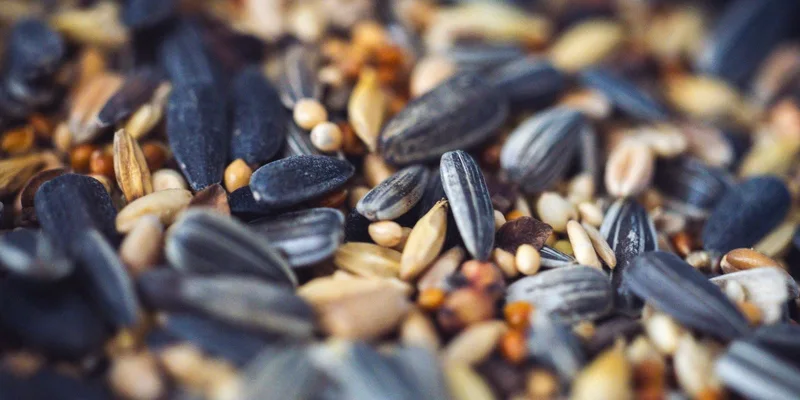
Stand in the bird aisle of any farm store and the choice looks impossible. Twenty bags, half of them labeled for a bird you actually want, all of them promising more visitors. Then you get home, fill the feeder, and watch the birds flick two thirds of it onto the grass while they hunt for the one seed they came for.
That flicking is the whole story of seed choice. Most feeder birds have a short list of things they can crack and a longer list of things they will throw aside to reach it. Once you know which seed goes with which bird, the bag choice stops being guesswork. Here is the whole thing in one table, with the reasoning around it.
This article contains affiliate links. If you buy through them, we may earn a commission at no extra cost to you. Learn more.
Quick Answer
Which seed brings which bird?
- Black oil sunflower is the broadest single seed. Cornell Lab’s Project FeederWatch calls it the most common seed offered at feeders in North America and links it to cardinals, chickadees, finches and sparrows.
- Nyjer, sometimes sold as thistle, is the finch seed. Project FeederWatch links it to American Goldfinch, Pine Siskin and Common Redpoll.
- Safflower is the cardinal seed, and Project FeederWatch notes most birds prefer sunflower over it, which is exactly why some people use it.
- Millet and cracked corn are ground food. Project FeederWatch calls millet a favorite of small ground foraging birds and says cracked corn attracts doves, quail and sparrows.
Bottom line: one bag of black oil sunflower covers most of the yard, and every other seed is a targeted add on rather than a replacement.
What a Seed Table Can and Cannot Tell You
A seed table tells you which birds are physically able and generally willing to eat a given seed. It does not tell you which birds live near you, and that is the bigger variable. If goldfinches do not pass through your neighborhood, a tube of nyjer will sit there souring no matter how correct the seed is.
So read the table as a shortlist rather than a promise. Start with the birds you already see on the fence line, find the seed that matches, and expand from there. The range maps at the Cornell Lab of Ornithology are the place to check whether a species is even an option where you live.
Black Oil Sunflower: The One Bag That Covers Most Birds
If you buy one seed, buy this one. Project FeederWatch, run by the Cornell Lab of Ornithology, describes black oil sunflower as the most common type of seed offered at feeders in North America and links it to cardinals, chickadees, finches and sparrows. The shell is thin enough that small birds can open it and the kernel inside is high in fat.
That combination is why it works across so many species at once. A chickadee that cannot crack a striped sunflower shell can crack a black oil shell, and a cardinal that can crack anything still prefers the fattier kernel. We go deeper on the shell question and the hulled versions in our guide to black oil sunflower seed.
Nyjer and the Finch Problem
Nyjer is the small black seed sold as thistle, and Project FeederWatch is clear that it is not related to North American thistle plants at all. It comes from the Guizotia abyssinica plant, and Project FeederWatch links it to finches including American Goldfinch, Pine Siskin and Common Redpoll. It needs a feeder with ports sized for it.
The catch with nyjer is freshness. It is an oily seed, it dries out in the bag and in the feeder, and finches will abandon a tube of stale nyjer without a word of complaint while you assume they have simply moved on. Buy quantities you will get through, and if a tube sits untouched for weeks, empty it before you blame the birds. The feeder side of this is covered in our goldfinch feeder guide.
Safflower: The Seed Chosen for Who It Excludes
Safflower is a white seed with a hard shell, and Project FeederWatch says it attracts cardinals while noting that most birds prefer sunflower seeds over safflower. Read that second half carefully, because it is the actual selling point. People switch to safflower not because more birds eat it but because fewer do.
In practice that means a safflower feeder tends to sit quieter, with cardinals, and with less of the crowd that empties a sunflower feeder in an afternoon. It is a trade, not an upgrade, and it works best as a second feeder rather than as a whole yard policy. Our cardinal feeder guide covers the perch width that matters just as much as the seed.
Millet, Cracked Corn and the Ground Crowd
Millet and cracked corn feed a different layer of the yard. Project FeederWatch describes millet as a favored food of many smaller ground foraging birds such as juncos and sparrows, and says cracked corn will attract doves, quail and sparrows. Both are commonly used on the ground or on a low tray rather than in a hanging tube.
This is where a lot of feeder frustration starts. Cheap mixes are heavy on millet and milo, which Project FeederWatch describes as a major component of inexpensive seed mixes, and tube feeder birds simply sweep those seeds out to reach the sunflower. Offer them on a platform or the ground and the same seed stops being waste; leave them in a hanging tube and you are paying for weight, which is the argument behind our no mess seed guide.
Peanuts, Suet and Mealworms
Not everything that brings birds is technically a seed. Project FeederWatch notes that peanuts can be offered shelled or in the shell and appeal to jays, chickadees, nuthatches and titmice, that suet is a good choice for attracting insect eating birds, and that mealworms are the larvae of the mealworm beetle.
These three cover the birds that a sunflower tube will never reach reliably. Woodpeckers and nuthatches work a suet cage in a way they never work a perch, and jays that ignore a small tube will clear a tray of peanuts in minutes. Our suet feeder guide covers the cage shapes, and crow feeding is its own separate question.
The Table: Seed by Seed
Everything above, condensed. Bird associations in this table follow what Cornell Lab’s Project FeederWatch publishes about each food type; the feeder column and the notes column are practical backyard experience rather than a source claim.
| Seed | Birds it brings | Feeder it needs | Watch out for |
|---|---|---|---|
| Black oil sunflower | Cardinals, chickadees, finches, sparrows | Tube, hopper or tray | Shell litter under the feeder |
| Hulled sunflower | Same list, plus fussier small birds | Tube or tray with drainage | Spoils fast when it gets wet |
| Safflower | Cardinals and other big billed birds | Hopper or tray | Most birds prefer sunflower to it |
| Nyjer | Goldfinches, siskins, redpolls | Fine port tube or mesh sock | Goes stale and gets ignored |
| White millet | Juncos, native sparrows, doves | Ground or low platform | Swept out of hanging feeders |
| Cracked corn | Doves, quail, sparrows | Ground or open tray | Molds quickly once damp |
| Peanuts | Jays, chickadees, nuthatches, titmice | Mesh peanut feeder or tray | Draws squirrels harder than anything |
| Suet | Woodpeckers, nuthatches, insect eaters | Suet cage, tail prop version | Softens and drips in summer heat |
Why the Right Seed Still Fails
Seed is one of three variables and usually not the one that is wrong. The other two are the feeder shape, which decides who can physically reach the food, and the placement, which decides whether birds feel safe landing at all. A perfect bag of nyjer in a hopper on an open lawn will do nothing.
Work through them in order. If the seed matches the bird and nothing comes, move the feeder within a few yards of cover and wait a week. If birds come but the wrong ones come, change the feeder rather than the seed, which is what our feeder to species table is for.
The Freshness Variable Nobody Checks
Old seed is the quiet reason a good bag stops working. Oily seeds go rancid, mixes absorb humidity and clump, and a bin left open in a warm garage grows moth larvae. Birds notice long before you do. Storing it properly is a small job with an outsized payoff, and our seed storage guide covers the containers.
Frequently Asked Questions
What is the best bird seed overall? Black oil sunflower, if you only buy one. Cornell Lab’s Project FeederWatch describes it as the most common seed offered at feeders in North America and links it to cardinals, chickadees, finches and sparrows, which covers most of a typical yard.
Why are birds throwing my seed on the ground? They are sorting. A mix contains seeds they cannot use, and reaching the ones they can means flicking the rest aside. Project FeederWatch notes milo is common in inexpensive mixes, and switching to a single seed or a hulled blend stops the sorting almost immediately.
What seed do cardinals like best? Sunflower and safflower both work. Project FeederWatch links safflower to cardinals specifically, and the practical advantage is that most other birds prefer sunflower over safflower, so a safflower feeder stays quieter.
Does bird seed go bad? Yes. Oily seeds turn rancid, damp seed molds and clumps, and stored seed can pick up moth larvae. If a bag smells sour or musty, or the seed sticks together in lumps, birds will avoid it even when nothing looks obviously wrong.
The Bottom Line
Black oil sunflower is the default, nyjer is for finches, safflower is for cardinals and for the birds it keeps away, and millet and corn belong on the ground rather than in a tube. Everything else is an add on for a bird you have specifically decided you want. Match the seed to the bird, then check the feeder shape and the placement before you blame the bag. Read next: our feeder to species table, the case for hulled no mess seed, and the cardinal feeder guide.