Last updated: August 21, 2026
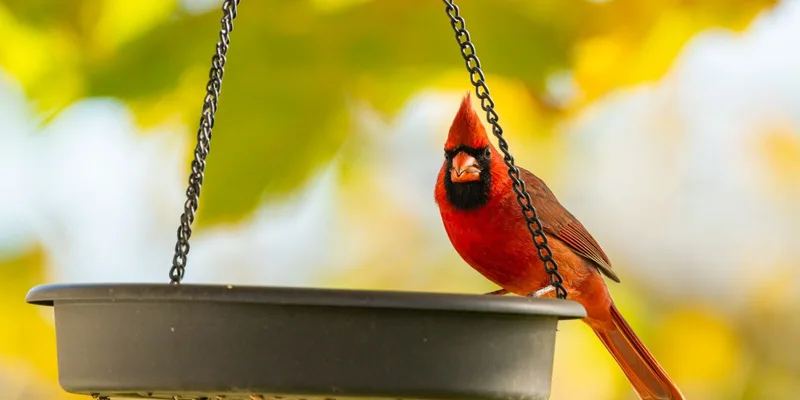
Cardinals are the bird most people are actually trying to attract when they buy their first feeder, and they are also the bird most likely to sit in the hedge and look at it. The reason is almost never the seed. It is the perch. A cardinal is a heavy, round bodied bird with a long tail, and it wants to stand on a feeder rather than cling to it, which rules out a surprising number of feeders on the shelf.
Get the standing surface right and cardinals become the most reliable visitors in the yard, morning and last light, all year. This guide covers the perch and tray question, which seed the Cornell Lab’s own feeder survey associates with cardinals, and which feeder styles are worth the money for a yard that wants them.
This article contains affiliate links. If you buy through them, we may earn a commission at no extra cost to you. Learn more.
Quick Answer
What feeder do cardinals prefer?
- A hopper or a platform, or any feeder with a tray the bird can stand on.
- A perch wide enough to stand across, not a peg sized for a finch.
- Black oil sunflower seed, with safflower as the useful second option.
- A position near cover, since cardinals dislike feeding in the middle of open lawn.
Bottom line: buy the hopper or the tube with a wide tray under it, fill it with black oil sunflower, and put it within a short hop of a shrub.
The Perch Is the Whole Decision
Cardinals feed sitting down. They land, settle, hull a seed, drop the shell and take another, and that routine needs a surface with room for the body and the tail. A narrow peg forces the bird to hang on while it works, which it will do briefly and reluctantly, and only if nothing better is available in the neighborhood.
This is why the same yard can have cardinals on the ground under a tube feeder and never on the feeder itself. The seed was never the problem. Adding a tray to the bottom of that tube usually changes the picture within a week, which is the cheapest test in backyard feeding.
Standing Versus Clinging
Chickadees, nuthatches and finches are happy to cling, so feeders built around them get away with minimal perches. Cardinals, jays and doves are standers. If a feeder listing shows the birds hanging sideways in the photograph, it was designed for the other group, whatever the product name says.
What to Fill It With
Black oil sunflower is the first answer and safflower is the second. Project FeederWatch, the Cornell Lab’s feeder survey, describes black oil sunflower as high in energy with thin shells, the preferred item for a wide variety of birds including cardinals, and lists safflower as a seed that attracts cardinals and other big billed birds.
The same source adds a useful caveat about safflower: in their experience most birds prefer sunflower over safflower. That is exactly why safflower gets recommended as a squirrel and grackle tactic rather than as a headline seed, and it is a fair trade only if you are already losing sunflower to something else.
When Safflower Is Worth It
Safflower earns its place in a yard where cardinals are being crowded out. Because it is less popular across the board, a safflower feeder tends to hold fewer competitors while the cardinals keep using it. Our safflower guide goes through where it helps and where it just slows the feeder down.
Cardinal Feeders by Situation
Best All Around: A Hopper With a Standing Ledge
A hopper feeder with a ledge running along the base is the classic cardinal feeder, and it stays the sensible default. Project FeederWatch notes that large hoppers attract most species of feeder birds and allow larger species to feed, which is the behavior you want when cardinals are the target.

If You Already Own a Tube Feeder
Do not replace it, extend it. A seed tray that clamps to the bottom of a tube turns a finch feeder into something a cardinal can use, and it catches the seed that would otherwise land in the grass. It is the smallest amount of money in this guide for the biggest change in visitors.

For a Yard That Wants Everything on One Surface
A covered platform feeder is the most open option, and cardinals take to it immediately. Project FeederWatch says tray feeders attract most species of feeder birds, and the roof is what keeps the seed from turning into a wet cake after a night of rain.

When Squirrels Own the Pole
A weight activated feeder with a full length perch bar closes under a squirrel and stays open under a cardinal, which is one of the few designs that solves both problems at once. Nothing is squirrel resistant in every setup, so pair it with placement rather than relying on the mechanism alone.

The Low Cost Starting Point
A simple hanging tray with a mesh floor drains, holds a decent amount of sunflower, and gives every standing bird room to work. It has no moving parts to seize and it comes apart for washing in one piece, which matters more than most first time buyers expect.

Comparing the Shapes
Three things separate cardinal feeders in daily use: how much standing room there is, whether the seed stays dry, and who else gets in. Here is the short comparison.
| Feeder | Standing room | Rain protection | Who else it feeds |
|---|---|---|---|
| Hopper with base ledge | Good, ledge on both sides | Roof over the seed | Most feeder birds |
| Covered platform | Best, open on all sides | Roof, needs a drained floor | Everything, jays and doves included |
| Tube plus seed tray | Fair, ring around the base | None unless you add a dome | Small birds above, cardinals below |
| Weight activated hopper | Good, full length bar | Roof over the seed | Birds under the trigger weight |
Where to Put It
Close to cover. Cardinals move between shrubs and feeders in short hops and are reluctant to sit exposed in the middle of a lawn. A feeder within a quick flight of a hedge, a brush pile or a low evergreen gets used far more than the same feeder on an open pole, and the difference shows up in days rather than weeks.
Light matters too, in a practical rather than a biological way. Cardinals are among the first birds at a feeder at dawn and among the last at dusk, so a feeder you can see from a kitchen window at those hours is the one you will actually enjoy.
Height and the Squirrel Question
Cardinals are comfortable anywhere from ground level to head height, which means you can set the height to solve the squirrel problem instead. Pole placement, distance from jumping off points and a baffle do the work there, and we go through the geometry in the baffle guide.
Common Mistakes
The first is buying a feeder marketed for cardinals that still has narrow pegs. The label is not the specification. Look at the photograph and ask whether a round bodied bird with a long tail could sit on that surface without bracing against anything.
The second is keeping the feeder too clean of surroundings. A feeder standing alone on a mown lawn with nothing within twenty feet is a feeder cardinals will visit last. Cover is part of the equipment, even if it is only a couple of planted shrubs.
Frequently Asked Questions
What is the best feeder for cardinals? A hopper with a standing ledge or a covered platform. Both give a cardinal room to sit and work a seed, which is the requirement most tube feeders fail. Project FeederWatch describes both hoppers and trays as feeders that attract most species.
What seed do cardinals like best? Black oil sunflower first. Project FeederWatch lists it as high in energy with thin shells and names cardinals among the birds it attracts, and it also lists safflower as a seed that draws cardinals and other big billed birds.
Will cardinals use a tube feeder? Only awkwardly, and usually not for long. Adding a seed tray under the tube is the fix, because it gives the bird a place to stand. That single accessory changes more yards than switching seed does.
Why do cardinals feed on the ground under my feeder? Because the feeder has nowhere to stand. They are hulling seed that other birds dropped, which is comfortable for them. A tray or a platform brings the same birds up to the feeder itself.
Where should I hang a cardinal feeder? Within a short flight of shrubs or a hedge. Cardinals prefer to move in and out through cover rather than crossing open lawn, so proximity to a shrub line matters more than height.
Do cardinals stay all winter? In most of their range yes, they do not migrate away from a yard. Winter is often when they are easiest to see, since the birds keep using the same feeders and the leaf cover is gone. More on seasonal seed choices in what to feed cardinals.
The Bottom Line
A cardinal feeder is a standing surface with sunflower on it, placed near cover. Buy the hopper with a real ledge or the covered platform, or spend a small amount adding a tray to the tube you already own, and skip anything with pegs. For the food side in detail see what to feed cardinals, and if you are still deciding between feeder shapes for a mixed yard, hopper, tube or platform sets them against each other.