Last updated: August 21, 2026
Every experienced feeder in every forum gives the same answer to the same beginner question. What seed should I start with? Black oil sunflower. It is such a reflex that new feeders sometimes assume it is folklore, buy a colorful mix instead, and spend the next month wondering why the birds are throwing most of it on the lawn.
It is not folklore. Black oil sunflower is the default because of two physical properties that happen to line up with what a backyard flock needs, and once you understand those two properties you can also see exactly where the seed falls short and which birds it will never bring. This is the case for the default seed, and the honest list of its downsides.
This article contains affiliate links. If you buy through them, we may earn a commission at no extra cost to you. Learn more.
Quick Answer
Why is black oil sunflower the default bird seed?
- Cornell Lab’s Project FeederWatch calls it the most common type of seed offered at feeders in North America.
- Project FeederWatch links it to cardinals, chickadees, finches and sparrows, which is most of a typical backyard lineup.
- The shell is thin, so small billed birds can open it instead of only watching the big ones eat.
- It works in every common feeder shape, so you do not have to buy hardware around the seed.
Bottom line: start here, add a second seed only when a bird you want is ignoring it, and expect shell litter underneath.
What Black Oil Sunflower Actually Is
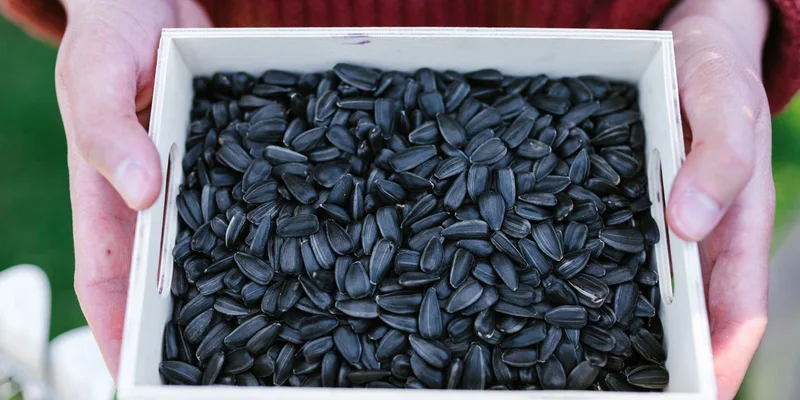
Black oil sunflower is a sunflower variety grown mainly for oil, with a small, uniformly dark seed and a shell noticeably thinner than the striped sunflower sold for human snacking. Project FeederWatch, run by the Cornell Lab of Ornithology, describes it as the most common type of seed offered at feeders in North America.
The difference from striped sunflower is not the bird food equivalent of a brand preference. It is a mechanical difference. A thinner shell is a shell that a smaller bill can crack, which changes who gets to eat at all rather than merely who eats first.
The Two Properties That Do the Work
Thin shell and high fat. Those are the two. The thin shell widens the guest list to birds that cannot handle a heavier hull, and the oil content makes each seed worth the effort of opening, which matters most on a cold morning when a small bird is burning through reserves overnight.
Everything else people say about the seed follows from those two facts. It is why chickadees and finches use it as readily as cardinals do, and it is why it holds up as a winter staple rather than being a summer novelty.
Why the Shell Matters More Than the Kernel
Watch a chickadee at a sunflower feeder and you see the whole argument. It takes one seed, flies to a branch, wedges the seed under a foot and hammers it open. That routine costs energy and time, and a hull that takes twice as long to breach is a hull that a small bird will skip in favor of an easier feeder down the street.
Which Birds It Brings and Which It Misses
Project FeederWatch associates black oil sunflower with cardinals, chickadees, finches and sparrows. In a typical yard that also pulls in titmice, nuthatches and jays, all of which handle sunflower comfortably. It is the closest thing to a universal seed that exists at a feeder.
It misses two groups. Goldfinches will take it but strongly prefer nyjer, which Project FeederWatch links to American Goldfinch, Pine Siskin and Common Redpoll. And it does nothing for the insect eating birds that come to fat rather than seed, which is what a suet feeder is for.
In Shell, Hulled, Chips or Striped
The same seed shows up in four forms on the shelf and they behave very differently under the feeder. In shell is the cheapest per pound and the messiest. Hulled hearts have no shell at all. Chips are hearts broken into pieces. Striped is the thicker shelled cousin that most small birds struggle with.
The trade is always mess against price. In shell seed leaves a mat of hulls under the feeder that kills grass and, left long enough, draws rodents. Hulled costs more per pound but nothing is thrown away, which is the whole argument in our no mess seed guide.
| Form | Who can open it | Mess left below | Suits |
|---|---|---|---|
| Black oil, in shell | Almost every seed eating feeder bird | A carpet of hulls | The default, over a bed or gravel |
| Hulled hearts | Everyone, including weak billed birds | Essentially none | Patios, decks, small yards |
| Sunflower chips | Small birds especially | None, but fines settle | Tube feeders with drainage |
| Striped sunflower | Big billed birds, cardinals and jays | Heavy shells | Deliberately narrowing the crowd |
Which birds can open which shell follows the pattern Project FeederWatch describes for sunflower generally; the mess and placement columns are practical backyard notes rather than a source claim.
The Mess Underneath Is the Real Cost
Shell litter is the single most common complaint about the default seed, and it is a fair one. Hulls pile up, they smother the lawn, they hold moisture, and the mix of hulls and dropped kernels is what turns a feeder into a rodent problem over a season. None of that is the seed’s fault, but it is yours to manage.
Three fixes work. Hang the feeder over a bed, gravel or paving rather than turf. Rake the drop zone occasionally instead of never. Or switch to hulled seed and pay more per pound for a clean patio. If rodents are already the issue, our rat resistant feeder guide starts with spillage rather than with the feeder.
Buying and Storing It Without Waste
Bulk is cheaper per pound and only cheaper if you get through it. Sunflower is an oily seed, which is precisely what makes it valuable and also what makes it turn rancid, and a bag left open in a warm shed can pick up moth larvae or clump with humidity long before you reach the bottom.
Buy an amount that matches your feeder traffic through one season rather than the biggest bag on the pallet, and decant it into something sealed and rodent resistant. Our seed storage guide covers the container types that actually hold up in a garage.
Signs a Bag Has Gone Off
A sour or paint like smell, seeds sticking together in damp lumps, visible webbing in the corners of the bag, or a feeder that suddenly goes quiet while the neighbors’ stays busy. Birds detect a stale oily seed long before a person does, and the polite thing to do is believe them and start a fresh bag.
When to Add a Second Seed
Add a second seed when a specific bird you want is present in the area and ignoring your feeder, not because the aisle offers variety. Nyjer for goldfinches, safflower for a quieter cardinal feeder, peanuts for jays and titmice, suet for woodpeckers and nuthatches. One target, one addition.
What does not help is a general purpose mix layered on top of the sunflower. The birds sort it, most of the filler ends up on the ground, and you have paid for weight rather than for visitors. The full breakdown lives in our seed to species table.
Frequently Asked Questions
Is black oil sunflower better than striped sunflower? For most backyards, yes. The thinner shell means small billed birds like chickadees can open it, while striped sunflower’s heavier hull effectively restricts the feeder to bigger billed birds such as cardinals and jays.
What birds eat black oil sunflower seed? Cornell Lab’s Project FeederWatch links it to cardinals, chickadees, finches and sparrows. In practice titmice, nuthatches and jays use it as well, which is why it functions as a near universal feeder seed.
Are sunflower hearts worth the extra cost? If mess matters to you, yes. There is no shell, so nothing accumulates below the feeder and nothing gets thrown aside, which means more of what you paid for is actually eaten rather than swept onto the lawn.
Do sunflower shells kill grass? A thick mat of hulls smothers turf and holds moisture against it, so lawns under a busy sunflower feeder do suffer. Hanging the feeder over a bed, gravel or paving avoids the problem entirely.
Will squirrels eat black oil sunflower? Enthusiastically. It is high in fat and easy to open, so a sunflower feeder is a squirrel magnet. That is a hardware problem rather than a seed problem, and it is what baffles and weight activated feeders are designed for.
Can I feed sunflower seeds meant for people? No. Snack sunflower seeds are salted, roasted or flavored, and salted foods have no place at a feeder. Buy seed sold as bird food, which is plain and unroasted.
The Bottom Line
Black oil sunflower earns its default status on two properties: a thin shell that small birds can crack and a high fat kernel worth cracking. It reaches most of the yard, works in any feeder shape, and costs you a carpet of hulls underneath unless you go hulled or hang it over gravel. Add a second seed only for a named bird that is ignoring it. Read next: the full seed to species table, the hulled and no mess options, and the cardinal feeder guide.