Last updated: August 21, 2026
A suet feeder is the cheapest thing in the yard and often the one that changes it most. Seed feeders bring in seed eaters. Suet brings in the birds that spend their lives working bark for insects, which is a completely different cast: woodpeckers, nuthatches, chickadees, wrens and, in season, warblers passing through.
The problem is that the basic wire cage everyone starts with is also the design starlings find easiest. Almost every other suet feeder shape on the market exists to solve that one issue, whether by turning the cake upside down, wrapping the cage in a second cage, or adding a board for a woodpecker to brace against. This guide explains which shape does what, and which one belongs on your hook.
This article contains affiliate links. If you buy through them, we may earn a commission at no extra cost to you. Learn more.
Quick Answer
Which suet feeder should you buy?
- A plain wire cage if you just want to start and do not have a starling problem.
- A bottom access cage if you do, since that design is described as starling resistant.
- A tail prop model if woodpeckers are the target, because they brace with the tail.
- A cage within a cage if squirrels are pulling the whole thing off the hook.
Bottom line: start with a simple cage, and move to a bottom access or caged model the week starlings find it.
What Suet Is and Which Birds Come for It
Suet is rendered fat, usually pressed into a cake with seed or fruit mixed in. Project FeederWatch, the Cornell Lab’s feeder survey, describes suet as a good choice for attracting insect eating birds and notes that it is typically made from beef kidney fat with optional seeds and berries added.
That single line explains the guest list. The birds that come are the ones that would otherwise be probing bark for grubs, which is why a suet cage on a tree trunk or a pole often outperforms a seed feeder in winter even though it costs a fraction as much.
Who Actually Turns Up
Project FeederWatch names woodpeckers, nuthatches and chickadees as the birds that feed from suet cages accessible only at the bottom. Cornell’s All About Birds account for the Black capped Chickadee calls chickadees one of the easiest birds to attract to feeders for suet, sunflower and peanuts, and its White breasted Nuthatch account recommends putting out suet along with large nuts.
The Starling Question, Which Drives the Whole Market
Starlings eat suet enthusiastically and in numbers, and a standard open cage suits them perfectly. The design answer is to make the food reachable only from underneath. Project FeederWatch puts it plainly: cages that are only accessible at the bottom tend to be starling resistant but allow woodpeckers, nuthatches and chickadees to feed.
Resistant is the honest word, not proof. A determined starling can work at an upside down feeder, and a large flock will find a way to take turns. What the design does reliably is stop a suet cake disappearing in a morning, which is usually enough.
What Not to Do About It
Starlings are a nuisance at feeders, not a target. Everything worth doing here is exclusion: change the feeder shape, change what you offer, or move the station. Nothing in this guide involves harming a bird, and nothing should.
Suet Feeders by Situation
The Basic Cage, and When It Is Enough
A single cake wire cage is the standard, and in a yard with no starlings it does the job for years. It hangs anywhere, it takes any standard cake, and there is nothing to break. Buy the version with a vinyl coated wire and a hinge that actually latches rather than a hook that pops open in wind.

When Starlings Have Found It
The upside down or bottom access feeder is the standard answer, and it is the one Project FeederWatch describes as starling resistant while still letting woodpeckers, nuthatches and chickadees feed. Expect a short adjustment period while your regulars work out the new approach angle.
If Woodpeckers Are the Point
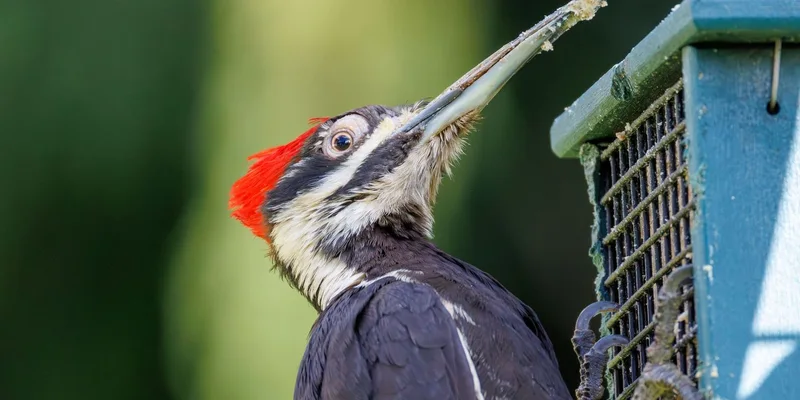
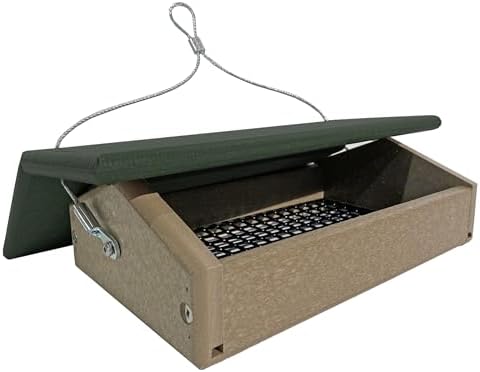
A tail prop model adds a flat board below the cage. A woodpecker uses its stiff tail feathers as a third point of contact against a trunk, and the board gives it the same bracing surface at a feeder. It makes larger woodpeckers noticeably more comfortable and more willing to stay.

When Squirrels Take the Cake Whole
A suet cage inside a wider wire cage lets small birds through the grid and keeps larger animals off the cake. It is the same principle as a caged seed feeder, applied to a much cheaper target. Nothing is squirrel proof in every setup, so pair it with pole placement and a baffle.

Feeding More Than One Cake
A double cage doubles the capacity without doubling the hardware, and it holds up in a busy winter yard where one cake vanishes in two days. It also lets you run two different mixes at once, which is a cheap way to find out what your birds actually prefer.

Comparing the Shapes
The differences that matter are access, who gets excluded, and whether the cake stays out of the rain. Here is how the common designs compare.
| Design | How birds reach the cake | Keeps out | Best suited to |
|---|---|---|---|
| Plain wire cage | From any side | Nothing | A first suet feeder, no starlings yet |
| Bottom access or upside down | From underneath only | Starling resistant | Yards where starlings arrived |
| Tail prop cage | From the front, tail braced | Nothing on its own | Woodpecker focused setups |
| Cage within a cage | Through an outer grid | Squirrels and larger birds | Poles and trees squirrels reach |
Where to Hang It and What Happens in Summer
Suet works best on or near a vertical surface, since the birds that want it are used to landing on trunks. A cage on a pole, on a tree trunk, or hanging close to one gets found faster than a cage swinging alone in the middle of a lawn.
Heat is the seasonal limit. Plain suet softens and goes rancid in warm weather, and a soft cake can smear on feathers. Either take the feeder down in the hottest months or switch to a no melt style cake made for summer, which most suet brands sell alongside the standard ones.
Cleaning
Fat leaves residue, so suet cages need the same routine as seed feeders. Project FeederWatch advises cleaning seed and suet feeders every week or two, and more often during periods of heavy use or wet weather. A cage is easy: hot water, a stiff brush, and full drying before the next cake goes in.
Frequently Asked Questions
What birds eat from a suet feeder? Insect eating birds, chiefly woodpeckers, nuthatches and chickadees. Project FeederWatch names those three as the birds that feed from bottom access suet cages, and describes suet generally as a good choice for attracting insect eating birds.
How do I keep starlings off the suet? Use a feeder that is only reachable from underneath. Project FeederWatch describes cages accessible only at the bottom as starling resistant while still allowing woodpeckers, nuthatches and chickadees. Resistant, not absolute, but it makes a real difference.
Do I need a tail prop? Only if woodpeckers are the goal. The board gives a woodpecker somewhere to brace its stiff tail feathers, which is how it stands on a trunk. Smaller clinging birds do not need it. More detail in our woodpecker suet guide.
Can I leave suet out in summer? Standard suet softens badly in heat. Either take it down for the hottest weeks or switch to a no melt summer cake. A soft cake that smears on feathers is the outcome to avoid.
How often should I clean a suet cage? Project FeederWatch advises every week or two for seed and suet feeders, more often in heavy use or wet weather. Fat residue builds up on the wire, so a stiff brush and hot water beats a rinse.
Where should I hang a suet feeder? On or near something vertical. Trunk mounted and pole mounted cages get found faster than one swinging in the open, because the birds that want suet are used to working bark.
The Bottom Line
Start with a plain cage, and switch to a bottom access design the week starlings show up. Add a tail prop if woodpeckers are what you are after, and an outer cage if squirrels are pulling cakes off the hook. Suet is the cheapest way to change which birds use your yard, and the shape of the cage is the only real decision. For the woodpecker specific version see suet feeders for woodpeckers, and for the squirrel side, caged suet feeders covers the hardware.