Last updated: August 21, 2026
A goldfinch feeder is one of the few pieces of backyard equipment where the seed decides the hardware rather than the other way around. Nyjer is tiny and slippery, and it pours straight out of an ordinary sunflower port. Every nyjer feeder on the market is a solution to that one problem, whether by shrinking the port, using a mesh, or using a fabric sock.
The second thing worth knowing before you buy is that goldfinches leave for reasons that have nothing to do with your feeder, and reasons that have everything to do with it. Telling the two apart saves a lot of money spent replacing perfectly good equipment. This guide covers both sides: the ports, and the disappearing act.
This article contains affiliate links. If you buy through them, we may earn a commission at no extra cost to you. Learn more.
Quick Answer
What feeder is best for goldfinches?
- A nyjer feeder with small ports, or a mesh feeder that holds the seed without pouring it.
- Sunflower works too, so a standard tube alongside the nyjer widens the menu.
- Fresh seed above everything, because stale nyjer is the most common reason goldfinches quit a feeder.
- A sock feeder as a cheap way to test whether goldfinches are even in your area.
Bottom line: buy a small nyjer tube or mesh feeder, fill it part way, and replace seed that sits untouched rather than topping it up.
What Goldfinches Actually Eat at Feeders
Two things. Cornell’s All About Birds account for the American Goldfinch says they are welcome and common at feeders, where they take primarily sunflower and nyjer. That is the entire menu, and it means a yard with a standard sunflower tube is already halfway to a goldfinch yard.
Project FeederWatch, the Cornell Lab’s feeder survey, adds the hardware half: nyjer attracts finches including American Goldfinch, Pine Siskin and Common Redpoll, and it needs a feeder with small ports rather than a standard seed tube. Those two sentences cover most of the buying decision.
Nyjer Is Not Thistle
Nyjer is often sold as thistle seed, which is a leftover marketing name rather than a description. It is imported, heat treated so it cannot sprout, and it is expensive relative to sunflower. That price is why the freshness question below matters so much: nobody wants to throw out a bag of it.
Why Goldfinches Leave a Feeder
Three reasons, and only one of them is your fault. Stale seed is the fixable one. Nyjer dries out, and finches will land, sample and move on rather than work a feeder full of seed that has gone flat. A feeder that stops emptying is the signal, and the fix is to dump it rather than top it up.
The second reason is natural food. When seed heads are ripe across the neighborhood, feeder use drops in any yard. The third is that the birds are still there and you stopped recognizing them, which happens more than people admit.
The Winter Disappearance That Is Not One
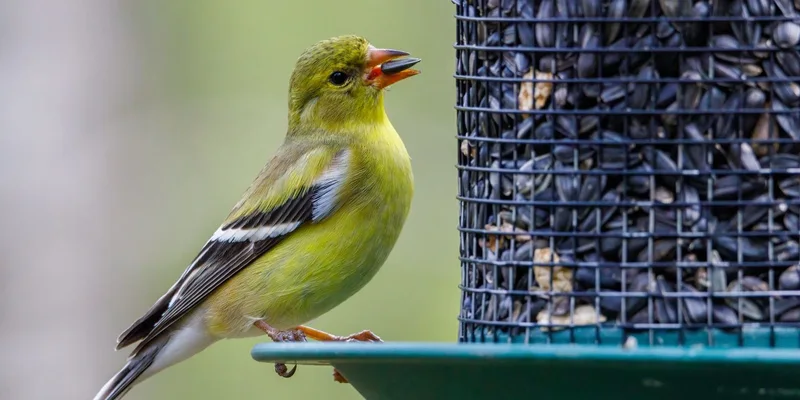
Male American Goldfinches trade their bright summer yellow for a drab olive brown in the colder months, as Cornell’s species account describes. The birds on the feeder in January are frequently the same individuals that were there in July, wearing a plumage nobody recognizes. Before you replace a feeder, check whether the small brownish finches on it are goldfinches.
Goldfinch Feeders by Situation
Best All Around: A Nyjer Tube With Small Ports
A clear tube with nyjer sized ports is the default, and it lets you see when the seed level stops dropping, which is the early warning for stale seed. Metal reinforced ports last longer than bare plastic, particularly where squirrels are working the feeder.

The Cheap Test Before You Commit
A fabric sock feeder holds nyjer against a mesh the birds cling to and pull through. It costs very little, which makes it the sensible way to find out whether goldfinches use your yard at all before buying something better. Socks are not really cleanable, so treat them as consumable.

When Larger Birds Are Emptying It
A mesh or upside down finch feeder makes the seed harder to reach for anything that will not cling. Goldfinches cling comfortably, which is why this style filters so effectively without a cage around it.

Feeding Sunflower Instead
Since Cornell’s account puts sunflower alongside nyjer, a small tube of sunflower hearts is a legitimate goldfinch feeder and a much cheaper one to run. Hearts leave no shells, which suits a patio, and they feed the rest of the small birds too.

Comparing the Options
What separates finch feeders is what they hold, how they cope with weather, and whether you can clean them at all.
| Feeder | Seed | Wet weather | Cleaning |
|---|---|---|---|
| Nyjer tube, small ports | Nyjer only | Good if it drains at the base | Needs a port brush |
| Nyjer sock | Nyjer only | Poor, holds moisture | Not cleanable, replace it |
| Mesh or upside down | Nyjer, some take hearts | Good, air moves through | Easy, mesh scrubs clean |
| Sunflower heart tube | Hearts and chips | Hearts spoil faster than shelled | Easy if the base unclips |
Buying and Storing Nyjer So It Stays Usable
Buy less than you think you need. Nyjer is an oil seed and it does not improve in a bag in a garage, so a smaller quantity bought more often keeps the feeder attractive. Store what you have somewhere cool, dry and sealed against both moisture and mice.
Fill the feeder part way rather than to the top. A full nyjer tube in a slow yard is a tube of seed going stale from the bottom up, and it is far cheaper to refill twice a week than to empty the whole thing into the bin. Storage details are in storing bird seed.
Cleaning the Feeder Itself
Project FeederWatch advises cleaning seed and suet feeders every week or two, more often during heavy use or wet weather. Nyjer feeders are the fiddly ones because of the port size, so a port brush is worth owning. The routine is in cleaning a bird feeder.
Frequently Asked Questions
What is the best goldfinch feeder? A nyjer tube with small ports, or a mesh feeder. Project FeederWatch notes that nyjer attracts finches including American Goldfinch and requires a feeder with ports sized for the seed rather than a standard sunflower tube.
Do goldfinches eat sunflower? Yes. Cornell’s All About Birds account says goldfinches take primarily sunflower and nyjer at feeders, so a sunflower heart tube is a perfectly good and much cheaper goldfinch feeder.
Why did the goldfinches stop coming? Usually stale nyjer, abundant natural seed, or the birds changing color. Dump seed that has stopped disappearing rather than topping it up, and check whether the small brown finches on the feeder are winter plumage goldfinches.
Are goldfinches yellow all year? No. Males wear a drab olive brown plumage outside the breeding season, which is why so many people report goldfinches leaving in autumn and returning in spring when the same birds never went anywhere.
Sock or tube for nyjer? A sock is cheap and good for testing whether goldfinches are around. A tube lasts, cleans and copes with rain better. We compare them properly in sock or tube.
Do House Finches use the same feeders? Often, yes, and they take both nyjer and sunflower. That species comes with a cleaning note of its own, which we cover in the House Finch feeder guide.
The Bottom Line
Buy a small nyjer feeder with proper ports, fill it part way, and treat seed that stops moving as spent rather than as inventory. Add a sunflower heart tube if you want the same birds at lower running cost. Most goldfinch problems are seed problems, not feeder problems, and the ones that are not usually turn out to be a plumage change. The seed side is in nyjer seed, and the sock question is settled in sock or tube.