Last updated: August 21, 2026
Almost every seed feeder on the market is a variation on three shapes. A hopper holds seed in a box and lets it slide down to a ledge. A tube holds it in a clear cylinder with ports along the side. A platform is a flat tray with seed spread on it. Everything else is a detail bolted onto one of those three.
Which one you buy decides which birds land in your yard, far more than the brand or the price does. A tube quietly turns away jays and doves. A platform lets in everything, including the things you did not want. This guide sets the three against each other on the terms that matter: who uses them, who they leave out, and what they do in bad weather.
This article contains affiliate links. If you buy through them, we may earn a commission at no extra cost to you. Learn more.
Quick Answer
Should you buy a hopper, a tube or a platform feeder?
- Hopper if you want one feeder that serves the widest range of birds and holds a lot of seed.
- Tube if you want small birds only and are happy to leave jays and grackles out.
- Platform if you want everything, including ground feeding birds, and will keep it drained.
- Two of the three, on separate hooks, if the yard has both small birds and big ones.
Bottom line: start with a hopper, add a tube when the big birds crowd it, and treat a platform as the extra rather than the only feeder.
What Each Shape Actually Is
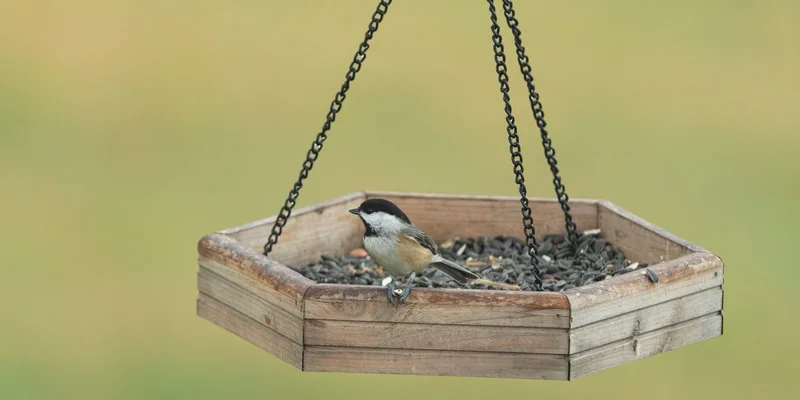
A hopper is a reservoir with a roof and a ledge along the bottom, refilling itself as birds eat. A tube is a vertical cylinder with feeding ports and perches down the sides. A platform, also sold as a tray, is a flat raised surface with seed spread across it, sometimes with a roof and usually with a mesh floor for drainage.
The Cornell Lab’s guidance describes the same short list, noting that most seed feeders are variations on a few basic designs: trays, hoppers, tubes, window mounts and suet feeders. Once you can name which of those you are looking at, most product listings become much easier to read.
Why the Shape Decides the Guest List
Birds differ in whether they stand or cling. Finches, chickadees and nuthatches cling happily to a small perch. Cardinals, jays and doves want a surface to stand on. A shape that offers only pegs quietly filters out the standers, and a shape that offers only a wide tray invites everything.
Who Uses Which, According to Project FeederWatch
Project FeederWatch, run by the Cornell Lab of Ornithology, publishes the clearest version of this. Large hoppers attract most species of feeder birds and allow larger species such as doves and grackles to feed. Small hoppers attract smaller birds while preventing larger species from perching comfortably. Tray feeders attract most species of feeder birds.
On tubes, the same source is specific: feeders with short perches accommodate small birds such as finches but exclude larger birds such as grackles and jays. And a tray placed near the ground is most likely to attract juncos, doves and sparrows, which is the practical description of a ground feeding station.
Hopper: The Sensible Default
A hopper is the feeder to buy if you are only buying one. It holds enough seed to run for days, keeps that seed under a roof, and offers a ledge that both clinging and standing birds can use. In a mixed yard it feeds cardinals, chickadees, finches, jays and doves from the same box.
The trade is that it feeds everything, including the birds you may later want to exclude, and that a big hopper full of seed goes stale in wet weather if the birds are not emptying it. Buy a size the yard can go through in a week rather than the biggest one on the shelf.

Small Hopper as the Middle Ground
The small hopper is underrated. It gives you the roof and the reservoir of the big one while, in Project FeederWatch’s description, preventing larger species from perching comfortably. That is a soft form of exclusion without a cage, and it suits a yard with a grackle problem but no desire for hardware.
Tube: Small Birds Only, By Design
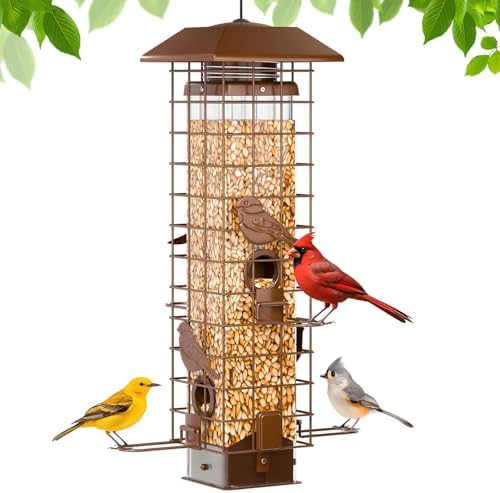
A tube feeder is the exclusion tool most people already own without realizing it. Short perches and small ports mean finches, chickadees, titmice and nuthatches use it comfortably while grackles and jays cannot get settled. If you want a feeder that stays busy with small birds, this is the shape.
Two details separate a good tube from a poor one. Metal reinforced ports survive squirrel chewing where plastic opens up into a hole, and a base that unclips is the difference between a feeder you clean and a feeder you rinse. Both are visible in the product photos if you look for them.
Adding a Tray Changes the Answer
Clip a seed tray under a tube and you have built a hybrid: small birds above, standing birds below, and far less seed on the grass. It is the cheapest way to widen the guest list without buying a second feeder, and it is why a lot of cardinals suddenly appear in yards that already had tubes.
Platform: Everything Gets In
A platform is the most open feeder there is, and Project FeederWatch says tray feeders attract most species of feeder birds. Set low, it becomes the station for juncos, doves and sparrows. Set on a pole with a roof, it is the feeder jays and cardinals prefer over anything that swings.
The catch is maintenance. Seed sits in the open, so rain gets in and wet seed goes bad, and droppings land where the food is. A mesh or screen floor that drains is not optional on a platform.

The Three Side by Side
Here is the comparison in one place, using the feeder behavior Project FeederWatch describes rather than manufacturer claims.
| Shape | Who uses it | Who it leaves out | Weather and upkeep |
|---|---|---|---|
| Large hopper | Most feeder birds, doves and grackles included | Very little | Roof keeps seed dry, clean the base |
| Small hopper | Smaller birds | Larger species cannot perch comfortably | Same as above, less seed to go stale |
| Tube, short perches | Finches, chickadees, titmice, nuthatches | Grackles and jays | Dry inside, ports need brushing |
| Platform or tray | Most feeder birds, juncos and doves when low | Almost nothing | Needs drainage and frequent clearing |
Which to Buy First
For a first feeder in a yard with no history, buy the hopper. It gives you the widest sample of what lives nearby, which is the information you need before you start excluding anything. After a few weeks you will know whether the problem is grackles, squirrels, or nothing at all.
Then add rather than replace. A tube on a second hook near cover gives the small birds a place the big ones cannot crowd, and a low tray brings in the ground feeders. Three modest feeders spread across a yard outperform one large one on every measure except the time it takes to fill them. In a wet climate, weigh drainage over roof size when you choose, as we set out in the weatherproof feeder guide.
Frequently Asked Questions
Which feeder attracts the most birds? A large hopper or a platform. Project FeederWatch says large hoppers attract most species of feeder birds and allow larger species to feed, and that tray feeders also attract most species. Both are the wide open options.
Which feeder keeps grackles and jays out? A tube with short perches, or a small hopper. Project FeederWatch describes short perched tubes as accommodating small birds while excluding larger ones such as grackles and jays, and small hoppers as preventing larger species from perching comfortably.
Do I need a platform feeder if I have a hopper? Only if you want ground feeding birds. A low tray is what brings in juncos, doves and sparrows, which a hopper on a pole reaches less reliably. Otherwise the hopper covers most of the same species.
Can one feeder do everything? A large hopper comes closest, but it also lets in the birds people most often want to exclude. Two feeders on separate hooks solve more problems than any single design does.
What about window feeders? They are a fourth shape, usually a small tray on suction cups, and they suit small birds at close range. Placement near glass raises its own question, which we cover in keeping birds from hitting windows.
Which shape is easiest to clean? The hopper, because the opening is wide and the parts are large. Tubes need a port brush and platforms need the floor cleared regularly. The routine is the same either way and is set out in cleaning a bird feeder.
The Bottom Line
Buy the hopper first, add a short perched tube when the big birds crowd it, and treat the platform as the extra station for ground feeders rather than the main feeder. The shape is the setting that decides your guest list, and Project FeederWatch’s own descriptions of who each design admits and excludes are the most useful thing to read before ordering. The species by species version is in which feeder attracts which bird, and if cardinals are the target, the perch question is covered in the cardinal feeder guide.