Last updated: August 21, 2026
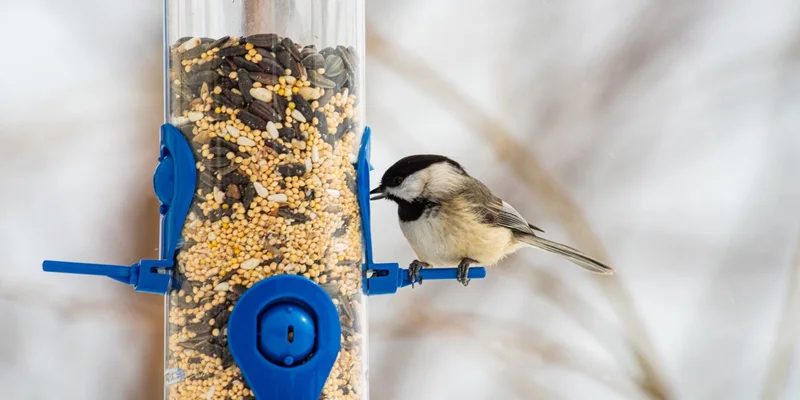
Chickadees are almost always the first birds to find a new feeder. They are curious, they scout constantly, and they are far less bothered by a strange object in the yard than a cardinal or a jay. If you have just hung your first feeder and something small and black capped turned up within a day, that was a chickadee doing what chickadees do.
They also feed in a way that shapes what you should buy. A chickadee takes one seed, carries it to a branch, holds it under its feet and hammers it open, then comes back. It never settles in for a long session, which means the feeder does not need much capacity and does need somewhere nearby to work. This guide covers what that looks like in practice.
This article contains affiliate links. If you buy through them, we may earn a commission at no extra cost to you. Learn more.
Quick Answer
What feeder do chickadees use?
- Almost any small feeder, including tiny hanging ones that swing in the wind.
- Black oil sunflower is the single best thing to put in it, with peanuts and suet close behind.
- A branch or shrub within a short flight, because they carry each seed off to open it.
- A window feeder if you want them close, since chickadees take to those readily.
Bottom line: a small sunflower tube near cover will do it, and a caged version keeps the bigger birds from taking it over.
Chickadees Are the Easy Ones
Cornell’s All About Birds account calls chickadees one of the easiest birds to attract to feeders, for suet, sunflower and peanuts, and notes that they do not mind using tiny hanging feeders that swing in the wind and will readily visit window feeders. There is very little in this species that needs solving.
What that means for buying is that you can choose the feeder for other reasons. Pick one that keeps grackles out, or one that mounts on a window for the view, or one that fits a balcony rail, and the chickadees will use whichever you land on.
Why They Never Stay Long
Chickadees carry a seed away rather than hulling it on the feeder. They wedge it under their feet on a branch and hammer it open, which is why a feeder can look almost unvisited while a steady stream of birds works it all morning. It also means cover within a short flight matters more than perch design.
What to Put In It
Black oil sunflower is the answer, and Project FeederWatch, the Cornell Lab’s feeder survey, explains why: it is high in energy with thin shells, which makes it the preferred item for a wide range of birds including chickadees. A thin shell matters a great deal to a bird that opens each seed by hand, so to speak.
Peanuts and suet fill out the list. Project FeederWatch notes that shelled peanuts suit chickadees, nuthatches and titmice, and Cornell’s chickadee account puts suet, sunflower and peanuts together as the foods that bring them in. Sunflower hearts or chips work too and leave no shells on the patio.
Mealworms and the Nesting Season
Dried mealworms are a common addition and chickadees take them, particularly when there are young in the box. Treat them as a supplement rather than a staple, and see our notes in dried mealworms for birds before you buy a large bag.
Chickadee Feeders by Situation
Best All Around: A Small Sunflower Tube
A tube with short perches is the natural fit. Project FeederWatch describes feeders with short perches as accommodating small birds such as finches while excluding larger birds such as grackles and jays, which is precisely the sorting you want when chickadees are the target.

When You Want Them at the Glass
A window feeder on suction cups puts a chickadee an arm’s length away, and Cornell’s account notes they readily visit window feeders. Mount it either very close to the glass or well away from it, and see keeping birds from hitting windows for why that distance matters.

If Bigger Birds Take Over
A caged tube feeder lets a chickadee through the grid and leaves grackles, jays and starlings outside it. The same cage keeps squirrels off the ports, so it solves two problems with one purchase. Grid sizing is the specification to read in the listing.

For the Peanut and Clinging Crowd
A mesh peanut feeder gives chickadees, nuthatches and titmice something to cling to and work at, and it holds shelled peanuts that no seed tube will dispense properly. It is a good second feeder rather than a first one.

Comparing the Options
Chickadees will use all of these, so the comparison is really about who else gets in and where the feeder can go.
| Feeder | What it holds | Who else uses it | Where it goes |
|---|---|---|---|
| Small sunflower tube | Black oil sunflower, hearts | Finches, titmice, nuthatches | Hook, pole or branch |
| Window feeder | Small amounts of seed | Small birds only | Glass, near or far, not mid range |
| Caged tube | Sunflower or mixes | Small birds, big ones excluded | Pole or hook, needs clearance |
| Mesh peanut feeder | Shelled peanuts | Nuthatches, titmice, woodpeckers | Near a trunk or pole |
Placement Is the Real Variable
Because chickadees carry every seed to cover, the distance between the feeder and the nearest branch is the setting that changes their behavior most. A feeder within a short hop of a shrub or a small tree gets worked steadily. One standing alone in the middle of a lawn gets sampled and abandoned.
That is also the standard advice for a nervous yard generally. Cover gives a small bird an escape route, and a chickadee will not commit to a feeding station where it cannot see one.
Nest Boxes as the Other Half
Cornell’s chickadee account suggests putting up a nest box to attract a breeding pair, and chickadees are among the species most likely to take one in an ordinary yard. Hole size is the specification that decides which species can use it, and NestWatch publishes the dimensions, which we summarize in birdhouse hole size.
Frequently Asked Questions
What is the best feeder for chickadees? A small tube with short perches, filled with black oil sunflower. Cornell’s All About Birds account notes chickadees do not mind tiny hanging feeders that swing in the wind, so the design is less critical than the position and the seed.
What do chickadees eat at feeders? Sunflower, peanuts and suet. Cornell’s account names all three as the foods that make chickadees one of the easiest birds to attract, and Project FeederWatch lists shelled peanuts as suiting chickadees, nuthatches and titmice.
Why do chickadees take one seed and fly away? That is how they eat. They carry a seed to a branch, hold it under their feet and hammer it open, then return. It is not shyness, and it means a busy feeder can look almost empty at any given moment.
Will chickadees use a window feeder? Yes, readily, according to Cornell’s backyard tips for the species. Position the feeder either right against the glass or well away from it rather than at a middle distance.
How do I stop bigger birds emptying the chickadee feeder? Use a caged tube or a short perched tube. Project FeederWatch describes short perched tube feeders as excluding larger birds such as grackles and jays while still accommodating small birds. Full detail in feeders only small birds can get into.
Do chickadees stay all winter? In most of their range they do not migrate away, and winter is often when they are most visible at feeders. That makes them the species most likely to keep a feeder busy through the coldest months.
The Bottom Line
Chickadees ask almost nothing of your equipment. Hang a small sunflower tube within a short flight of a shrub and they will find it, usually before anything else does. Spend the decision on the rest of the yard instead: a cage if grackles are a problem, a window mount if you want them close. For the seed side see black oil sunflower, and if bigger birds are the issue, small birds only feeders covers the hardware.