Last updated: August 21, 2026
Dried mealworms are the food people buy for bluebirds and then discover the bluebirds ignore. A bag goes out in a dish, sits there for a week going pale in the sun, and eventually the house sparrows clean it up. Meanwhile somebody two streets over has bluebirds landing on their hand for them.
The difference is rarely the product. It is presentation, timing and whether the birds you want are even in your yard yet. This guide covers which species actually take dried mealworms, how to get a bird to recognize them as food, and where the honest limits are on feeding insects to wild birds.
This article contains affiliate links. If you buy through them, we may earn a commission at no extra cost to you. Learn more.
Quick Answer
Do dried mealworms actually work at a feeder?
- Yes for bluebirds, chickadees, titmice, wrens and nuthatches. The Cornell Lab describes mealworms as a protein, calcium and vitamin source that even brings in birds which normally skip feeders.
- Soak them. Dried worms rehydrated in warm water are taken far more readily than dry ones straight from the bag.
- Offer them in a dish or a caged tray, not scattered on the ground.
- Keep the amount modest. NestWatch flags the debate about supplemental feeding being too much of a good thing.
Bottom line: a small dish, soaked worms, put out at the same time each day, near a spot the birds already use.
Which Birds Take Them
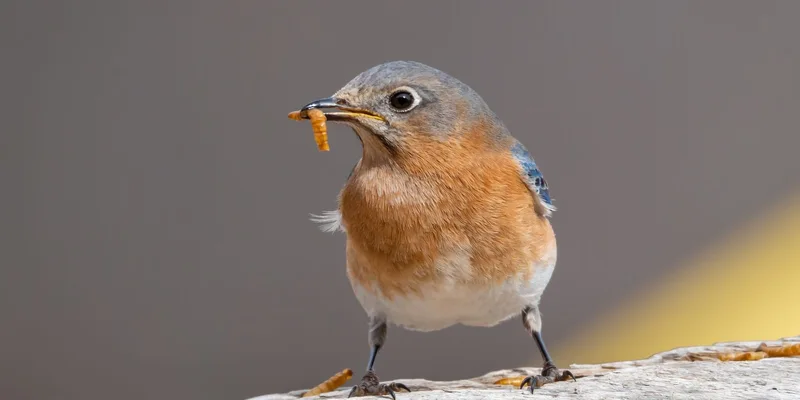
Insect eaters. The Cornell Lab describes mealworms as an excellent source of protein, calcium and vitamins for a great many birds, including some that normally do not visit feeders at all. In practice the reliable takers in most yards are bluebirds, chickadees, titmice, Carolina and house wrens, and nuthatches, with robins and catbirds joining in some places.
What you will not usually convert are the seed specialists. Goldfinches and house finches largely ignore mealworms, and cardinals take them only occasionally. If your yard is currently all finches, a bag of mealworms is not going to change that on its own.
Bluebirds Are a Habitat Question First
Bluebirds want open ground with scattered perches, which is why they show up in yards with lawn, fence lines and a nest box and skip yards enclosed by dense shrubs. Mealworms bring bluebirds to a specific spot in a yard that already suits them. If they have never been in your yard, the box comes before the worms; our guide to the bluebird house covers that end.
Dried or Live
Live mealworms are more attractive to birds because they move, and movement is what an insect eater is looking for. They are also a chore: they need refrigeration, a bran substrate and a container that does not get knocked over in the kitchen. Most backyard feeders settle on dried after one round of live.
Dried worms are shelf stable, odorless and easy to keep in a jar by the door, and the gap in appeal closes considerably once you soak them. Warm water for fifteen minutes or so plumps them up and makes them look and smell more like food. Drain them before they go in the dish.
Mealworms by Situation
Best Everyday Way to Offer Them
A shallow open dish on a post or a rail is the simplest thing that works. Bluebirds and robins want to see the food from above and land next to it rather than cling to something. A dish with a lip stops worms blowing away, which is otherwise the fastest way to lose half a scoop.

Best If Starlings and Sparrows Clean It Out
A caged or domed mealworm feeder with an opening sized for a small bird keeps the big birds out and lets the bluebirds and chickadees work. This is the standard answer where house sparrows are abundant, and our guide to the bluebird feeder covers the cage dimensions that matter.

Best for Nesting Season Traffic
During nesting, adults make constant short trips, and a dish they can reach in seconds gets used heavily. Some people mix mealworms into a suet dough or offer them alongside a suet cake, which suits chickadees and wrens working the same corner of the yard.

How Much, and the Honest Caveat
NestWatch, the Cornell Lab’s nest monitoring project, notes that mealworms are increasingly fed to bluebirds and other species and that some argue the extra food might be too much of a good thing. Their supplemental feeding research also found that unsupplemented Eastern Bluebirds still had very high nest success in boxes with predator guards.
Read that as permission to feed modestly rather than a reason to stop. A small daily scoop is a supplement to a diet that is mostly wild insects. A dish kept permanently heaped is a different thing, and NestWatch’s framing is the reason to keep it small rather than to keep it constant.
Do Not Let Them Sit
Rehydrated worms left out get slimy and go off, and a wet dish grows the same film any feeder does. Put out what gets eaten in a session and tip the rest. Dry worms left out in rain turn to mush, which nothing wants.
Comparing the Ways People Offer Them
Four common setups, and they differ mostly in who else eats your worms.
| Setup | Keeps big birds out | Weather protection | Best suited to |
|---|---|---|---|
| Open dish on a post | No | None, worms get wet | Yards with few starlings |
| Caged tray feeder | Yes, with the right mesh | Some, if roofed | Bluebirds where sparrows are common |
| Domed dish on a hook | Partly, dome height matters | Good | Chickadees, titmice, wrens |
| Mealworm blended suet | Depends on the cage | Good | Winter, and clinging species |
Getting Birds to Notice Them
Put the dish where the birds already go. Next to the seed feeder, on the rail they perch on, near the nest box they are using. A dish in the middle of an empty lawn takes weeks to be found because nothing has a reason to look there.
Then be consistent about the time. Birds learn a schedule quickly, and a dish that appears every morning at the same hour gets checked. Some people whistle or tap the dish while they fill it, and after a couple of weeks the bluebirds arrive at the sound rather than at the sight of the worms.
Frequently Asked Questions
Should I soak dried mealworms? It helps a lot. Fifteen minutes in warm water plumps them up so they look and smell closer to live prey, and most people find takes go up sharply after they start doing it. Drain them before they go in the dish.
How many mealworms should I put out? A modest daily amount rather than a full dish. NestWatch notes the argument that supplemental feeding of mealworms can be too much of a good thing, and their research found unsupplemented bluebirds still nested very successfully in guarded boxes.
Which birds eat dried mealworms? Mainly bluebirds, chickadees, titmice, wrens and nuthatches, with robins and catbirds in some yards. The Cornell Lab describes mealworms as attracting a great many birds including some that normally do not come to feeders.
Are dried mealworms safe for baby birds? Adults decide what to feed nestlings, and they mostly bring soft wild insects. Offer worms as a supplement near the box and let the parents choose. Do not attempt to feed nestlings yourself; a licensed wildlife rehabilitator is the right contact for a bird in trouble.
Do squirrels eat mealworms? Some will, and so will raccoons overnight. Bringing the dish in at dusk removes the problem entirely and also keeps the worms dry.
Can I feed mealworms all year? Yes, in modest amounts. They are most valuable in cold snaps and during nesting, and least necessary in high summer when wild insects are everywhere.
The Bottom Line
Dried mealworms work when you soak them, offer them in a dish the target birds can use, keep the amount modest and put them somewhere the birds already visit. They will not conjure bluebirds into a yard that has no open ground, which is a habitat question rather than a food one. For the hardware, see our bluebird feeder guide, and for the nesting side, the bluebird house guide.