Last updated: August 21, 2026
There is a point in most people’s feeding year when the small birds stop getting a turn. A flock of grackles works a hopper flat in an afternoon, starlings strip the suet, and the chickadees and finches you actually hung the feeder for are reduced to picking through what falls. Nothing has gone wrong with your feeder. It was simply built to let everything in.
The fix is exclusion by design, and it is one of the few problems in backyard feeding with a clean mechanical answer. Small birds fit through gaps and stand on short perches that larger birds cannot use, and several standard feeder designs are built around exactly that difference. This guide covers which ones work, what they cost you in access, and where the limits are.
This article contains affiliate links. If you buy through them, we may earn a commission at no extra cost to you. Learn more.
Quick Answer
How do you feed only small birds?
- A caged feeder, where a wire grid lets small birds through and keeps larger ones outside.
- A tube with short perches, which excludes larger birds such as grackles and jays.
- A small hopper, which prevents larger species from perching comfortably.
- A bottom access suet cage, described as starling resistant while chickadees and nuthatches still feed.
Bottom line: the caged tube is the strongest single answer, and a short perched tube is the cheapest one.
Exclusion Is a Design Choice, Not a Deterrent
The important distinction is between keeping a bird out and driving it away. Everything in this guide is the first kind: a physical gap a small bird passes and a large one does not. Nothing here involves harming, trapping or chasing anything, and nothing needs to.
Project FeederWatch, the Cornell Lab’s feeder survey, describes the mechanics plainly. Tube feeders with short perches accommodate small birds such as finches but exclude larger birds such as grackles and jays. Small hoppers attract smaller birds while preventing larger species from perching comfortably. Suet cages accessible only at the bottom tend to be starling resistant while woodpeckers, nuthatches and chickadees still feed.
Who Counts as a Small Bird Here
In practice: chickadees, titmice, nuthatches, goldfinches, House Finches, siskins, downy woodpeckers and wrens. The birds these feeders exclude are grackles, starlings, jays, doves and, depending on the design, cardinals. That last one catches people out, since a cardinal is often the bird they wanted most.
The Caged Feeder: The Strongest Answer
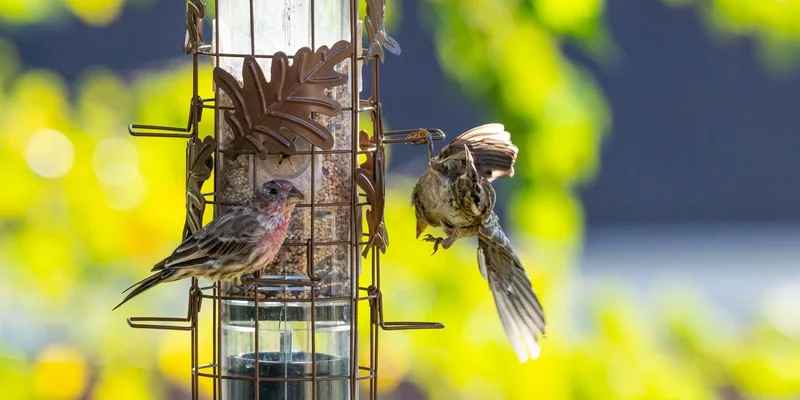
A caged feeder is a seed tube inside an outer wire grid. Small birds hop through the grid to the ports, and anything larger cannot fit. It is the most complete exclusion available without a moving part, and it handles squirrels at the same time, since a squirrel cannot pass the grid either.
The specification that matters is the grid opening, and it is the number to read in the listing rather than assume. Too wide and a grackle reaches in, too narrow and a cardinal never gets a chance. Manufacturers publish the dimension because it is the whole product, so use it.

What a Cage Costs You
Cardinals, jays and doves, mostly. If those are on your wanted list, run a caged feeder alongside a hopper rather than replacing everything, so the big birds still have somewhere to go. That two station approach solves more yards than any single feeder does.
The Cheaper Options That Still Work
A Tube With Short Perches
The simplest form of exclusion, and you may already own it. Short perches give a finch or a chickadee everything it needs and give a grackle nothing to stand on. Project FeederWatch describes this design as excluding larger birds such as grackles and jays, which is precisely the outcome most people are after.

A Small Hopper
The small hopper is the quiet performer. It keeps the roof and the reservoir of a full size hopper while, as Project FeederWatch puts it, preventing larger species from perching comfortably. It is a softer filter than a cage, which suits a yard where the problem is occasional rather than constant.

A Bottom Access Suet Cage
For the suet side, turn the access underneath. Project FeederWatch describes bottom access cages as starling resistant while still allowing woodpeckers, nuthatches and chickadees to feed. It is the cheapest exclusion purchase in the whole yard.
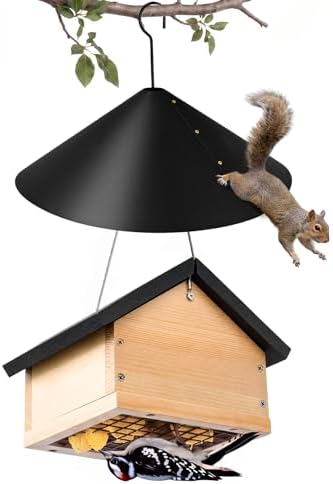
A Caged Suet Feeder
A suet cage inside a wider grid does the same job for squirrels and larger birds at once. It is worth it if you are losing whole cakes rather than losing a share of them.

Comparing the Designs
These differ in how absolute the exclusion is, what they keep out, and what they cost you in birds you might want.
| Design | How it excludes | Keeps out | Also loses you |
|---|---|---|---|
| Caged tube | Wire grid around the ports | Grackles, jays, starlings, squirrels | Cardinals and doves |
| Tube, short perches | Nothing to stand on | Grackles and jays | Cardinals, mostly |
| Small hopper | Uncomfortable perching | Larger species, softly | Little, but less absolute |
| Bottom access suet | Food reachable only from below | Starling resistant | Birds that will not hang |
Two Things That Undo All of It
The first is a seed tray. Clipping a tray under a caged or short perched tube gives every large bird a landing surface and quietly reverses the design. If you want the exclusion, run the tube bare and accept some spillage.
The second is the ground. Whatever falls under an exclusion feeder feeds grackles, doves and starlings anyway, and it also feeds rodents. Sweeping or raking the area regularly is part of the setup, and using a no mess seed reduces the volume dramatically. Our notes are in no mess bird seed.
Seed Choice as a Soft Filter
Changing the seed shifts the guest list too. Project FeederWatch notes that safflower attracts cardinals and other big billed birds while most birds prefer sunflower over safflower, which is why safflower gets used as a crowd thinning tactic. It is slower than a cage and it keeps the cardinals, which some people prefer.
Frequently Asked Questions
What feeder keeps grackles and starlings out? A caged tube is the most complete answer. A tube with short perches works too, since Project FeederWatch describes that design as excluding larger birds such as grackles and jays while accommodating small birds.
Will a caged feeder keep cardinals out as well? Usually yes, depending on the grid opening. If cardinals matter to you, run a caged feeder for the small birds and a hopper or a tray for the standers, rather than trying to make one feeder do both.
What grid size should I look for? Read the dimension in the listing rather than guessing, because it is the specification that defines the product. Wider grids let more birds through, including some you are trying to exclude.
How do I keep starlings off the suet? Use a bottom access cage. Project FeederWatch describes cages accessible only at the bottom as starling resistant while still allowing woodpeckers, nuthatches and chickadees. It reduces the problem rather than ending it.
Do these feeders stop squirrels too? A caged feeder does, because a squirrel cannot pass the grid. It does not stop a squirrel from hanging on the outside or emptying what spills, which is where a pole and a baffle come in. See squirrel baffles.
Is there a downside to excluding big birds? Only that you see fewer species. Grackles and starlings are native or naturalized parts of the landscape and none of this is about harming them, it is about giving the small birds a feeder of their own.
The Bottom Line
Buy a caged tube if the problem is constant and a short perched tube if it is occasional, add a bottom access suet cage for the fat, and keep the ground underneath clear. Run a hopper elsewhere in the yard so the big birds still have somewhere to be, and the whole thing settles down within a week or two. The wider comparison of feeder shapes is in hopper, tube or platform, and the cage hardware itself is covered in caged feeders.