Last updated: August 21, 2026
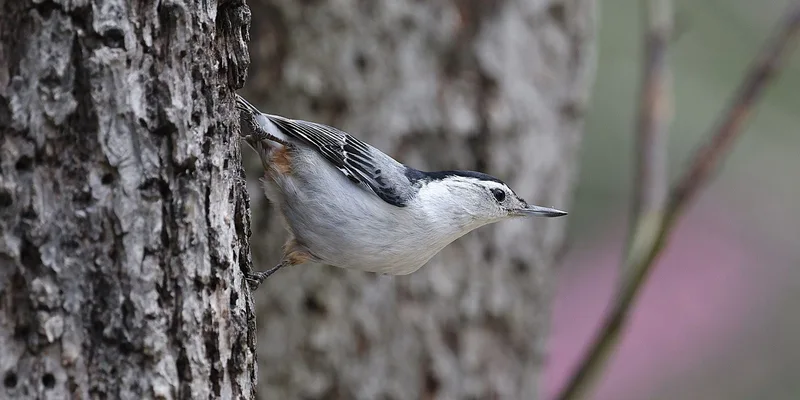
Nuthatches are the birds that come down a tree trunk head first. That habit is not a party trick, it is how they find food other bark feeders miss, and it changes what they want from a feeder. A nuthatch is entirely comfortable feeding from below, sideways or upside down, and it is noticeably less comfortable standing on an open flat surface.
That single preference makes them easy to feed once you know it, and mildly frustrating if you do not. This guide covers which feeders nuthatches actually use, what Cornell’s own backyard tips say to put in them, and why the upside down suet feeder ends up being the best purchase in this category for reasons that have nothing to do with nuthatches.
This article contains affiliate links. If you buy through them, we may earn a commission at no extra cost to you. Learn more.
Quick Answer
What feeder do nuthatches use?
- Hopper, tube or suet feeders, which they favor over exposed platform feeders.
- Large nuts such as sunflower and peanuts, plus suet.
- An upside down or bottom access suet cage, which suits them and keeps starlings off.
- A position near a trunk, since nuthatches arrive by working their way down a tree.
Bottom line: a suet cage on or near a trunk plus a sunflower or peanut feeder covers everything a nuthatch wants.
What Nuthatches Want From a Feeder
Something to cling to, close to a tree. Cornell’s All About Birds account for the White breasted Nuthatch says they are more likely to use hopper, tube or suet feeders than exposed platform feeders, and that you can attract them by offering large nuts such as sunflower and peanuts, and by putting out suet.
The behavioral detail behind that is worth knowing. A nuthatch takes a seed, carries it off, wedges it into bark and hammers it open, and it also caches food in tree bark for later. So the feeder does not need to hold a bird for long, and a busy nuthatch will look like it is emptying your feeder when it is really stocking a tree.
Two Species, Same Setup
Most of North America has White breasted Nuthatches in deciduous woods and neighborhoods, with Red breasted Nuthatches turning up in conifers and moving south in some winters. Cornell’s range maps on All About Birds are the place to check which you can expect. The feeders and food are the same either way.
What to Put Out
Sunflower, peanuts and suet, in whatever combination suits your yard. Cornell’s account names large nuts such as sunflower and peanuts alongside suet as the way to attract them, and Project FeederWatch notes that shelled peanuts suit chickadees, nuthatches and titmice.
Sunflower hearts are worth mentioning specifically. A nuthatch has to work a shelled seed open against bark, so hearts save it a step and leave no hulls under the feeder. They cost more per pound and spoil faster in wet weather, which is the trade.
Suet as the Reliable One
Project FeederWatch describes suet as a good choice for attracting insect eating birds and names nuthatches among the birds that feed at bottom access suet cages. In a cold month a suet cage is often the feeder nuthatches use most, and it is the cheapest thing in this guide.
Nuthatch Feeders by Situation
Best All Around: The Upside Down Suet Cage
Bottom access suits a bird that already feeds head down, and it comes with a useful side effect. Project FeederWatch describes cages that are only accessible at the bottom as starling resistant while still allowing woodpeckers, nuthatches and chickadees to feed. One purchase, two problems solved.

For the Peanut Habit
A mesh peanut tube gives a nuthatch something to cling to and work at, which is exactly the posture it prefers. Shelled peanuts in mesh also bring in chickadees and titmice, so it earns its hook in most yards.

If You Want Them on the Seed Feeder
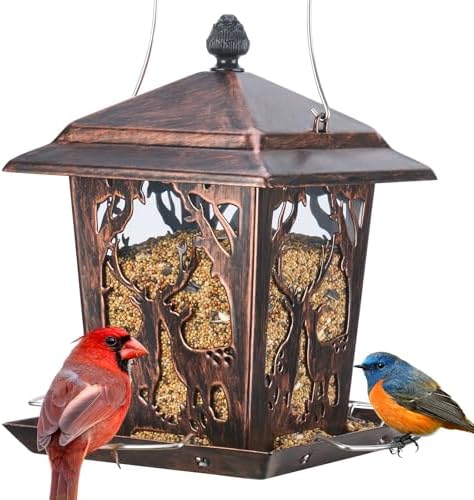
A hopper with a roof or a standard tube both fit Cornell’s description of what nuthatches favor over open platforms. Fill it with black oil sunflower or hearts and place it within sight of a trunk rather than out in the middle of the lawn.
Mounting Close to the Trunk
A trunk mounted bracket or a feeder designed to hang flat against a tree puts the food where a nuthatch is already looking. It also gets found faster than a feeder swinging in the open, because these birds search vertically rather than scanning a lawn.

Comparing the Options
The variables that matter are the clinging surface, whether starlings can get at it, and what else it feeds.
| Feeder | Clinging surface | Starling behavior | Who else uses it |
|---|---|---|---|
| Upside down suet cage | Wire underside | Described as starling resistant | Woodpeckers, chickadees |
| Mesh peanut tube | Full length mesh | Open, but hard work for them | Chickadees, titmice, woodpeckers |
| Hopper or seed tube | Ledge or perch | Open access | Most small feeder birds |
| Trunk mounted feeder | Flat vertical face | Open access | Woodpeckers, creepers, wrens |
Placement: Think Vertically
Nuthatches arrive by trunk. A feeder within a short move of a mature tree gets found quickly, and one in the open middle of a yard may take weeks. If your yard has a single large tree, everything in this guide should hang within a few paces of it.
Height is not fussy. These birds are comfortable at any level on a trunk, so set height for your own view and for squirrel management. The pole and baffle geometry is covered in the baffle guide.
Nest Boxes
Nuthatches will use a nest box in a suitable yard, and hole size is the specification that decides which species can. NestWatch, run by the Cornell Lab, publishes the dimensions per species, and we summarize them in birdhouse hole size.
Frequently Asked Questions
What is the best feeder for nuthatches? A suet cage, ideally bottom access, with a sunflower or peanut feeder nearby. Cornell’s account says nuthatches are more likely to use hopper, tube or suet feeders than exposed platform feeders.
What do nuthatches eat at feeders? Sunflower, peanuts and suet. Cornell’s backyard tips suggest offering large nuts such as sunflower and peanuts and putting out suet, and Project FeederWatch lists shelled peanuts as suiting nuthatches along with chickadees and titmice.
Why do nuthatches feed upside down? It is how they forage on trunks, working downward and finding food that birds moving upward pass over. At a feeder it means they are entirely comfortable with bottom access designs that other birds struggle with.
Will nuthatches use a platform feeder? Less readily. Cornell’s account specifically contrasts hopper, tube and suet feeders with exposed platform feeders, and the exposure is the part nuthatches like least.
Why does my feeder empty so fast when nuthatches visit? They cache. A nuthatch carries seeds off and wedges them into bark for later, so a single bird can make many trips. It looks like heavy feeding and is really storage.
Do nuthatches and chickadees use the same feeders? Almost entirely, yes. The two species overlap on suet, sunflower and peanuts, so a yard set up for one is set up for both. See the chickadee feeder guide for the small differences.
The Bottom Line
Hang a bottom access suet cage near a trunk, add a mesh peanut feeder or a sunflower tube, and skip the open platform. That covers the species completely, and the suet cage doubles as your starling answer and your woodpecker station. For the full suet comparison see the suet feeder guide, and for the birds that share the same setup, the chickadee feeder guide covers the overlap.