Last updated: August 21, 2026
A caged feeder is the least clever and most dependable answer to squirrels. There is no spring to adjust, no weight to calibrate and nothing to freeze in January. A wire grid sits around the seed, small birds go through it, and everything bigger stays outside looking in.
The catch is in that last sentence. The grid does not distinguish between a squirrel and a cardinal; it only knows size. Buy a cage without thinking about which birds you actually want, and you can end up with a feeder that finches love and that your favorite bird cannot use. Grid size is the whole decision.
This article contains affiliate links. If you buy through them, we may earn a commission at no extra cost to you. Learn more.
Quick Answer
What should you look for in a caged bird feeder?
- The grid opening size, which is the only figure that decides which birds get in.
- A gap between the cage and the seed ports, so a squirrel cannot reach through and hook seed out.
- A cage that lifts off for cleaning, because a fixed cage over a seed tube is miserable to wash.
- Coated metal rather than thin bare wire, which rusts at the welds first.
Bottom line: cages are the most reliable squirrel defense there is, and Audubon notes they exclude larger birds along with the squirrels.
What a Cage Actually Does
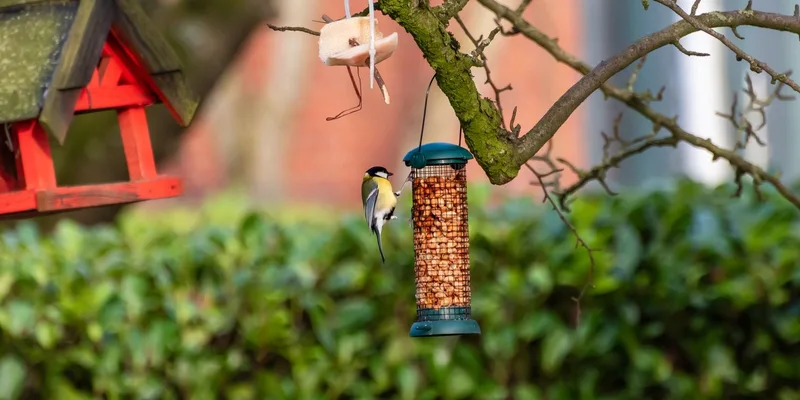
A caged feeder is a normal seed tube, hopper or suet basket with a wire grid built around it at a distance. The grid works purely on body size. Anything that can pass through the opening feeds; anything that cannot, does not. There is no mechanism, so there is nothing to defeat, jam or wear out.
That reliability is why cages are the right choice in the hardest situations, particularly a feeder that has to hang from a branch. A squirrel dropping in from above gets exactly the same result as one climbing from below, which is not true of any weight based design.
Grid Size Decides Everything
The opening in the wire is the specification worth finding in the listing. Standard cages are built around a grid that lets chickadees, titmice, nuthatches, finches, sparrows and downy woodpeckers through and stops squirrels, jays, grackles, starlings and doves. Around an inch and a half is the figure most listings quote for that job.
Wider grids let more birds in and, past a certain point, let a young or slim squirrel in as well. Narrower grids exclude even the medium small birds. If a listing does not give a figure, that is a reason to look at a different one.
The Second Measurement Nobody Checks
The gap between the cage and the seed ports matters just as much. A cage sitting tight against the tube lets a squirrel push an arm through and rake seed out of a port without going anywhere near the inside. Look for a cage that stands well off the feeder body all the way around.
Caged Feeders by Situation
Best Default: Caged Seed Tube
A tube feeder inside a lift off cage is the workhorse. It suits black oil sunflower or a hulled mix, the small birds treat it as a sanctuary, and the squirrels give up within a week. Check that the cage lifts clear of the tube so refilling and cleaning do not become a wrestling match.

When Only the Smallest Birds Should Get In
Some yards are dominated by house sparrows and starlings rather than squirrels. A tighter grid, sold as a small bird feeder, shuts those out too and leaves the chickadees and finches with the seed. Our guide to feeders only small birds can get into covers where that line falls.

Protecting Suet
Suet is the item squirrels work hardest for, and a cage around the basket is the standard defense. Look for one with a tail prop, the flat extension below the cage that lets a woodpecker brace its tail while it feeds, since without it the larger woodpeckers struggle. More in our squirrel resistant suet feeder guide.

For Goldfinches and Nyjer
Nyjer feeders get raided too, and a caged nyjer tube keeps the seed for the finches it was bought for. The grid also stops larger birds sitting on the perches and emptying the tube, which is a bigger cause of finch feeder failure than squirrels are. See our goldfinch feeder guide.

Comparing Cage Styles
The differences worth paying for are the grid, the standoff distance and how easily the cage comes apart.
| Style | Who gets in | Cleaning | Best suited to |
|---|---|---|---|
| Caged seed tube | Chickadees, finches, nuthatches, downies | Easy if the cage lifts off | The main feeder under heavy pressure |
| Caged hopper | Same, with more standing room | Moderate, more corners | Mixed small birds, windy spots |
| Caged suet basket | Woodpeckers, if there is a tail prop | Easy, few parts | Winter suet, high squirrel pressure |
| Narrow grid small bird feeder | Only the smallest birds | Easy | Sparrow and starling problems |
What You Give Up
Audubon is direct about the trade: caged feeders work like weight activated ones in that they exclude larger bird species along with the squirrels. Cardinals, jays, grackles, doves, most medium woodpeckers and anything bigger simply cannot get to the seed.
For some people that is the point, and for others it is a real loss. The usual compromise is to run a cage as the protected feeder and a separate open tray or hopper elsewhere in the yard, accepting that the second one feeds squirrels as well. Our cardinal feeder guide covers what the bigger birds actually need.
Build Quality and Cleaning
Cages live outside in rain and take a beating from animals leaning on them. Powder coated or plastic dipped steel lasts; thin bare wire corrodes at the welds and eventually a section springs open, which is how a young squirrel gets in. Check the weld points rather than the wire gauge.
Cleaning is the other half. A cage that lifts off in one piece turns a fiddly job into a normal one, and a fixed cage over a tube is the kind of thing that quietly stops being cleaned. How often to do it, and what to do if birds at your feeder look sick, is covered with the sources in our feeder cleaning guide.
Frequently Asked Questions
What grid size keeps squirrels out but lets birds in? Listings for standard caged feeders usually quote around an inch and a half, which passes chickadees, finches, nuthatches and downy woodpeckers while stopping squirrels and larger birds. If the listing gives no figure, treat that as a warning.
Will a caged feeder keep cardinals out? Yes. Audubon notes caged feeders exclude larger birds along with squirrels, and cardinals are on the wrong side of that line. Run a separate tray or a weight activated hopper if cardinals matter to you.
Can squirrels reach through the cage? They can if the cage sits close to the seed ports. The gap between the grid and the feeder body is as important as the grid opening itself, and it is the specification most listings do not mention.
Are caged feeders better than weight activated ones? More reliable, because nothing can jam, freeze or need adjusting. Less flexible, because you cannot let the big birds back in. Our squirrel resistant feeder guide compares them side by side.
Do I still need a baffle with a caged feeder? Not for the seed, but a squirrel sitting on the cage all afternoon still keeps birds away and chews at the fittings. A baffled pole makes the whole station calmer, as covered in our baffle guide.
Do cages work against rats? Not really, because rats come for the seed on the ground rather than the seed in the feeder. That is a spillage problem, dealt with in our rodent resistant feeding guide.
The Bottom Line
Buy the cage for the grid opening and the standoff gap, and buy it knowing what it costs you. Small birds get a feeder nothing can take from them, and cardinals, jays and grackles are on the outside for good. In yards where the feeder has to hang from a branch, or where squirrels have beaten everything else, that trade is worth making. Read next: our squirrel resistant feeder guide and the suet cage guide.