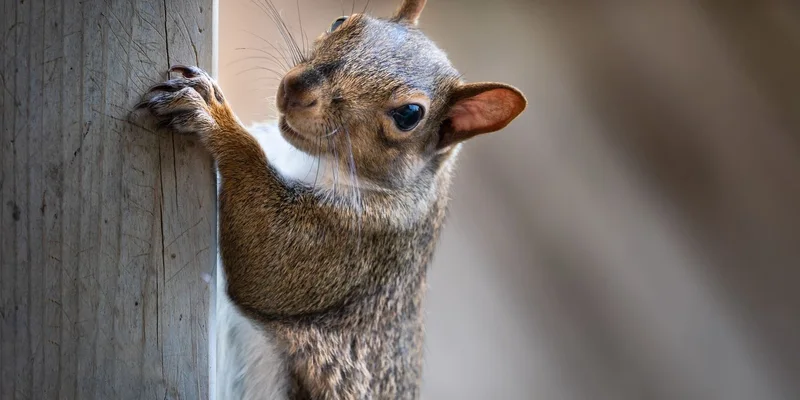
Last updated: August 21, 2026
A baffle is the cheapest piece of hardware in the whole yard and the one that changes the most. It is a smooth barrier that a squirrel cannot get past, either wrapped around the pole below the feeder or hung as a dome above it, and it works on physics rather than on the animal changing its mind.
The reason so many people buy one and stay disappointed is that a baffle only defeats the climb. It does nothing about the jump. Get the shape, the diameter and the mounting height right and the pole becomes a dead end. Get any one of the three wrong and you have added a hat to your feeder.
This article contains affiliate links. If you buy through them, we may earn a commission at no extra cost to you. Learn more.
Quick Answer
Which squirrel baffle shape should you buy?
- Pole mounted feeder: a stovepipe or a torpedo baffle below the feeder, sitting loose enough to tilt and rock.
- Hanging feeder: a dome above it. Cornell Lab suggests a tilting baffle of at least eighteen inches across for squirrels coming from above.
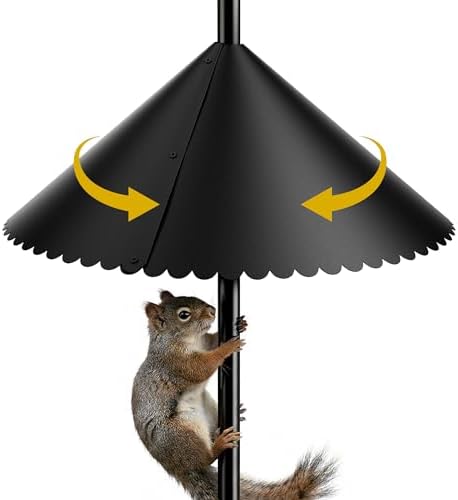
- Existing pole you do not want to take apart: a wrap around baffle that closes with a clamp instead of threading over the top.
- Height matters as much as shape. Audubon puts the baffle around four to five feet off the ground.
Bottom line: match the shape to how the squirrel arrives, then check that the baffle actually fits your pole diameter before you order.
What a Baffle Is Doing
A baffle presents a surface a squirrel cannot grip and cannot get around. On a pole it sits below the feeder as a wide sleeve or cone that the animal has to climb over rather than through, and the good ones are hung loosely enough to tip and slide so a climbing squirrel loses its footing and comes off.
Above a hanging feeder the job is different. A dome makes the feeder unreachable from a branch overhead by giving the animal a smooth curved surface with nothing to hold, and the same tilting action does the rest.
Stovepipe, Cone, Dome and Wrap Around
Four shapes cover almost everything on the market. Stovepipe and torpedo baffles are long cylinders that go under a pole mounted feeder, cones are shorter and flare outward, domes go above a hanging feeder, and wrap around models are split so they close over a pole that is already in the ground.
Where Each Shape Belongs
A stovepipe is the strongest choice under a pole because its length gives the squirrel nothing to reach over. A cone takes up less room and looks tidier, which matters on a small patio, but a big squirrel can sometimes stretch past a shallow one. Domes are the only option for a feeder on a hook or a branch, and wrap arounds exist purely so you do not have to dig up the pole.
Baffles by Situation
Best Default for a Pole Mounted Feeder
A stovepipe baffle on a smooth steel pole is the setup that ends the argument in most yards. Look for one that hangs on a coupler so it can rock rather than sitting rigid, and check the listed inner diameter against your pole before you order. This is the piece people wish they had bought first.
For a Pole That Is Already in the Ground
If the pole is set in concrete or fitted with an arm you would rather not remove, a wrap around baffle is the answer. It splits open, closes around the pole and clamps, so nothing has to come apart. The clamp is the part to look at, since a loose one slides down under a squirrel’s weight and gives it a step.

For a Feeder Hanging From a Branch or Hook
A dome above the feeder is the only thing that helps when the approach is from above. Cornell Lab suggests a tilting baffle at least eighteen inches in diameter for squirrels dropping in from overhead, so width is the specification that matters more than material here.

For a Wooden Post or a 4×4
Square posts and wide wooden posts need a baffle built for that shape, because a round sleeve will not close around them and a squirrel goes straight up the corner. These are usually sold as post baffles with a flat mounting bracket underneath, and the bracket is what carries the weight.

Comparing the Four Shapes
Every shape solves one approach route and ignores the others, which is why the first question is always where the squirrel comes from rather than which baffle is best.
| Shape | Mounts | Stops | Weak point |
|---|---|---|---|
| Stovepipe | Below the feeder, on the pole | Climbing up a round pole | Needs a matching pole diameter |
| Cone or torpedo | Below the feeder, on the pole | Climbing, in a smaller footprint | A shallow cone can be reached past |
| Dome | Above a hanging feeder | Dropping in from a branch | Useless against a climb from below |
| Wrap around | Clamps onto a pole in place | Climbing, without dismantling | Slips if the clamp is not tight |
Height, Diameter and Clearance
Three measurements decide whether the baffle works. Audubon recommends setting a pole baffle roughly four to five feet off the ground so a squirrel cannot leap over the top of it, and siting the whole thing eight to ten feet from anything it can launch from.
Diameter is the second one. A narrow baffle can be reached around by a stretched out squirrel, and Cornell Lab’s guidance for an overhead baffle is at least eighteen inches across for that reason. The third is the inner diameter, which simply has to match your pole, and is the most common reason a baffle goes back in the box.
The Pole Underneath Matters Too
A baffle on a rough, textured or jointed pole is only half a barrier, because the joints and brackets give a squirrel something to stand on below it. Smooth steel is what you want, and our feeder pole guide covers the diameters that baffles are actually made for.
Why Baffles Fail
The three failures are always the same. The baffle is too low and the squirrel jumps over it. The feeder is within jumping range of a fence, a branch or a roof edge, so the pole never comes into it. Or the baffle is bolted rigid instead of hanging loose, which turns it into a shelf rather than a slide.
There is a fourth, quieter one: a bird feeder hanging so low that the squirrel can reach it from the ground, or a pole arm long enough that a jump from a nearby chair reaches the feeder directly. Walk the yard and look for the launch points before you blame the hardware, which is the survey in our deterrent guide.
Frequently Asked Questions
How high should a squirrel baffle be? Audubon suggests around four to five feet off the ground for a pole mounted baffle, so the top of it is above a squirrel’s standing jump. Lower than that and the animal simply hops over the whole thing from the grass.
What size baffle do I need? Wide enough that a squirrel cannot reach around it. Cornell Lab suggests at least eighteen inches in diameter for a tilting baffle hung above a feeder. For a pole baffle, check the inner diameter against your pole first, since that is the spec that decides whether it fits at all.
Does a baffle go above or below the feeder? Below, if the feeder is on a pole and the squirrel climbs. Above, if the feeder hangs from a branch or a hook and the squirrel drops onto it. Yards with both approach routes sometimes need both.
Will a baffle work on a shepherd hook? Only if the hook is tall enough to put the baffle at height and the arm is long enough that the feeder is out of reach from the pole. Many decorative hooks are too short for either. See our shepherd hook guide for the sizes that work.
Can I make a baffle from a bucket or a stovepipe? Cornell Lab notes that bird watchers have used vinyl records, plastic salad bowls, soda bottles and stovepipes as barriers. Homemade versions work on the same principle, as long as they are wide enough, high enough and free to tilt.
Do baffles stop raccoons as well? They help, but raccoons are heavier and more patient, and they mostly come at night. The reliable answer there is bringing the feeder in after dark, which is covered in our guide to raccoons and bears at the feeder.
The Bottom Line
Pick the shape by the approach route, not by the picture. Stovepipe or torpedo under a pole, dome above a hanging feeder, wrap around when the pole is staying where it is. Then set it around four to five feet up, keep the whole setup eight to ten feet clear of launch points, and let it hang loose enough to tilt. Read next: the feeder pole guide for diameters that fit, and the squirrel resistant feeder guide for the mechanism that goes on top.