Last updated: August 21, 2026
The first time a pileated woodpecker lands on a small wire suet cage, you understand the problem instantly. The bird is the size of a crow, it is trying to hold on to a cage the size of a paperback, and its tail has nowhere to go. It works at the cake for a few seconds, gives up on the angle, and leaves.
A tail prop is the board that fixes that. It extends below the cage so the bird can brace its tail against something solid, exactly as it would against a tree trunk, and it turns a feeder the big woodpeckers tolerate into one they settle on. This guide covers what to look for and which version belongs on your pole.
This article contains affiliate links. If you buy through them, we may earn a commission at no extra cost to you. Learn more.
Quick Answer
Do you need a suet feeder with a tail prop?
- If large woodpeckers visit, yes. Cornell explains that woodpeckers brace their stiff tail feathers against the wood while they work.
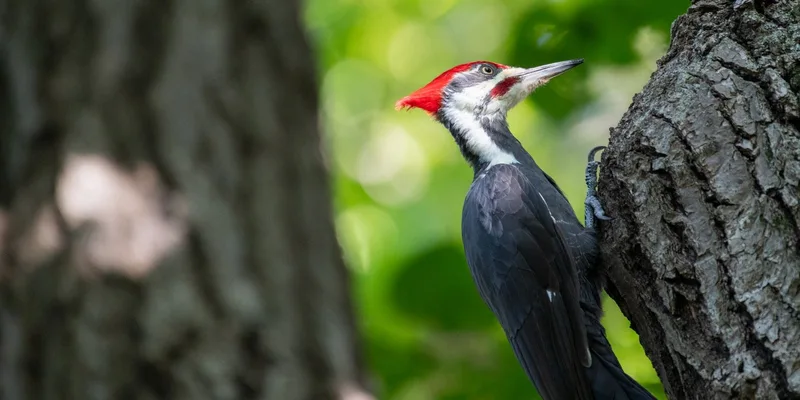
- The prop has to be long. A Pileated Woodpecker is the largest woodpecker in North America, per Cornell, and a short board does nothing for it.
- Look for a solid board rather than a wire loop, and a roof if the feeder hangs in the open.
- Small clinging birds still use it, so you lose nothing by having one.
Bottom line: buy the longest prop you can hang, and pair it with a cake that holds up in your climate.
Why a Tail Prop Matters at All
A woodpecker does not perch, it climbs, and it holds position using three points of contact: two feet and a tail. Cornell Lab educational material describes it directly, that woodpeckers brace their tails against the wood, and that particularly large tail feather shafts are what make the tail stiff enough to work as a brace.
Take that third point of contact away and a big bird is hanging from its feet alone on a swinging cage. Small woodpeckers manage. A Pileated Woodpecker, which Cornell describes as the largest woodpecker in North America, mostly does not, which is why people with pileateds in the neighborhood buy this shape of feeder and nothing else.

How Long the Prop Needs to Be
Longer than it looks in the product photo. The prop has to extend below the bottom of the cake by more than the bird’s tail length, and a pileated tail is a serious piece of equipment. Feeders marketed for woodpeckers in general often carry a short lip that suits a downy and does nothing for the birds you bought it for.
If pileateds visit, treat prop length as the first specification and everything else as secondary. If your regulars are downies, hairies and red bellieds, a moderate prop is plenty, and the feeder will still be usable when a bigger bird turns up. Our woodpecker suet guide goes into which species you are likely to see on which feeder.
Board, Not Wire
Some feeders use a wire loop or a thin bar as the prop. It is better than nothing, but a flat board gives a bird a surface to press against rather than a line to balance on, and it holds up better to being landed on repeatedly by a heavy bird.

Roof, Capacity and Material
A roof is worth having on any suet feeder that hangs in the open, because it keeps rain off the cake and shades it in summer. Suet that has been rained on crumbles out of the cage in lumps, and lumps on the ground are what draws rodents to the area, which we cover in rat proof feeders.
Capacity is a separate decision. Double cake feeders halve the refills and give two birds room at once, which matters if you have a busy woodpecker yard, but they weigh more and need a hook that can take it. Recycled plastic bodies wash clean and shrug off weather; cedar and other woods look better and absorb some fat over time.

Tail Prop Feeders Compared
Prop length is the specification that decides which birds can use the feeder comfortably. The rest is capacity and weather protection.
| Version | Prop length | Capacity | Best suited to |
|---|---|---|---|
| Short lip cage | Minimal, a bar or wire | One cake | Downy and hairy woodpeckers |
| Standard board prop | Extends below the cake | One cake | Red bellied and flicker sized birds |
| Long prop, single cake | Longest available | One cake | Yards with pileated visits |
| Long prop, double cake | Long, plus two feeding faces | Two cakes | Busy yards, fewer refills |
Where to Hang It
Woodpeckers come from trees, so a tail prop feeder works best within sight of a trunk rather than out in the middle of a lawn. On a pole it needs to hang clear so a long tailed bird can land without hitting anything, and on a tree hook it should sit away from the trunk so squirrels cannot simply step across.
The prop itself is a gift to a squirrel, since it is a board to stand on. If squirrels are already working your feeders, plan on a baffle under the feeder rather than hoping the design deters them, which our baffle guide covers, or move to a caged version.

Which Cake to Put In It
Standard rendered suet cakes fit almost every cage on the market, and the choice that matters is the blend rather than the brand. Peanut and nut blends pull woodpeckers hardest; seed heavy cakes bring in more of everything else. Insect blends are the third common option and are worth trying in nesting season.
In hot months, switch to a no melt or summer blend, because plain fat softens and can smear onto feathers. Our suet cake guide covers rendered fat, summer blends and how to store a box of cakes without ruining them.
Frequently Asked Questions
What is a tail prop on a suet feeder? An extended board below the cage that a woodpecker can brace its tail against. Cornell explains that woodpeckers brace their stiff tail feathers against wood while feeding, and the prop reproduces that surface on a hanging feeder.
Do I need one for pileated woodpeckers? If you want them to settle and feed, effectively yes. Cornell describes the Pileated Woodpecker as the largest woodpecker in North America, and a bird that size cannot hold a small swinging cage comfortably without a brace.
Will small birds still use it? Yes. Chickadees, nuthatches and downy woodpeckers use these feeders without any trouble, so adding a prop costs you nothing in smaller visitors.
Does a tail prop help against starlings? No, it works the other way, since a prop gives a standing bird somewhere to stand. For starlings, the tool is a cage that only opens at the bottom, which Project FeederWatch describes as starling resistant.
Wood or recycled plastic? Recycled plastic washes clean and handles weather without warping. Wood looks better and is easier to find with a long prop. Both work; check the latch and how far the cage opens before you decide.
How high should it hang? Somewhere you can reach for refills, with clear space below the prop and enough distance from a trunk or fence that squirrels cannot step across. A baffle underneath is the reliable answer if they can jump to it.
The Bottom Line
A tail prop is not a gimmick, it is the third point of contact a woodpecker uses on a tree. Buy the longest prop your hook can carry if pileateds visit, choose a solid board over a wire bar, add a roof for an exposed spot, and switch to a summer blend when the heat arrives. Read next: our woodpecker suet feeder guide and the full suet feeder comparison.