Last updated: August 21, 2026
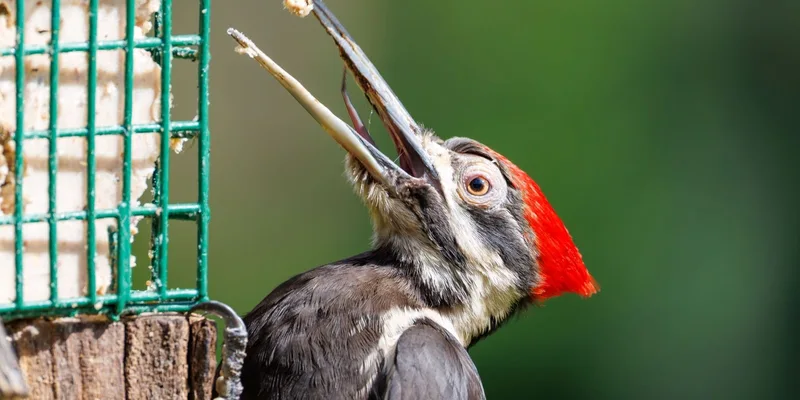
A woodpecker does not perch. It clings to a vertical surface and props itself with its tail, using the stiff feathers as the third leg of a tripod. That is why a small wire cage swinging from a branch, which a chickadee treats as perfectly normal, gets a downy woodpecker landing, scrabbling, and leaving again within seconds.
Solve the bracing problem and woodpeckers become some of the most reliable visitors you will get, including the large ones that most people assume never come to feeders. This guide covers the tail prop, the upside down cage, and how the size of the woodpecker in your area changes what you should buy.
This article contains affiliate links. If you buy through them, we may earn a commission at no extra cost to you. Learn more.
Quick Answer
What suet feeder works best for woodpeckers?
- A cage with a tail prop, the flat board that extends below the suet.
- A mount that does not swing: a trunk, a pole, or a bracket rather than a thin branch.
- Bottom access if starlings are stripping the cake, since woodpeckers still feed from underneath.
- A taller feeder if the large woodpeckers in your area come in, because they need more board.
Bottom line: buy the tail prop version, mount it on something solid, and add a bottom access cage if starlings arrive.
Why the Tail Prop Exists
A tail prop is a flat extension below the suet cage that gives a woodpecker somewhere to press its tail while it works. On a tree the bird braces against bark. At a feeder without a board it has nothing, so it hangs from the wire with its whole weight on its feet, which is possible but awkward and short lived.
The result is visible immediately. Give a red bellied woodpecker a board and it settles into the same posture it uses on a trunk, stays for minutes rather than seconds, and comes back. That is the entire reason this category of feeder exists, and it is the only feature that genuinely separates a woodpecker feeder from a general suet cage.
Who Else Benefits
Nuthatches and chickadees use tail prop feeders happily even though they do not need the board. Cornell’s All About Birds account for the White breasted Nuthatch recommends putting out suet along with large nuts such as sunflower and peanuts, and notes that nuthatches are more likely to use hopper, tube or suet feeders than exposed platform feeders.
Which Woodpeckers Come to Suet
Project FeederWatch, run by the Cornell Lab of Ornithology, names woodpeckers among the birds that feed from suet cages, alongside nuthatches and chickadees, and describes suet generally as a good choice for attracting insect eating birds. In most yards the regulars are the smaller species, with larger ones arriving occasionally.
Which species you get depends on where you live, and Cornell’s range maps on All About Birds are the practical way to find out. Downy and hairy woodpeckers cover most of the country, red bellied woodpeckers the East and the central states, northern flickers very widely, and the large pileated woodpecker where mature forest sits near the yard.
Sizing for the Big Ones
A pileated woodpecker is a much larger animal than a downy and needs correspondingly more to brace against. If they are in your area, a tall feeder with a long board is worth the extra money, because the standard small cage simply does not give that bird a workable position.
Woodpecker Suet Feeders by Situation
Best All Around: The Single Cake Tail Prop
One cake, a wire cage and a board below it. This is the default and it suits nearly every yard with downy, hairy and red bellied woodpeckers. Look for a board that is genuinely long rather than a token lip, and a cage that latches shut rather than hooking closed.

When One Cake Does Not Last
A double cake tail prop feeder holds twice the suet on one hook, which matters in a cold month when a family group is working it daily. It also spreads the birds out slightly, which reduces the standoffs on a busy feeder.

If Starlings Empty It
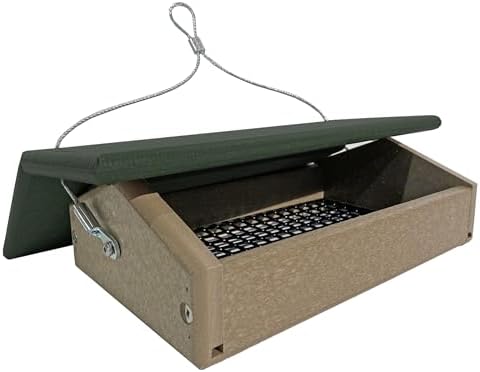
Switch to bottom access. Project FeederWatch describes cages that are only accessible at the bottom as starling resistant while still allowing woodpeckers, nuthatches and chickadees to feed. Woodpeckers manage the upside down approach comfortably once they have worked it out.
For the Largest Woodpeckers
A tall suet log or an extended cage with a long back panel gives a big bird enough surface to settle against. These are heavier feeders and want a solid mount rather than a branch, which is worth planning before it arrives.

Comparing the Options
What separates woodpecker suet feeders is the bracing surface, the access, and how much they hold. Here is the short comparison.
| Feeder | Bracing surface | Starling behavior | Best suited to |
|---|---|---|---|
| Single cake tail prop | Board below the cage | Open access, starlings can feed | Downy, hairy and red bellied |
| Double cake tail prop | Board below both cakes | Open access | Busy winter yards |
| Bottom access cage | Cage sides, no board | Described as starling resistant | Yards losing cakes to flocks |
| Tall suet log or panel | Long back and board | Open access | Pileated and large flickers |
Mounting: The Part People Skip
Woodpeckers want a feeder that does not move. A cage bolted to a tree trunk, screwed to a fence post or hung from a rigid pole bracket gets used far more than the same cage swinging from a thin branch. Movement is the thing that ends a visit before it starts.
Height is flexible. These birds are comfortable at any level a trunk offers, so set the height for your own view and for squirrel management rather than for the birds. The geometry of that is in our baffle guide.
Summer Suet
Standard suet softens in heat, and a soft cake can smear onto feathers. Either take the feeder down in the hottest weeks or use a no melt summer cake, which most brands sell alongside the standard type. Our notes on the cakes themselves are in suet cakes.
Frequently Asked Questions
Do woodpeckers really need a tail prop? They do not strictly need one, but they use a feeder with one far more. A woodpecker braces with its stiff tail feathers against a trunk, and the board reproduces that surface. Without it the bird hangs from the cage and usually leaves sooner.
What suet feeder keeps starlings off? A bottom access cage. Project FeederWatch describes cages that are only accessible at the bottom as starling resistant while still allowing woodpeckers, nuthatches and chickadees to feed. It reduces losses rather than eliminating them.
Will a pileated woodpecker use a regular suet cage? Sometimes, but not comfortably. A large bird needs a long board and a solid mount, which is what the tall log and extended panel feeders provide. Whether you get them at all depends on your area, and Cornell’s range maps are the place to check.
Where should I mount a woodpecker suet feeder? On something rigid: a trunk, a fence post or a pole bracket. Swinging feeders are the most common reason woodpeckers land once and do not return.
What goes in it besides suet? Most cages take a standard cake, and some brands make peanut or fruit versions of the same block. Cornell’s backyard tips for nuthatches and chickadees also list peanuts and sunflower, which a mesh peanut feeder on the same pole covers.
Do woodpeckers come to seed feeders too? Occasionally. Project FeederWatch lists occasional woodpeckers among the birds black oil sunflower attracts, so a hopper on the same pole is not wasted. Suet is still what brings them in reliably. The wider comparison is in our suet feeder guide.
The Bottom Line
Buy the tail prop, mount it on something that does not move, and switch to bottom access if starlings find it. Size up only if the large woodpeckers in your region actually visit yards near you, which Cornell’s range maps will tell you faster than trial and error. The wider shape comparison is in our suet feeder guide, and the cake side is covered in suet cakes.