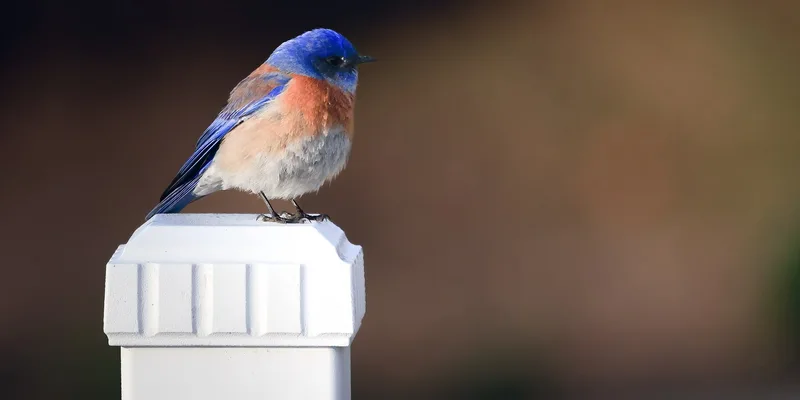
Last updated: August 21, 2026
Bluebirds are the one species where a full seed feeder is completely beside the point. They do not eat sunflower, they will not touch safflower, and a yard with four feeders and a hopper full of premium mix can go years without a single bluebird landing in it. They are insect and fruit birds, and the only reliable way to feed them is to offer something that used to crawl.
That is what a bluebird feeder is: a container of mealworms with a barrier that keeps everything bigger out. The barrier is the part that decides whether the worms last five minutes or all morning, because a dish of mealworms in the open is a mockingbird’s lunch. This guide covers the two formats that work and how to get bluebirds using one.
This article contains affiliate links. If you buy through them, we may earn a commission at no extra cost to you. Learn more.
Quick Answer
What kind of feeder do bluebirds use?
- A mealworm feeder, not a seed feeder. Audubon calls mealworms one of the only food items that reliably attract bluebirds.
- Two formats work: a hopper style that dispenses dried worms through small holes, and a cage style with holes just big enough for bluebirds.
- Audubon notes freeze dried worms lack the moisture nestlings need, so live worms suit the breeding season.
- NestWatch research found the right nest box is far more effective at attracting Eastern Bluebirds than the right feeder.
Bottom line: a caged mealworm feeder plus a proper nest box beats any feeder on its own.
Why Seed Feeders Do Nothing
Bluebirds eat ground dwelling insects and fruit, which is why they hunt from a low perch over open grass rather than working a feeder pole. Audubon notes they consume a variety of ground dwelling insects such as crickets and caterpillars, and that they especially enjoy mealworms. Nothing in that description involves cracking a seed.
So the yard that gets bluebirds is not the yard with the best seed. It is the yard with open, short grass, a few low perches, water, and a food they actually eat. Our feeder and species table lays out where bluebirds sit relative to the seed eating crowd.
The Two Formats That Work
Audubon describes both directly: mealworms are best provided in one of two types of feeder to avoid being quickly depleted by bigger birds. The first is hopper style, which dispenses freeze dried worms through small holes. The second is cage style, which encloses the worms, live or dried, often on a platform or in a cup, behind wire with holes just big enough for bluebirds but not larger species.
In practice the cage is the one most people end up with, because it works with either kind of worm and because the entry holes do the exclusion job that an open dish cannot. Mockingbirds, jays, starlings and robins all like mealworms every bit as much as bluebirds do.

Hopper Style, Dried Worms Only
A hopper feeder that meters dried worms out through small holes is the low maintenance option. It keeps a supply available without you having to top it up daily and it stays tidy, but it only works with dried worms, so it is a shoulder season and winter feeder rather than a nesting season one.

Live Worms in the Nesting Weeks
Audubon is specific about the difference: freeze dried mealworms do not have the moisture that budding bluebird nestlings need to stay hydrated, so during breeding season you should supply live mealworms that bluebird parents can give to their chicks. That is the one point in the year where the format of the worm genuinely matters.
Live worms need a dish with slick, vertical sides so they cannot climb out, which is why cage feeders for the breeding season usually have a glass or smooth plastic cup inside rather than a flat tray. Outside nesting season, dried worms are simpler and keep far better. Our dried mealworm guide covers which birds besides bluebirds will take them.

Feeder Formats Compared
The exclusion and worm type columns follow the Audubon description of the two mealworm feeder styles. Placement is the practical part.
| Format | Keeps bigger birds out | Worm type | Best suited to |
|---|---|---|---|
| Cage with entry holes | Yes, holes sized for bluebirds | Live or dried | Year round, the default choice |
| Hopper with small holes | Yes, by hole size | Dried only | Low maintenance feeding |
| Open dish or tray | No | Live or dried | Training birds to a spot, briefly |
| Pole mounted cage | Yes, plus baffle options | Live or dried | Open lawns with squirrels |
Getting Them to Notice It
Bluebirds do not investigate feeders the way a chickadee does, so the usual approach is to start with the worms visible and then close the feeder down. A few worms in an open dish on the feeder for the first days, in a spot with a low perch above it, lets a bird see food from its hunting perch rather than having to work out that a cage contains something.
Once birds are coming, move the worms inside the cage. Keep the timing consistent, because bluebirds learn a schedule quickly and a morning feeding at the same time gets found faster than a random handful whenever you remember.
Placement Beats Everything
Put it over open, short grass with a fence line, a wire or a low branch within a few yards, and away from the busy seed feeder rather than next to it. The crowd, spilled hulls and squabbling at a sunflower station is exactly the environment a bluebird avoids.
The Nest Box Does More Than the Feeder
This is the part worth taking seriously before you spend anything. NestWatch reports that the right bird house is far more effective at attracting Eastern Bluebirds than the right food, even live mealworms in the right feeder, and Audubon makes the same point that leaving mealworms out will likely not be enough on its own.
So the order of operations is a nest box first, sited and sized to NestWatch guidance, and a mealworm feeder second as the thing that keeps the pair in view. Our bluebird house guide covers hole size, box depth and predator guards, and where to hang a birdhouse covers placement and height.
Frequently Asked Questions
What do you put in a bluebird feeder? Mealworms. Audubon describes them as one of the only food items that reliably attract bluebirds, offered either live or freeze dried depending on the season. Seed feeders do not work for this species.
Live or dried mealworms? Dried for most of the year, live during breeding season. Audubon notes freeze dried worms do not have the moisture budding nestlings need, so parents should have live worms to carry to the chicks.
How do I keep other birds out of the mealworms? Use a cage with entry holes sized for bluebirds, which is exactly the design Audubon describes for keeping bigger birds from depleting the supply. An open dish will be found by mockingbirds and starlings within a day.
Will bluebirds eat suet or fruit? They take fruit, and some yards see them at soft suet or suet dough, particularly in cold weather. Mealworms remain the food that reliably brings them in.
Where should the feeder go? Over open, short grass with a low perch nearby and at a distance from the seed feeders. Bluebirds hunt from perches over open ground and avoid the crowd at a busy sunflower station.
Do I need a nest box as well? It is the bigger lever. NestWatch found the right bird house far more effective at attracting Eastern Bluebirds than the right food, so a properly sized box is the first purchase and the feeder is the second.
The Bottom Line
A bluebird feeder is a mealworm container with a barrier, and the cage style with bluebird sized entry holes is the version that works all year. Use dried worms outside the nesting weeks and live worms while parents are feeding chicks, place it over open grass with a low perch nearby, and put a proper nest box up first, because that is what the research says brings bluebirds to a yard. Read next: our dried mealworm guide and the bluebird house guide.