Last updated: August 21, 2026
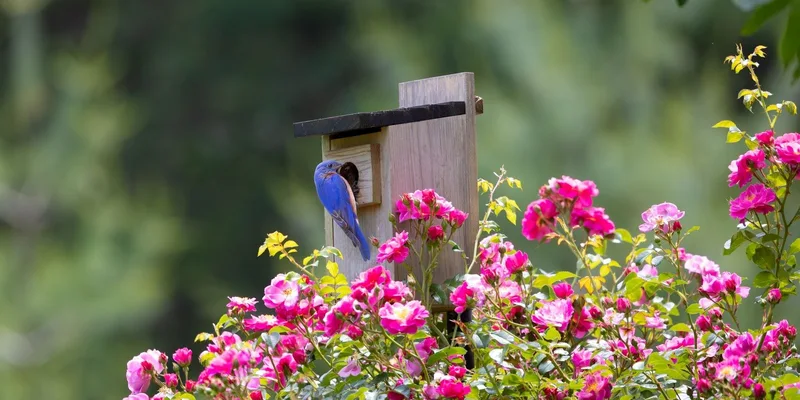
A bluebird house is one of the few things you can put in a yard where getting the details right genuinely changes the outcome. A box with the wrong hole size lets in the competition. A box on a fence post with no guard is a snack dispenser for raccoons and rat snakes. A box with a perch on the front is an invitation to exactly the birds you did not want. None of that is fussiness; it is what decides whether a pair fledges young or abandons the site.
The good news is that the specification is published and settled. NestWatch, the nest box program run by the Cornell Lab of Ornithology, gives dimensions and placement for Eastern Bluebirds and describes what a good birdhouse has in it. This guide walks through those, then covers what to look for when you are buying a box rather than building one.
This article contains affiliate links. If you buy through them, we may earn a commission at no extra cost to you. Learn more.
Quick Answer
What makes a bluebird house one that bluebirds will use?
- The right hole. NestWatch notes Eastern Bluebirds can nest in boxes with holes as small as one and a half inches in diameter.
- The right box. NestWatch gives Eastern Bluebirds a box of five and a half by five and a half by nine inches.
- The right pole. NestWatch puts the mounting height at four to six feet, on a pole, with the hole facing east toward open habitat.
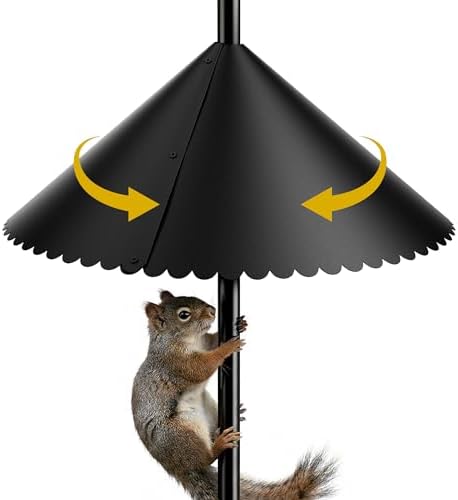
- A predator guard. NestWatch lists cone baffles, stovepipe baffles and Noel guards as the options.
Bottom line: buy an untreated wood box with the right hole and a hinged side, then spend the rest of your attention on the pole and the guard.
Hole Size Is the First Filter
The entrance hole decides who gets in. NestWatch notes that Eastern Bluebirds can nest in boxes with holes as small as one and a half inches in diameter, and that lower limit is doing real work: it lets bluebirds through while excluding larger birds that would otherwise take the box, most obviously European Starlings.
What it does not exclude is House Sparrows, which are smaller than bluebirds. There is no hole size that keeps them out and bluebirds in, which is why sparrow management is a separate subject from box design. NestWatch mentions that some people drill a second, identical entrance hole beside the first as a deterrent.
Western and Mountain Bluebirds Are Not the Same Box
The figures above are the Eastern Bluebird specification. Western and Mountain Bluebirds have their own NestWatch pages with their own dimensions, and if you are west of the Rockies that is the page to check before ordering rather than assuming one box covers all three. Our birdhouse hole size table pulls the species together in one place.
What a Good Box Is Made Of
NestWatch is specific about construction: untreated, unpainted wood, preferably cedar, pine or cypress, put together with galvanized screws rather than nails, which can loosen over time. Treated wood, paint and staples are all on its list of things to avoid, and that rules out a lot of decorative boxes sold as garden ornaments.
Thickness matters for the same reason as material. A box built from thin ply heats fast in sun and offers no insulation, while proper timber holds a steadier temperature inside. Weathered grey cedar is not a defect, it is what an untreated box is supposed to look like after a season.
Drainage, Ventilation and the Roof
The features that keep a brood alive are the ones nobody photographs. NestWatch calls for at least four drainage holes in the floor, three eighths to one half inch in diameter, with the floor recessed at least a quarter inch from the bottom so water does not sit in it. That is what stops a nest going sodden after a night of rain.
For heat, NestWatch specifies two ventilation holes of five eighths inch on each of the side walls near the top, four in total. The roof should slope and overhang, two to four inches at the front and two inches at the sides, with shallow cuts underneath acting as gutters. Check all of that against the listing photos before you buy.
No Perch, and a Side That Opens
NestWatch is blunt about external perches: avoid them entirely, because they are unnecessary and help predators access the box. Cavity nesting birds do not need somewhere to stand outside their own hole. A perch on the front is the clearest sign a box was designed for a gift shop shelf.
The other feature to insist on is a hinged side door with a sturdy latch, which NestWatch lists for monitoring and cleaning. A box you cannot open is a box you cannot check, and cleaning out an old nest between broods is part of running one.
Bluebird Houses by Situation
Best All Around Choice
An untreated cedar box with a one and a half inch hole, a hinged side and visible drainage and ventilation holes is the pick, and it is not an expensive category. Compare the listing against the NestWatch feature list rather than against the photo styling, since the differences that matter are all small holes and hinges.

Getting It on a Pole
NestWatch puts bluebird boxes on a pole at four to six feet and warns against mounting on trees, where predators can jump to the box. A smooth metal pole is what makes a baffle work, so the pole and the guard are really one purchase rather than two.

Keeping Climbing Predators Off
NestWatch lists three predator guard types: a cone baffle, which is a metal collar around the pole, a stovepipe baffle of about eight inches in diameter and twenty four to thirty six inches long, and a Noel guard, a wire mesh tube fitted to the front of the box. A pole mounted box without one of these is only half installed.
Guarding the Entrance Itself
A Noel guard is the one that addresses reach rather than climb: a mesh tunnel on the front of the box that stops a raccoon or a cat reaching in through the hole. It fits boxes that are already mounted, which makes it the usual retrofit when something has raided a box you thought was safe.

The Eastern Bluebird Specification in One Table
These figures are from the NestWatch page for the Eastern Bluebird and its general guidance on birdhouse features. Check the relevant NestWatch species page if you are in Western or Mountain Bluebird range.
| Feature | NestWatch guidance | Why it matters | Check on the listing |
|---|---|---|---|
| Entrance hole | As small as one and a half inches across | Lets bluebirds in, keeps starlings out | Stated hole diameter |
| Box size | Five and a half by five and a half by nine inches | Room for the brood, depth from the hole | Interior dimensions, not exterior |
| Mounting | On a pole, four to six feet up | Predator access and monitoring height | Whether a pole is included |
| Guards and doors | Cone, stovepipe or Noel guard; hinged side | Raiding and cleaning between broods | Latch type and guard compatibility |
Where the Box Goes
Placement is where most boxes go wrong. NestWatch describes bluebirds as birds of grassland and open woodland, and says to position the box so the entrance hole faces east and toward open habitat. A box tucked against a hedge in a shaded suburban border is in the wrong habitat before anything else is considered.
Spacing matters too. NestWatch gives roughly three hundred feet between separate nest box pairs, and where Tree Swallows are competing, pairs of boxes fifteen to twenty feet apart with those pairs about three hundred feet from each other. Our guide to where to hang a birdhouse covers the practical side of finding those spots in a normal yard.
Competition, Monitoring and the Rules
Bluebird boxes attract other cavity nesters, and Tree Swallows, chickadees and wrens all use them legitimately. House Sparrows and European Starlings are the two that cause the most frustration, and the tools available to you as a backyard host are exclusion and box design rather than anything else. NestWatch’s second hole suggestion sits in that category.
What is and is not permitted with nesting birds is set in law and varies, so that is a question for your state wildlife agency rather than for a buying guide. Monitoring is different: NestWatch exists to collect nest records, and opening a box carefully to check a nest is a normal part of hosting one.
Frequently Asked Questions
What size hole does a bluebird house need? NestWatch notes that Eastern Bluebirds can nest in boxes with holes as small as one and a half inches in diameter. Western and Mountain Bluebirds have their own NestWatch pages, so check the one for your species before buying.
How high should a bluebird house be mounted? NestWatch gives four to six feet, on a pole, with the entrance hole facing east and toward open habitat. It advises against mounting boxes on trees, where predators can jump across to them.
Do bluebird houses need a perch? No. NestWatch says to avoid external perches entirely, because they are unnecessary and help predators access the box. A perch on the front is a sign the box was designed as decoration.
What predator guard should I use? NestWatch lists cone baffles, stovepipe baffles of about eight inches in diameter and twenty four to thirty six inches long, and Noel guards, which are wire mesh tubes on the front of the box. A pole mounted box should have one of them.
Should I paint or stain a bluebird box? No. NestWatch calls for untreated, unpainted wood, preferably cedar, pine or cypress, and lists treated wood and painted surfaces among the materials to avoid. Let it weather.
Will bluebirds visit my feeders too? They can, though not for seed. Mealworms behind a cage is the usual route, which is what our bluebird feeder guide covers, and a nest box in the right habitat makes a feeder far more likely to work.
The Bottom Line
Buy an untreated wood box with a one and a half inch hole, no perch, real drainage and ventilation, and a hinged side you can open. Then put as much thought into the pole and the baffle as into the box itself, because that is what decides whether a nest survives the season. Read next: our birdhouse hole size table for other species, where to hang a birdhouse, and the bluebird feeder guide for the mealworm side.