Last updated: August 21, 2026
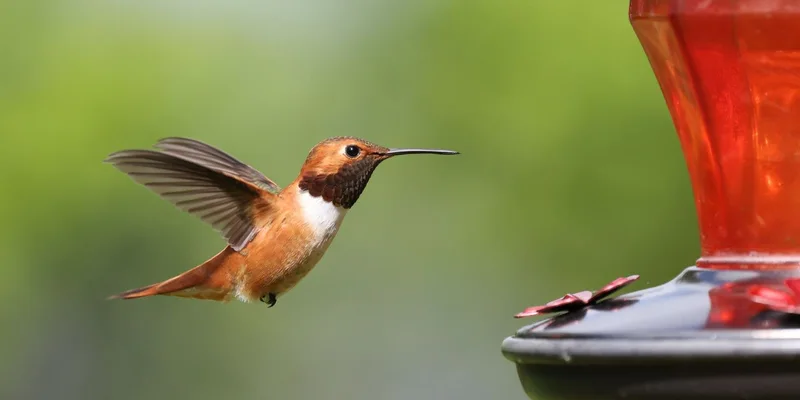
A hummingbird at a feeder is a harder subject than anything else in the yard. It arrives without warning, holds position for a couple of seconds, and its wings are moving far too fast for a casual camera to freeze. Point a standard camera feeder at it and you get a green blur near a red port, which is why hummingbird camera feeders are built differently rather than just smaller.
The two things that change are focus distance and trigger speed. The lens has to be sharp at a few inches instead of a foot, and the camera has to be awake and recording before the bird has finished drinking. Everything else, the nectar reservoir, the ant defense, the bee guards, is the same set of problems any nectar feeder has, with a battery bolted on. This guide covers both halves.
This article contains affiliate links. If you buy through them, we may earn a commission at no extra cost to you. Learn more.
Quick Answer
What should you look for in a hummingbird feeder with camera?
- A lens that focuses close, because the bird will be inches from the glass rather than across the perch.
- A fast trigger and a pre roll, so the clip starts before the bird has already left.
- A reservoir you can take apart completely, since nectar feeders need washing far more often than seed feeders.
- Built in ant and bee defenses, or at least a hanger that accepts an ant moat.
Bottom line: close focus and trigger speed decide the footage, and a feeder that opens fully decides whether you keep using it.
Why Hummingbirds Need a Different Camera
Distance is the reason. On a seed feeder the bird lands on a perch a fixed distance from the lens, and any camera focused at that spot works. A hummingbird hovers at the port, often closer than a seed feeder camera can focus, and it moves in and out of that plane constantly. A lens set for a foot away renders it soft.
Speed is the second reason. Many hummingbird visits are over in a few seconds. A camera that takes a moment to wake, focus and start recording produces clips of an empty feeder with a shadow leaving the frame. Pre roll buffering, where the camera is always holding the last second or two, is the feature that fixes this, and it is worth looking for by name on the listing.
The Feeder Half of the Problem
Underneath the electronics this is still a nectar feeder, and nectar feeders fail in predictable ways. They leak when the seal warps, they grow mold in the ports, they attract ants down the hanging wire, and they get monopolized by wasps in late summer. A camera does not help with any of that, it just documents it.
So judge the feeder body the way you would judge any nectar feeder. A saucer design, where the nectar sits below the ports rather than above them, leaks less and washes more easily than an inverted bottle. Ports that unscrew rather than press in are the ones you can actually get clean.
Nectar, Ants and Bees
Fill it with plain sugar water made to the published recipe from Audubon or Cornell Lab of Ornithology, with no dye and no honey. The exact proportions and the reasons behind them are in our nectar recipe guide, which quotes the sources directly rather than offering variations.
For ants, an ant moat on the hanger is the standard answer, and it works by water rather than by anything sticky. Never put grease or petroleum jelly on a hanger or pole, because it gets onto feathers. For bees and wasps, the fix is deeper ports, bee guards and moving the feeder, not spraying anything.
Hummingbird Camera Feeders by Situation
Best All Around Pick
A saucer style nectar feeder with a close focusing camera in the roof, a solar panel and a reservoir that comes apart in two or three pieces. That combination handles the daily reality of nectar feeding, which is washing, and still gets you the hovering shot that made you want one.

For a Balcony or a Window
Where there is no pole and no branch, the useful version is one that mounts to a rail or to glass with suction. The bird comes very close, the light is usually good, and the camera is easy to reach for charging. See our window camera feeder guide for what suction cups can and cannot hold.

If Ants Are the Recurring Battle
Some models integrate a moat into the hanger rather than leaving you to add one. That is worth paying for if your feeder hangs from a hook under an eave, which is the classic ant highway. The alternative is a separate moat above the feeder, covered in our ants guide.

When You Already Own a Seed Camera Feeder
A few brands sell a hummingbird attachment or a nectar module that shares the app and the account with their seed feeder. If you are already invested in one app, that keeps everything in one timeline. Check that the attachment fits the specific model you own before ordering.

Comparing the Body Shapes
Camera aside, nectar feeders come in a few shapes and they behave differently in heat, in wind and at the sink. This is the part that decides whether the feeder is still in use in August.
| Shape | Leak behavior | Cleaning | Camera fit |
|---|---|---|---|
| Saucer, nectar below ports | Least prone to dripping | Two or three parts, easy | Camera usually in the roof, good angle |
| Inverted bottle | Can drip as it warms | Narrow neck, needs a brush | Camera on a stalk above the ports |
| Window mounted dish | Small volume, low risk | Comes indoors to wash | Very close focus, easy charging |
| Seed feeder with nectar module | Depends on the module | Extra parts to track | Shares the app you already use |
Placement, Light and the Shot You Want
Hummingbird footage lives or dies on background and light. A feeder with open sky behind it gives you a bright blob and a dark bird. A feeder with foliage two or three feet behind the ports gives you a clean, dim backdrop that makes the bird stand out, and it also gives the bird a perch to guard from.
Shade matters for the nectar as well as the picture. Nectar in full afternoon sun spoils faster and needs changing more often, which is a chore you will feel. Our guide to where to hang a hummingbird feeder in a small yard covers the tradeoff between visibility from the window and keeping the reservoir cool.
Season, Cleaning and Honest Expectations
Nectar feeders are seasonal in most of the country, and the camera does not change the calendar. Feeders go out around when the first birds are reported moving through your area, and they come down when the traffic stops. Timing is regional, and Audubon and Cornell Lab of Ornithology both publish arrival information worth checking for your state.
Cleaning is the non negotiable part. Sugar water in warm weather spoils quickly and black mold forms in the ports, and both Audubon and Cornell advise emptying, washing and refilling on a regular schedule rather than topping up. Our cleaning guide covers the routine, and the camera at least makes it obvious when the ports look wrong.
Frequently Asked Questions
Do hummingbird camera feeders actually get sharp footage? The good ones do, because the lens is designed to focus at a few inches. A standard seed feeder camera pointed at a nectar feeder will not, since it is focused for a bird on a perch further away.
Will a camera scare hummingbirds away? No. Hummingbirds are bold around feeders and habituate to a fixed object very quickly. What does put them off is a feeder that swings badly in the wind or one that has been moved to a new spot, which takes them a few days to relocate.
What do I put in it? Plain white sugar dissolved in water, made to the recipe published by Audubon or Cornell Lab of Ornithology, with no red dye and no honey. Our recipe guide gives the sources and their reasoning.
How do I stop ants getting in? Use an ant moat above the feeder and keep it filled with plain water. Do not use grease, oil or petroleum jelly on the hanger, because those coat feathers. The full set of options is in our ants article.
Can one camera feeder cover both hummingbirds and seed birds? Not really. The focus distance and the trigger speed pull in opposite directions, and the two feeders want different placements. Most people who want both run a nectar camera feeder alongside a seed one.
Does it need a subscription? That depends on the brand and the model, exactly as with seed camera feeders. Check the current plan described on the listing, and see our subscription breakdown for how the tiers are usually split.
The Bottom Line
Buy on close focus, trigger speed and how completely the reservoir comes apart, in that order. A saucer body with a roof mounted camera, a solar panel and an ant moat covers the common case, and the placement, with foliage behind and shade over the nectar, does more for the footage than any spec. Read next: our main camera feeder guide for the seed side of the yard, and where to hang a hummingbird feeder before you pick the spot.