Last updated: August 21, 2026
Orioles are the one backyard bird that really does arrive on a schedule and really does leave again, and that is why so many new oriole feeders never get used. The feeder goes up in June, the birds moved through in early May, and the orange half sits drying on its spike for a fortnight until someone gives up and takes the whole thing down.
Getting orioles is less about the feeder than about the week you hang it and the two or three foods that actually pull them in from a flight path. This guide covers the timing, what the sources say to offer, how to present it so it does not turn into a sticky mess, and what to do in the fortnight when nothing shows up.
This article contains affiliate links. If you buy through them, we may earn a commission at no extra cost to you. Learn more.
Quick Answer
How do you attract orioles to a new feeder?
- Hang it before they arrive, not after. Orioles find a feeder during spring migration, and a feeder that goes up late gets skipped.
- Offer halved oranges on spikes, Audubon’s first suggestion for luring them close.
- Add grape jelly in a small, shallow container. Audubon warns against putting out so much that it risks soiling their feathers.
- Sugar water in an oriole feeder supplements the flower nectar they gather, per the Cornell Lab species account.
Bottom line: right week, orange first, jelly in small amounts, and somewhere high and visible.
Timing Is the Whole Game
Orioles are migrants, so the feeder has to be out and visible when the first birds pass through your area rather than when you notice a neighbor has one. Audubon’s guidance on jelly is framed around the start of the breeding season, which is exactly the window when a bird arriving tired and hungry will investigate anything orange in a yard.
Arrival dates run weeks apart between the Gulf states and the northern tier, so a national date is useless. The practical move is to watch a regional arrival map or ask a local Audubon chapter when the first birds are reported near you, then hang the feeder a week before that. Nothing is wasted if you are early. A full feeder with fresh fruit simply waits.
Orange Halves, and How to Present Them
Oranges are the classic opener. Audubon suggests cutting them in half and setting them out where the birds can peck at the juice and pulp, and adds two practical notes: stand the halves in a shallow dish of water to discourage ants, and replace the fruit daily so it does not dry out or grow harmful mold.
Cut side up on a spike, at a height where you can reach it, is the arrangement that survives contact with real life. A dried out orange half that has been baking for four days is not a feeder, it is a wasp magnet, and once wasps take over the spot the orioles stop coming down.
Why Orange Rather Than Any Fruit
Part of it is that orioles genuinely take fruit and nectar, and part of it is visibility. A bright orange half is a signal a bird can see from a flight path, which is why the color turns up on almost every oriole feeder on the market. Once birds are using the yard, they will find the jelly and the nectar too.
Grape Jelly Without the Mess
Grape jelly works and it is the fastest way to hold birds in the yard once they have found you. Audubon describes offering it in special feeders or small bowls, and is specific about the amount for Baltimore Orioles: put out small amounts, and not so much that it risks soiling their feathers.
The other form Audubon describes is a half and half mixture of water and grape jelly, blended into a syrupy nectar and set out in a small, shallow container, which is also the suggestion for drawing in Bullock’s Orioles as they finish spring migration. Thinner is easier for the birds and easier for you, because a shallow dish is far quicker to rinse than a jelly jar with a crust in the bottom. Our guide to grape jelly for orioles goes further into how much is too much.
Nectar and the Feeder Itself
Oriole feeders are essentially hummingbird feeders scaled up: bigger ports, a perch heavy enough for a bird the size of a robin, and usually orange plastic instead of red. Cornell notes that special oriole feeders filled with sugar water supplement the flower nectar Baltimore Orioles gather, so it belongs in the mix alongside fruit and jelly.
Use the same published nectar recipe you would use for hummingbirds, from Audubon or Cornell, rather than inventing a stronger mix for a bigger bird. Our nectar recipe article covers the sourced version and why the variations you see online are a bad idea, and the oriole feeder guide compares jelly dishes, orange spikes and nectar ports in one unit.
What to Offer and When to Replace It
The table below follows Audubon’s and Cornell’s descriptions of oriole foods and how to present them. Replacement intervals matter more than quantity, because heat turns all three of these into something you do not want a bird eating.
| Offering | How to present it | Replace | Watch out for |
|---|---|---|---|
| Orange halves | Cut side up on a spike, or in a shallow dish of water | Daily, per Audubon | Drying out and mold |
| Grape jelly | Small amounts in a small bowl or jelly dish | Before it crusts or ferments | Soiled feathers if the dish is deep |
| Jelly and water, half and half | Blended syrupy, shallow container | Frequently in warm weather | Ants and wasps at the rim |
| Sugar water | Oriole feeder with wide ports and a perch | On the same schedule as hummingbird nectar | Cloudiness and black specks in the reservoir |
Where to Hang It
High and visible beats tucked and sheltered for orioles. These are birds of open woodland edges and tall shade trees, and they are looking down at your yard rather than working through a shrub layer. A feeder hung from a tree limb, a shepherd hook clear of the fence line, or a bracket on a post at eye level or above all work.
Keep the ants off before they arrive rather than after. A water moat above the feeder is the clean solution and it is the same hardware used on hummingbird feeders, which is covered in our ant moat guide. Sticky products smeared on a hanger are the wrong answer for reasons we go into separately.
Water Helps More Than People Expect
A shallow bath within sight of the feeder gives orioles a reason to stop rather than pass over, particularly during a dry spring. Moving water helps even more. The same setup serves every other bird in the yard, which is covered in our bird bath guide.
East, West and Which Oriole You Have
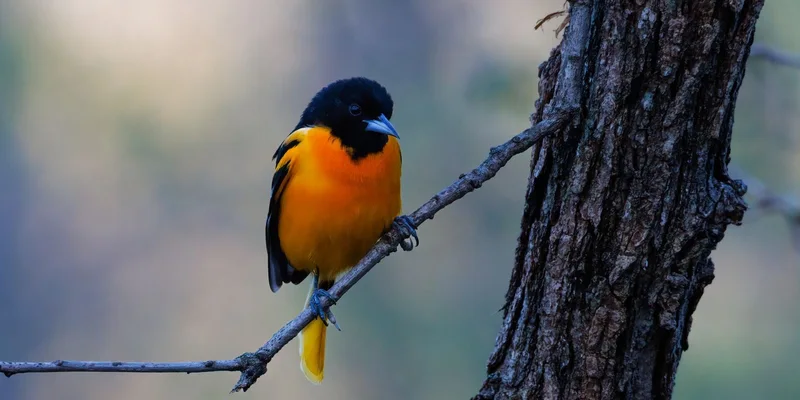
In most of the eastern half of the country the bird arriving at your jelly is a Baltimore Oriole. Across much of the West it is a Bullock’s Oriole, and Audubon notes that Bullock’s do not eat from seed feeders but do look for sugary foods as they complete spring migration, which is why the jelly and water mixture is the suggestion there.
Orchard Orioles turn up in parts of the East and the southern Plains and are smaller and darker than a Baltimore. The practical point is that the offerings do not change much between them. Fruit, jelly and nectar cover all three, and none of them are going to touch the sunflower in your main feeder.
Frequently Asked Questions
When should I put out an oriole feeder? Before the first birds are reported in your area, which is weeks apart between the South and the northern states. Local arrival reports or a nearby Audubon chapter beat any national date, and hanging it early costs nothing.
What food attracts orioles fastest? Halved oranges. Audubon suggests setting them out where birds can peck at the juice and pulp, replacing the fruit daily. Jelly and sugar water hold birds once they have found the yard.
How much grape jelly is safe to offer? Small amounts in a shallow dish. Audubon’s caution for Baltimore Orioles is not to put out so much that it risks soiling their feathers, and a thin dish of half jelly and half water is easier for the birds than a deep pot of it.
Do orioles eat birdseed? Audubon states plainly that Bullock’s Orioles do not eat from seed feeders, and orioles generally are fruit, nectar and insect birds. Your sunflower feeder will not bring them in no matter how full it is.
Why did the orioles disappear in June? Nesting. Once pairs are on territory and feeding insects to nestlings, feeder visits often drop off sharply, then pick up again later in summer when young birds are moving around.
Will orioles use a hummingbird feeder? They will try, and mostly fail, because the ports and perches are too small. An oriole feeder is the same idea built to their size, with larger ports and a perch that carries the weight.
The Bottom Line
Hang the feeder before the first birds arrive, lead with halved oranges replaced daily, keep jelly to small amounts in a shallow dish, and add sugar water in a proper oriole feeder if you want them to stay. Place it high and visible, keep ants off with a water moat, and put a shallow bath nearby. Read next: our oriole feeder guide for the jelly, orange and nectar formats compared, and which feeder attracts which bird for the wider picture.