Last updated: August 21, 2026
Most bird baths that sit empty of birds are not badly made. They are too deep, too slippery, or standing in the middle of a lawn where nothing feels safe landing. A bath is the one piece of backyard gear where the thing you are buying is not really the object, it is a depth and a surface, and the pretty pedestal on the garden center pallet very often gets both wrong.
The good news is that the requirements are short and they do not change with fashion. Get the water shallow, give the birds something to grip, put it where a startled bird can reach cover in one hop, and keep it clean. This guide goes through each of those in the order that actually decides whether birds use your bath, plus which style suits a yard, a deck or a balcony.
This article contains affiliate links. If you buy through them, we may earn a commission at no extra cost to you. Learn more.
Quick Answer
What makes a bird bath one that birds actually use?
- Shallow water. The National Audubon Society puts the maximum at about two inches at the deepest point, with the basin sloping in from the rim.
- A rough, grippy surface. Glazed ceramic and slick resin give wet feet nothing to hold, so birds perch on the edge and leave.
- Cover within a short flight. Audubon advises siting a bath on level ground with evergreens or other shrubs nearby.
- Water you will actually change. Audubon recommends freshening the water every other day, which is easier with a basin you can lift.
Bottom line: buy for depth, texture and a liftable basin first, and treat the pedestal as decoration.
Depth Is the Whole Decision
Depth is the single specification that separates a bath birds bathe in from an ornament. The National Audubon Society recommends a maximum of about two inches at the deepest point, with the basin sloping gradually inward from the rim, and its own build guide describes water roughly an inch to an inch and a half deep. Anything deeper reads as open water to a small songbird.
That is why so many garden center baths underperform. A steep sided bowl with a flat floor gives a chickadee no shallow shelf to stand on, and a bird that cannot judge the depth will not step in. If you already own a deep bath, Audubon’s own fix is to drop in a few large pebbles or a flat stone so birds can gauge the bottom and stand above it.
Different Birds Want Different Depths
A shallow, gradually sloping basin serves everything at once. Chickadees, finches and warblers use the thin edge, while cardinals, jays and grackles wade toward the middle. One bowl covers the whole range as long as the shallow part exists, which is exactly what a sloped profile gives you and a straight walled bowl does not.
Texture: The Reason Birds Land and Leave
The second thing a bath has to do is give wet feet something to grip. A glazed ceramic basin or a smooth molded resin bowl is a skating rink once it is wet, and birds respond by standing on the rim, dipping a bill, and going somewhere else. Rough concrete, textured stone, unglazed pottery and hammered metal all read as safe footing.
You can feel it with a fingertip. Run a wet hand across the inside of the basin, and if it feels slippery to you it will feel worse to a bird carrying its whole weight on two toes. This is the specification product photos hide, because a glossy finish photographs better than a gritty one.
Bird Baths by Situation
Best All Around Choice for a Yard
For a normal back yard, a pedestal bath with a shallow, textured, gently sloping basin does everything. Look for a bowl that lifts off the base, because a fixed basin turns every water change into a chore with a hose and a scrub brush at an awkward height, and the water change is the habit the whole thing depends on.
For a Deck Rail or a Balcony
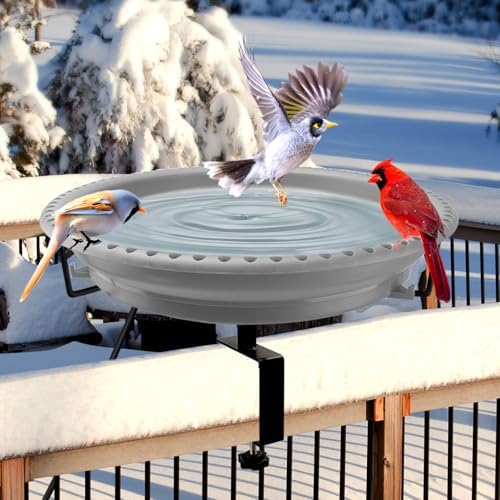
Where there is no lawn, a rail mounted or clamp on basin gets water up to the birds without a pedestal. The trade is capacity: a small bowl in sun goes warm and low fast, so plan on topping it up daily in summer. Mount it where you can reach it from the door, not at the far corner of the rail.

For Ground Feeding Birds and Shy Species
Doves, towhees, thrushes and quail take water at ground level far more readily than on a pedestal. A ground basin set in a border, with a shrub within a hop, gets used by species that will never visit a raised bath. Keep it away from dense cover at the very edge, where a cat can wait unseen.

If You Want Sound and Movement
Moving water is the strongest attractant a bath can have, and it also discourages mosquitoes from laying in it. A solar float or a small pump turns a static bowl into something birds hear from across the yard. Our fountain guide covers what flow rate suits a shallow basin.

For Winter, Where Water Freezes
Open water in freezing weather is scarce and heavily used. Audubon notes that many kinds of birds drink and bathe in open water in frigid weather and that a bath with a built in heater, or a heater added to an existing bath, is the way to keep it thawed. Audubon also warns off ceramic baths in the cold, because they can crack.
Comparing the Main Styles
The style you pick mostly changes where the bath sits and how much work it is, not whether birds like it. Depth and texture decide that part, and every style below can be had in a good version or a slippery one.
| Style | Where it works | Water changes | Watch out for |
|---|---|---|---|
| Pedestal | Open yard, visible from a window | Easy if the bowl lifts off | Fixed basins and top heavy bases |
| Ground basin | Borders, under shrubs, shady corners | Easiest, just tip and refill | Cats using nearby dense cover |
| Deck rail or clamp | Balconies, decks, no lawn | Frequent, small volume | Warming fast in afternoon sun |
| Hanging bowl | Under a branch or a shepherd hook | Awkward, water slops when it swings | Swaying, which birds dislike |
Where the Bath Goes
Placement is worth as much as the bath itself. Audubon’s guidance for siting a bath is level ground with evergreens or other shrubs nearby, and a spot you can watch from a window. Cover close enough to reach in one short flight is what gives a wet bird, which flies badly, somewhere to go if a hawk shows up.
Audubon also suggests keeping baths out from directly under trees and feeders, since leaf litter, droppings and seed hulls dirty the water fast. A couple of steps out from the drip line of a shrub is usually the sweet spot: close enough to feel safe, far enough to stay clean.
Sun, Shade and Summer Heat
A bath in full afternoon sun goes warm, evaporates fast and grows algae quicker, so morning sun with afternoon shade is the easier combination in most yards. In winter the calculation flips, and a spot that catches low sun helps a heated basin work less hard.
Keeping It Clean Without Poisoning Anything
A dirty bath is worse than no bath. Audubon points out that neglected baths become breeding grounds for mosquitoes and pathogens, and links dirty birdbaths to the spread of house finch eye disease, salmonellosis and avian pox. The fix is routine rather than dramatic: change the water often and scrub before scum builds.
For the scrub, Audubon gives a specific mix, one part vinegar to nine parts water, and advises against synthetic soaps and cleansers because they can strip the essential oils off bird feathers. The full routine, including what to do about algae in hot weather, is in our guide to cleaning a bird bath.
Common Mistakes When Buying a Bath
The most common is buying on looks and discovering the bowl is four inches deep with a glazed floor. The second is a basin that cannot be lifted off its base, which quietly kills the every other day water change that Audubon recommends. The third is siting: a bath alone in the middle of a lawn is a bath birds watch from the fence.
A fourth, specific to cold regions, is buying ceramic. Audubon advises avoiding ceramic baths in cold weather because they can crack, and a resin or metal basin with a heater is the winter answer instead.
Frequently Asked Questions
How deep should a bird bath be? The National Audubon Society recommends a maximum of about two inches at the deepest point, with the basin sloping in from the rim. Audubon’s own birdbath build describes water roughly an inch to an inch and a half deep, which suits small songbirds best.
How often should I change the water? Audubon recommends freshening the water every other day, which also stops mosquitoes completing their cycle. In summer heat, or if the bath sits under a feeder, daily is easier than scrubbing later.
Why do birds ignore my bird bath? Usually depth, texture or placement. Too deep, too slippery, or too far from cover are the three, in that order. Adding flat stones fixes depth and grip at the same time, which is the fix Audubon suggests for a basin that is deeper than ideal.
Does a bird bath need moving water? No, but it helps a lot. Sound and movement pull birds in from further away, and Audubon notes mosquitoes avoid laying eggs in moving water. See our bird bath fountain guide for the options.
Should the bath go in sun or shade? Morning sun with afternoon shade suits most yards, since full sun warms and evaporates a shallow basin quickly. Audubon suggests keeping baths away from directly under trees and feeders so debris does not foul the water.
Do I need a separate bath for winter? Not necessarily, but you need a way to keep water open. Audubon describes both a bath with a built in heater and adding a heater to a summer bath, and warns that ceramic baths can crack in cold weather.
The Bottom Line
Buy the depth and the texture, not the pedestal. A shallow, gradually sloping, rough surfaced basin that lifts off its base, sited a short flight from cover and refreshed every couple of days, will out perform a handsome bowl that is four inches deep every time. Read next: our shallow bird bath guide for the two inch rule in practice, and stones in a bird bath for the cheapest fix to a bath you already own.