Last updated: August 21, 2026
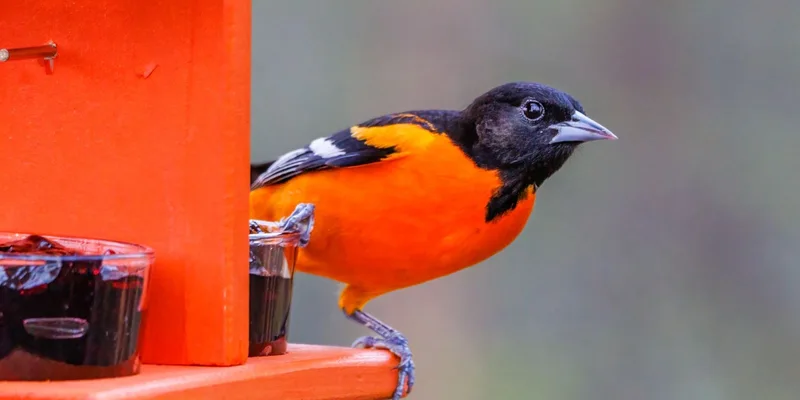
Grape jelly is the fastest way to get an oriole to stop in your yard, and it is also the thing people worry about most once the orioles arrive. A cup of jelly disappears in a morning, the birds come back for more, wasps find it by noon, and somewhere in there the question arrives: is this actually good for them?
The honest answer is that jelly is a treat, not a diet, and the guidance from the people who study these birds is about restraint rather than prohibition. Audubon’s advice on attracting orioles is specific about the amount, and it is worth reading before you set out a full jar.
This article contains affiliate links. If you buy through them, we may earn a commission at no extra cost to you. Learn more.
Quick Answer
How much grape jelly should you give orioles?
- Small amounts. Audubon says to put out only small amounts of jelly, not so much that it risks soiling the birds’ feathers.
- A shallow dish, refilled often, beats a deep well kept permanently full.
- Offer it alongside orange halves and nectar, so jelly is one option rather than the only one.
- Sticky feathers are the real risk. A bird that gets jelly on its face and breast cannot preen it off easily.
Bottom line: a spoonful at a time in a shallow cup, topped up during the day, and cleaned out every evening.
Why Orioles Go for Jelly at All
Orioles are fruit and nectar feeders for part of the year, which is unusual among the birds that visit backyards. Audubon’s guide to attracting hummingbirds and orioles notes that orioles can be drawn in with grape jelly in special feeders or small bowls, alongside orange halves and sugar water.
That fruit habit is seasonal. The Cornell Lab’s account of the Baltimore Oriole describes a summer diet dominated by insects, especially caterpillars, along with beetles, grasshoppers, spiders and snails. Jelly is a supplement that appeals strongly in spring when the birds arrive tired and natural fruit is scarce.
The Amount Question, Answered by the Source
Audubon puts the guidance in terms of quantity and mess: put out small amounts of jelly to attract these nectar eaters, and do not put out so much that it risks soiling their feathers. For Orchard Orioles the same guidance repeats the point about offering small amounts at a time so it does not get too messy.
That is the actual published rule, and it is a practical one rather than a nutritional pronouncement. Feathers matter enormously to a bird, and jelly that gets onto the face and breast is difficult to preen out and interferes with waterproofing and insulation.
What Small Amounts Looks Like
A spoonful in a shallow cup, refilled a few times a day if the birds are working it, rather than a deep well filled to the brim in the morning. The shallow version also means the jelly does not sit long enough to ferment in the sun, and it makes the evening clean out trivial.
Which Jelly, and What to Avoid
Plain grape jelly is what orioles are used to and what the guidance describes. Read the label and skip anything with artificial sweeteners, since the point of the food is sugar energy and a sugar free jelly delivers none of it. Nothing here needs to be exotic; the birds are not comparing brands.
What does not belong in the dish is anything you would not put in a nectar feeder either. No dye, no honey and no home improvised syrups. If you are also running a nectar feeder, our guide to the published nectar recipe covers what Audubon and Cornell actually specify there.
The Feeder Matters More Than the Jelly
An oriole feeder with a shallow jelly well, a couple of orange spikes and a perch is the standard arrangement, and it exists for a reason: shallow cups limit how much a bird can get on itself, and spikes keep the fruit off the ground. Our guide to the oriole feeder covers the designs.
Some people simply use a small glass dish clipped to a rail. That works fine as long as it is shallow, but it offers no shelter from rain and nothing to deter wasps, which are the two things that decide whether a jelly station is pleasant to run through summer.
| Offering | Peak season | Mess risk | Notes |
|---|---|---|---|
| Grape jelly, shallow cup | Spring arrival | High if the cup is deep | Audubon: small amounts only |
| Orange halves on spikes | Spring arrival | Low | Replace before they ferment |
| Sugar water in an oriole feeder | Spring and summer | Low | Use the published nectar recipe |
| Mealworms in a dish | Nesting season | Low | Matches the insect diet Cornell describes |
Wasps, Ants and Fermenting Jelly
Sugar in the open attracts insects, and by midsummer a jelly cup can have more wasps than birds on it. The workable answers are all passive: keep the amount small so nothing sits, clean the cup daily, move the feeder a few feet if it has become an insect station, and use an ant moat above the hanger to keep ants out of the dish.
What we do not recommend is spraying anything near a feeder or dealing with a nest yourself. If wasps have become a genuine problem at the feeder, take the jelly down for a few days and let them lose interest, then put it back somewhere else. For the equivalent problem on nectar feeders, see our article on wasps at the hummingbird feeder.
Heat Changes the Job
Jelly in full sun goes runny and then sour. Shade extends its life considerably, and so does putting out less at a time. If the surface looks glossy and wet rather than firm, it is time to tip it out and wash the cup rather than add more on top.
Frequently Asked Questions
Is grape jelly bad for orioles? Audubon recommends offering small amounts rather than avoiding it, and the reason given is mess and soiled feathers rather than a nutritional ban. Keep the dish shallow, keep the quantity modest, and offer fruit and nectar alongside it.
How much jelly per day? A spoonful at a time, refilled as it goes. Audubon’s phrasing is small amounts, not so much that it risks soiling the birds’ feathers, and a shallow cup topped up through the day is the easiest way to stay inside that.
Should I stop jelly when the young fledge? Many people cut back in midsummer, and it is a reasonable habit. The Cornell Lab describes the summer oriole diet as mostly insects, especially caterpillars, so jelly is least important exactly when the birds are feeding young.
Can I use jam or preserves instead? Plain jelly is what the guidance describes. Whole fruit pieces and seeds in a preserve add mess without adding appeal, and anything with artificial sweetener defeats the purpose entirely.
When do orioles arrive and leave? It varies by species and region, and the Cornell Lab’s species pages give the expected timing for where you live. Most people put jelly out shortly before the first birds are expected locally and keep it up through the spring.
What else can I offer besides jelly? Orange halves, sugar water in an oriole feeder and mealworms during nesting all work. Our article on attracting orioles to a new feeder goes through the sequence that gets a yard noticed.
The Bottom Line
Grape jelly is a legitimate and very effective oriole attractant used the way Audubon describes it: in small amounts, in a shallow cup, cleaned daily, with fruit and nectar available too. The risk is sticky feathers and fermenting sugar, not the jelly itself. If you are setting up for the season, our oriole feeder guide covers the hardware and what not to feed birds covers the wider list of things that should stay out of a yard.