Last updated: August 21, 2026
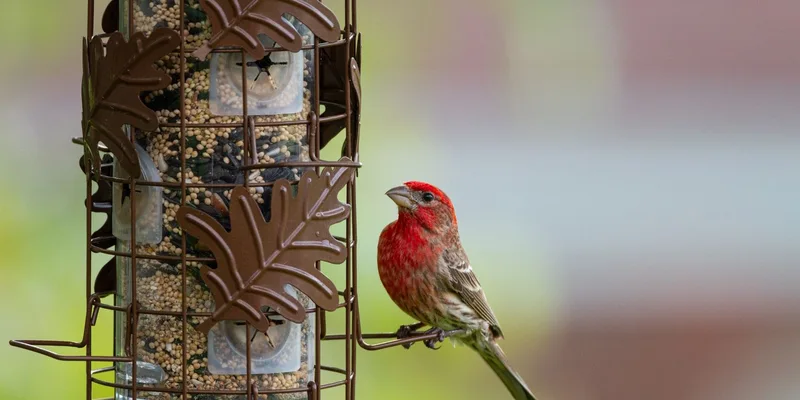
House Finches are the easiest birds in this guide to attract and the ones that need the most thought afterward. They arrive in groups, they stay on a feeder far longer than a chickadee does, and they press their faces into the ports while they work. That combination of crowding and close contact is exactly why this species comes with a health note attached that no other feeder bird does.
None of that is a reason to skip them. It is a reason to buy a feeder you can take apart and wash, and to know what a sick bird looks like. This guide covers the ports and perches House Finches actually use, which seed the Cornell Lab’s feeder survey associates with them, and what Project FeederWatch asks feeder owners to do when eye disease turns up in the yard.
This article contains affiliate links. If you buy through them, we may earn a commission at no extra cost to you. Learn more.
Quick Answer
What feeder is best for House Finches?
- A tube feeder with metal reinforced ports and short perches, filled with black oil sunflower.
- Something that comes apart fully, because this is the species where cleaning matters most.
- A nyjer feeder as the second station, which finches share with goldfinches.
- Enough spacing between feeders that birds are not packed shoulder to shoulder.
Bottom line: pick the tube you can strip down in under a minute, and space your feeders out rather than clustering them on one hook.
What House Finches Want From a Feeder
Sunflower on a tube, mostly. Project FeederWatch, the Cornell Lab’s winter feeder survey, describes black oil sunflower as high in energy with thin shells and the preferred item for a wide variety of birds, finches included. House Finches also take nyjer, which they share with goldfinches at the same feeders.
Physically they are small clinging birds, so short perches suit them and they are unbothered by a feeder that swings. Project FeederWatch notes that tube feeders with short perches accommodate small birds such as finches while excluding larger birds such as grackles and jays, which is the design most people already own.
Why They Stay So Long
House Finches feed in a flock and work slowly, hulling seed in place instead of carrying it off. A tube with six ports can hold six birds for several minutes at a stretch, which is charming to watch and is also the reason feeder hygiene is a bigger topic for this species than for the ones that grab and go.
The Disease Question, Stated Plainly
House Finches get an eye disease that feeder owners should recognize. Project FeederWatch describes it as caused by a strain of the bacterium Mycoplasma gallisepticum, with infected birds showing red, swollen, runny or crusty eyes, and in severe cases swelling bad enough that the bird is effectively blind. It has been tracked at feeders since the mid nineties.
What Project FeederWatch asks people to do is straightforward. If you see one or two diseased birds, take the feeders down and clean them with a ten percent bleach solution, clear away old seed and droppings underneath, let everything dry fully before rehanging, and space feeders out so birds are not crowded together. They also ask that sightings be reported, including reports of no disease, since both kinds of data are useful.
What This Does Not Mean
It does not mean feeding House Finches is risky by default, and it does not mean a feeder can prevent or treat anything. A clean, well spaced feeder lowers the amount of contact between birds, which is all any equipment can do. If you find a bird that is clearly sick or injured, the right call is a licensed wildlife rehabilitator or your state wildlife agency, not a home remedy.
House Finch Feeders by Situation
Best All Around: A Tube That Strips Down
The feeder worth paying for here is the one that comes apart without tools. Base off, ports out, tube empty, everything into the sink. Metal reinforced ports last longer under constant use and resist the chewing that opens a plastic port into a hole big enough for squirrels.

The Nyjer Station Finches Share With Goldfinches
A nyjer feeder with small ports brings in House Finches alongside goldfinches, siskins and redpolls. Project FeederWatch names those finches as the birds nyjer attracts, and notes that it needs a feeder with ports sized for the seed rather than a standard sunflower tube.

When You Want Fewer Birds Packed Together
Two smaller feeders on separate hooks beat one big one, which is the practical form of the spacing advice. A small hopper with a short ledge feeds finches and keeps the crowd down, and it gives you a second station to rotate through the wash while the first one dries.

The Cleaning Kit You Will Actually Use
A long handled brush set with a port brush is the difference between cleaning a feeder properly and rinsing it. Ports are where the birds put their faces, so they are the part that matters and the part a garden hose never reaches.

Comparing the Options
What separates these in practice is who they let in, how fast they clean, and what they hold. Here is the short version.
| Feeder | What it holds | How easily it cleans | Who else uses it |
|---|---|---|---|
| Tube with metal ports | Black oil sunflower, mixes | Good if the base unclips | Chickadees, titmice, small birds |
| Nyjer tube or mesh | Nyjer only | Fiddly, small ports | Goldfinches, siskins, redpolls |
| Small hopper | Sunflower and mixes | Easy, wide opening | Small birds, larger ones excluded |
| Sock feeder | Nyjer only | Not cleanable, replace it | Goldfinches and House Finches |
A Cleaning Routine That Is Realistic
Project FeederWatch advises cleaning seed and suet feeders every week or two, and more often during periods of heavy use or wet weather. That last clause is the important one for a House Finch yard, because heavy use is precisely what you have when a flock adopts your tube feeder.
Build the routine around a spare feeder rather than willpower. One feeder hanging while the other dries means the job takes the time it takes and nothing goes back up damp. Our full walkthrough is in cleaning a bird feeder.
The Ground Underneath
Old seed and droppings below the feeder are part of the same job. Project FeederWatch specifically includes removing them in its guidance when disease shows up, and it is easier to rake a small area under a pole than to clear a wide scatter under a swinging feeder in the open.
Mistakes That Make a Finch Feeder Worse
The first is clustering feeders on one hook because it looks tidy. Crowding is the thing the guidance asks you to reduce, and three feeders spread across a yard cost nothing more than three feeders on one shepherd hook.
The second is buying a feeder that does not open. Sealed tubes, glued bases and ports that will not come out turn a fifteen minute job into a job you skip. If a listing does not show the feeder disassembled, assume it does not disassemble.
Frequently Asked Questions
What feeder do House Finches prefer? A tube feeder with short perches, filled with black oil sunflower. Project FeederWatch describes that design as one that accommodates small birds such as finches while excluding larger birds, and lists black oil sunflower as a preferred food.
Do House Finches eat nyjer? Yes, and they share nyjer feeders with goldfinches. Project FeederWatch names nyjer as the seed that attracts finches including American Goldfinch, Pine Siskin and Common Redpoll, and it needs a feeder with small ports rather than a standard sunflower tube.
What is House Finch eye disease? Project FeederWatch describes it as an infection caused by a strain of Mycoplasma gallisepticum, with red, swollen, runny or crusty eyes as the visible sign. It has been tracked at North American feeders since the mid nineties.
Should I take my feeders down if I see a sick finch? Project FeederWatch advises taking feeders down and cleaning them with a ten percent bleach solution if you see one or two diseased birds, clearing seed and droppings underneath, and letting everything dry before rehanging. They also ask people to report what they see.
How often should I clean a finch feeder? Project FeederWatch advises every week or two for seed and suet feeders, and more often during heavy use or wet weather. A busy finch tube in a rainy month sits firmly in the more often category.
How do I tell a House Finch from a Purple Finch? It is a genuinely hard pair and worth using a field guide illustration rather than a description. Both use the same feeders, so nothing about your setup needs to change either way.
The Bottom Line
Buy the tube you can take apart, put a nyjer feeder on a separate hook, and spread the stations across the yard instead of stacking them on one pole. House Finches will find all of it within days. The maintenance side is where this species asks more of you than the others, and the routine is laid out in cleaning a bird feeder. If goldfinches are turning up on the same feeders, the port and seed differences are covered in the goldfinch feeder guide.