Last updated: August 21, 2026
Nyjer is the seed people buy for goldfinches and then quietly give up on. The pattern is always the same: a busy first month, then a feeder that sits untouched while the finches work a neighbor’s yard instead. The bag is still half full, the feeder looks fine, and nothing is wrong with the birds.
What is wrong is usually the seed. Nyjer is a small oil rich seed that goes stale faster than anything else people put in a feeder, and finches will simply refuse it once it has dried out. Understanding that one fact turns nyjer from a frustrating purchase into the most reliable finch magnet there is.
This article contains affiliate links. If you buy through them, we may earn a commission at no extra cost to you. Learn more.
Quick Answer
Why do finches ignore nyjer seed?
- It has gone stale. Project FeederWatch says nyjer grows stale quickly even when kept dry, and stale seed gets refused.
- It has been sitting in the feeder too long. FeederWatch advises emptying, cleaning and refilling frequently.
- It is in a mix. FeederWatch recommends feeding nyjer on its own to avoid waste.
- The feeder ports are wrong. Nyjer needs fine ports or mesh, not a sunflower tube.
Bottom line: buy small bags, fill small amounts, and dump anything the birds have not cleared in a week or two.
What Nyjer Actually Is
Nyjer is not thistle, despite the label on half the bags in the store. Project FeederWatch is clear about this: nyjer comes from Guizotia abyssinica, a plant native to Africa, and it is not related to North American thistles. It picked up the thistle name commercially and it stuck.
It is also sterilized before import, which is why a nyjer feeder does not seed your lawn with weeds. What matters for you is that it is small, oily and expensive per pound, which sets up everything else about how to use it.
Who Comes for It
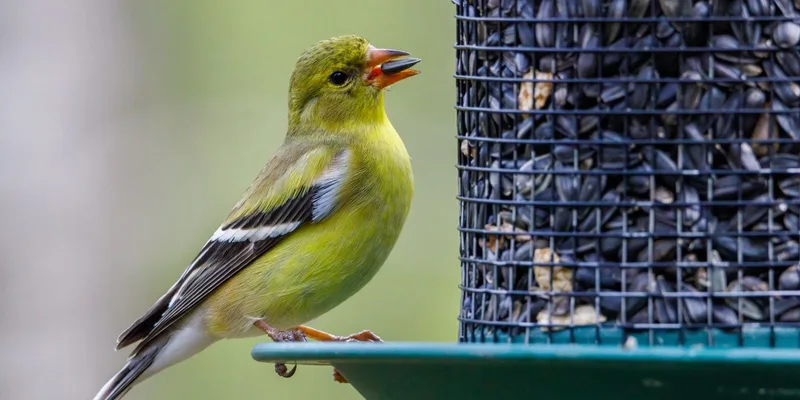
Finches, essentially. Project FeederWatch attributes nyjer’s popularity to its ability to attract finches, naming the American Goldfinch, Pine Siskin and Common Redpoll. Those are the birds a nyjer feeder is for, and in much of the country a good nyjer feeder is the most reliable way to hold goldfinches in a yard.
House Finches will use it too in many places. What you generally will not get is the wider feeder crowd, because the seed is small work for a big bill and the feeders are built to exclude anything bigger. That is by design.
Regional Reality
Which finches you see depends on where you are and on the year. Redpolls and siskins move around a lot between winters, so a feeder that was mobbed one January can be quiet the next with nothing changed. The Cornell Lab’s species pages are the place to check what is expected in your area.
The Freshness Problem
This is the whole article in one paragraph. Project FeederWatch states plainly that nyjer seed grows stale quickly even when kept dry, that seed left in a feeder for more than about a week can grow stale or moldy, especially in warm damp conditions, and that feeders should be emptied, cleaned and refilled frequently. Finches are not being fussy. They are refusing food that has gone off.
The practical consequence is counterintuitive: buy the small bag, not the big one. A big bag is cheaper per pound and worse value in practice, because most of it will be refused before the birds get to it. Fill the feeder part way and refill often.
How to Tell If a Batch Is Stale
Fresh nyjer is glossy black and slightly oily to the touch, and a handful smells faintly nutty. Old nyjer looks dull and gray, feels dry, and smells of nothing much or of dust. If you pinch a seed and it crumbles dry rather than crushing oily, the birds have already made their decision about it.
Feeders That Suit It
Nyjer needs a feeder built for it. A standard sunflower tube pours it out of the ports, and a hopper simply spills it. The two designs that work are a tube with narrow slit ports and a mesh or sock, and each suits a different situation.
| Feeder | Waste level | Drying and drainage | Best suited to |
|---|---|---|---|
| Narrow port nyjer tube | Low | Good if it has drainage at the base | Year round use, easy to clean |
| Mesh nyjer tube | Moderate, birds cling anywhere | Very good, air moves through | Busy flocks, humid climates |
| Fabric thistle sock | Higher, seed works through the weave | Poor once soaked | Cheap trial, dry weather |
| Standard sunflower tube | Very high, seed pours out | Not applicable | Not suitable for nyjer |
If you are choosing between the sock and the tube, our comparison of the finch sock and the nyjer tube goes through the trade in more detail, and the goldfinch feeder guide covers the port and perch details.
Feed It on Its Own
Project FeederWatch recommends feeding nyjer by itself rather than in a mix, to prevent waste. That is worth taking seriously because it works both ways: finches sorting through a mix to find nyjer throw the rest on the ground, and birds that want the rest of the mix scatter the nyjer.
A separate nyjer feeder a short distance from your main seed feeder is the standard arrangement. It also keeps the fine husk pile in one place, which matters because damp husk under a feeder is the litter that goes moldy first. Rake it out when you refill.
Frequently Asked Questions
How long does nyjer stay good in a feeder? Project FeederWatch puts it at about a week before seed in a feeder can go stale or moldy, sooner in warm damp weather. Empty, clean and refill rather than topping up, and buy bags small enough that you get through them.
Is nyjer the same as thistle? No. Project FeederWatch notes that nyjer comes from Guizotia abyssinica, an African plant unrelated to North American thistles. The thistle name is a commercial habit, not botany.
Will nyjer seed grow weeds under my feeder? Imported nyjer is heat treated before sale so it does not germinate. Spilled seed and husk still need raking out, because damp litter under a feeder is a hygiene problem regardless of whether it sprouts.
Do squirrels eat nyjer? Far less than sunflower. The seed is small work for a big animal and most nyjer feeders offer nothing to hold on to. Squirrels raiding a nyjer feeder are usually after a different feeder nearby.
Why did the goldfinches leave in summer? Goldfinches nest late and switch to natural seed when it is abundant, so a quiet midsummer feeder is normal. Check the seed is fresh, keep the feeder filled lightly, and they generally come back.
Can I mix nyjer with hulled sunflower chips? Some blends do this and finches take both. Just be aware that FeederWatch advises feeding nyjer alone to reduce waste, and a mixed feeder is harder to keep dry and clean.
The Bottom Line
Nyjer works, but only while it is fresh. Buy small bags, fill the feeder part way, dump what the birds have not cleared within a week or two, and run it in a feeder built for fine seed rather than in a mix. If you are picking the hardware, start with our goldfinch feeder guide, and if you want the wider picture of seed choices, see which seed brings which bird.
