Last updated: August 21, 2026
A standard suet cage is a starling buffet. The cake is reachable from four sides, a starling can stand on the frame and work at it with both feet planted, and a flock will strip a cake in a morning while the downy woodpecker you bought it for waits in the maple. The upside down cage exists to take that standing room away.
It is a simple change: the cake sits in a cage with a solid top and plate, and the only opening is on the underside, so a bird has to hang beneath it to eat. That suits the clinging birds perfectly and suits a starling badly. This guide covers what the design does, where it falls short, and which version fits your feeder pole.
This article contains affiliate links. If you buy through them, we may earn a commission at no extra cost to you. Learn more.
Quick Answer
Does an upside down suet feeder really keep starlings off?
- Mostly. Project FeederWatch describes cages accessible only at the bottom as starling resistant, not starling proof.
- The birds you want are unaffected. Cornell notes woodpeckers, nuthatches and chickadees feed from these by clinging upside down.
- A solid roof keeps rain off the cake, which matters more in summer than people expect.
- Double cake models halve your refills; single cake models are lighter on a thin hook.
Bottom line: the best single change you can make to a suet station, as long as you expect resistant rather than absolute.
How the Design Works
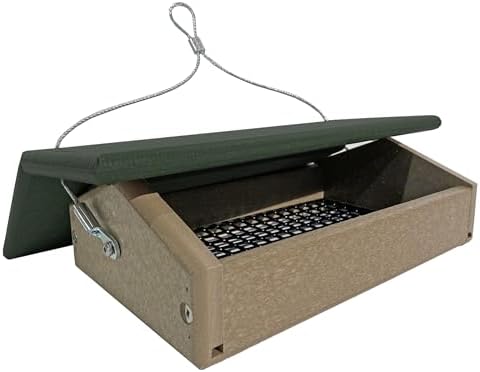
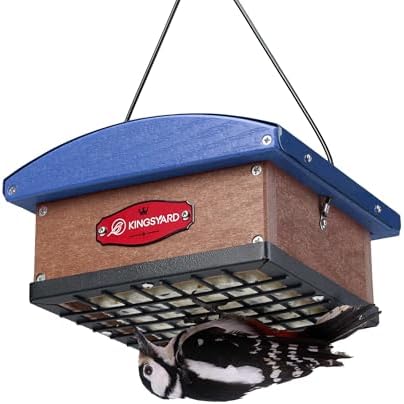
An upside down suet feeder is a wire cage with a solid plate on top and the mesh opening facing the ground. A bird has to approach from underneath and hang on to eat, which is a normal posture for a woodpecker or a nuthatch and an awkward one for a bird that feeds standing up.
Project FeederWatch puts the effect precisely: cages that are only accessible at the bottom tend to be starling resistant but allow woodpeckers, nuthatches and chickadees to feed by clinging upside down. That single sentence is the entire buying case, and it is also the reason the honest description is resistant rather than proof.
Which Birds Keep Coming
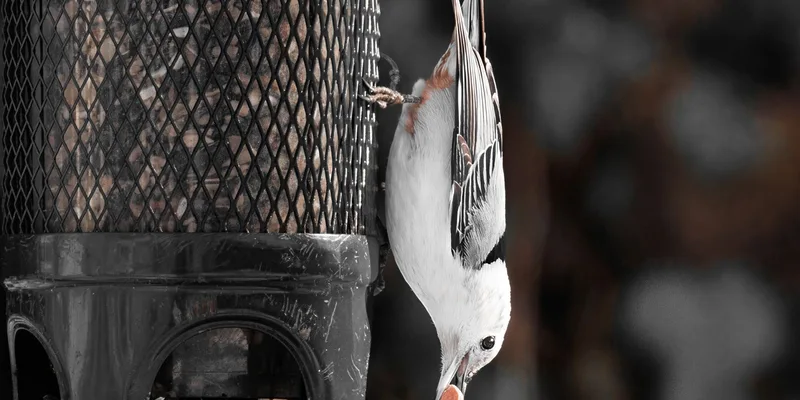
The clinging birds lose nothing. Downy, hairy and red bellied woodpeckers, white breasted and red breasted nuthatches, chickadees and titmice all handle an underside cake without hesitation, and nuthatches in particular spend half their lives head down on a tree trunk anyway.
What you give up is the casual visitor. Cardinals, jays and juncos that used to pick at the edge of an open cage will mostly stop, and so will the wrens that were working the mesh from the side. If those visits mattered to you, the answer is a second cake in an open cage somewhere else rather than abandoning the upside down feeder.

Where It Fails
Starlings are adaptable and some individuals work out a way onto some designs, usually by gripping the frame edge and reaching in at an angle. FeederWatch participants have described countering that by hanging a plate a few inches below the cake so the gap underneath is only big enough for smaller birds. If your feeder is being defeated, that is the direction to look before buying another one.
Roof or No Roof
The solid top on an upside down feeder is doing two jobs, and only one of them is bird exclusion. It is also a roof, and suet in the sun and rain is a maintenance problem: rendered cakes soften in heat, plain fat goes rancid, and a soaked cake crumbles out of the cage in lumps.
Models with an extended roof overhang, rather than just a flat plate the size of the cake, keep noticeably more weather off. That matters most from late spring onward, which is also when you should be switching to a summer blend anyway. Our suet cake guide covers the rendered and no melt blends made for warm months.

The Main Versions Compared
The starling column follows Project FeederWatch’s description of bottom access cages. Capacity and material are what separates the models on the shelf.
| Version | Starling resistance | Capacity | Best suited to |
|---|---|---|---|
| Single cake, flat plate | Good, per the bottom access principle | One cake | Light hooks, small yards |
| Single cake, extended roof | Good, plus weather cover | One cake | Exposed poles and summer heat |
| Double cake, roofed | Good, twice the feeding space | Two cakes | Busy woodpecker yards |
| Caged upside down | Good, and adds squirrel resistance | One or two cakes | Yards with squirrels on the pole |
Hanging It Where It Works
Give the feeder room underneath. A bird hanging beneath a cage needs clear air below it, so a feeder tucked tight under a branch or a deck rail gets far less use than the same feeder hanging free on a hook. A hand’s width of clearance is not enough; think in terms of the bird’s whole body length plus its tail.
Distance from a trunk or a fence matters for the squirrel side of the equation, and an upside down cage does nothing to stop a squirrel that can reach it. If yours are a problem, a baffle on the pole is the fix, which our baffle guide covers, or a version with a wire cage around the whole feeder as in our squirrel resistant suet guide.
Keeping It Clean
Suet feeders get greasy in a way seed feeders do not, and the grease holds crumbs and moisture against the wire. The cage should come apart far enough that you can get at the inside of the mesh, which is the part that never gets cleaned on a feeder with a fiddly single latch.
Recycled plastic bodies wash easily and do not rot; wood looks better and holds fat in the grain. Either is fine, but check the hinge and latch before you buy, because a cake sized opening you have to force is a cake you eventually stop replacing. Our guide to cleaning feeders covers the routine and the disease risk behind it.
Frequently Asked Questions
Do upside down suet feeders keep starlings away? Largely, but not absolutely. Project FeederWatch describes bottom access cages as starling resistant while still allowing woodpeckers, nuthatches and chickadees to feed by clinging upside down. Some individual starlings still work at them.
Will woodpeckers use an upside down feeder? Yes. Clinging is normal for them, and Cornell lists woodpeckers alongside nuthatches and chickadees as the birds that feed from bottom access cages. Large woodpeckers may prefer a tail prop version instead.
What birds will I lose? Mostly the ones that feed standing up, including jays and cardinals picking at the edge of an open cage. If you want those visits too, run a second open cage in another part of the yard.
Does it stop squirrels? No. The design targets birds that cannot hang, and a squirrel can hang comfortably. Use a baffle on the pole or buy a version with a wire cage around the whole feeder.
Single or double cake? Double if woodpeckers are already regular visitors and you are refilling constantly, single if the feeder hangs from a light hook or you want to try the format first. Two cakes on a thin shepherd hook is a lot of weight in wind.
Can I put a summer suet blend in one? Yes, and you should when it gets warm. Blends made for heat hold their shape better, and the solid top on an upside down feeder shades the cake, which helps.
The Bottom Line
The bottom access cage is the cheapest effective answer to a starling problem at the suet, and it changes nothing for the woodpeckers, nuthatches and chickadees you actually want. Expect resistant rather than proof, give it clear air underneath, choose an extended roof if the spot is exposed, and add a baffle if squirrels are the real issue. Read next: our suet feeder guide for the formats side by side, and keeping bigger birds off the feeder for the rest of the yard.