Last updated: August 21, 2026
A weight activated feeder is the one design that lets you keep the big birds and lose the squirrels. A metal shroud sits over the seed ports on a spring. A chickadee lands and nothing happens. A squirrel puts its full weight on the same perch, the shroud slides down, and the ports disappear behind it.
Watching it work the first time is genuinely satisfying, and watching it fail is instructive. Almost every complaint about these feeders traces back to one of three things: the spring set wrong, the feeder hung too close to the pole, or the shroud gummed up with wet seed. All three are fixable, and two of them are decided before you buy.
This article contains affiliate links. If you buy through them, we may earn a commission at no extra cost to you. Learn more.
Quick Answer
How does a weight activated bird feeder work?
- A spring loaded shroud covers the seed ports when something heavier than a small bird lands on the perch.
- Better models let you adjust the spring, so you can also shut out grackles, starlings and doves.
- Metal ports and a metal shroud matter, because plastic around the seed is what gets chewed.
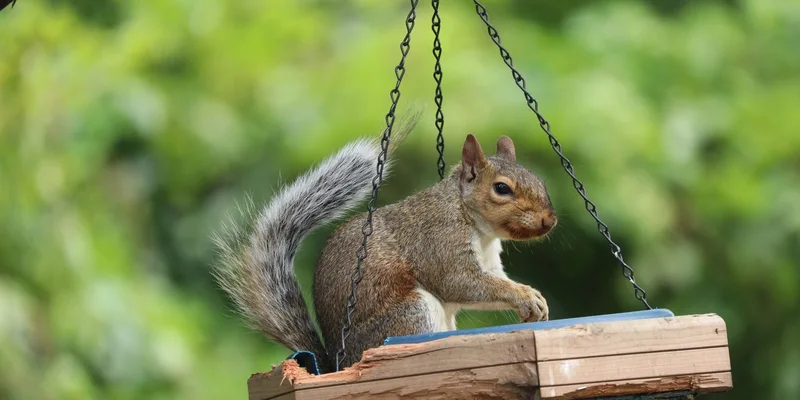
- It has to hang clear of the pole. Audubon warns that a squirrel will pull a feeder in and feed from the side.
Bottom line: a good mechanism plus a proper hanging distance, or the cleverest spring in the world does nothing.
The Mechanism, Plainly
Inside the top of the feeder is a spring holding up an outer sleeve, usually called the shroud. The perch ring hangs from that sleeve. When the weight on the perch exceeds what the spring supports, the whole sleeve slides down and its solid section covers the ports. Take the weight off and the spring lifts it back.
That is the entire idea, and its elegance is that it does not need to identify anything. It does not care whether the weight is a squirrel, a grackle or a wet leaf; it responds to load, which makes it far more dependable than anything relying on the animal choosing to leave.
What the Adjustment Actually Buys You
An adjustable spring turns one feeder into several. Set loose, it closes only under squirrel weight and lets everything with feathers feed. Tightened up, it also closes under grackles, starlings, doves and jays, which is how people use these feeders to defend a seed budget from a flock rather than from a rodent.
The cost is that the settings are not separable. There is no position that excludes a grackle and admits a cardinal, because they are close enough in weight that the spring cannot tell them apart. You decide which side of that line you want to be on.
Living With the Setting
Expect to move it at least once. Most people start loose, watch for a fortnight, and tighten it a notch when the blackbird flock arrives in numbers. Feeders that give you a reference chart on the mechanism make this less of a guessing game than ones that just have a screw.
Weight Activated Feeders by Situation
Best General Purpose Choice
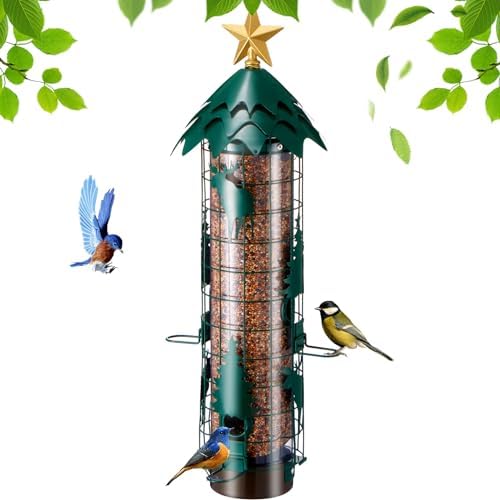
A weight activated seed tube with an adjustable spring, metal ports and a metal shroud is the default. It handles black oil sunflower and mixed seed, it takes small and medium birds, and it is the version most people should buy first. Hang it on a baffled pole with the arm reaching well clear of the shaft.

When Cardinals Are the Point
Cardinals like to face their food with room to stand, which a narrow perch ring does not give them. A weight activated hopper with a long counterweighted perch bar, or a tube with a wider perch ring, keeps them coming while still tipping under squirrel weight. Our cardinal feeder guide goes into perch width.
For Heavy Chewing Pressure
Where squirrels have already destroyed a feeder, the parts to insist on are metal port rims, a metal shroud and a metal roof. Plastic anywhere near the seed is what gets gnawed, and a feeder that sells those pieces as replacements will outlast several cheaper ones.
Protecting Suet the Same Way
The mechanism scales down to suet. A weight activated suet feeder drops a door or locks the cage when something heavy lands, which is useful because suet is the item squirrels work hardest for. There is more on the shapes in our squirrel resistant suet feeder guide.

Comparing Weight Activated Styles
The differences that matter are the perch style, whether the spring adjusts, and how much of the feeder is metal.
| Style | Perch | Adjustable spring | Best suited to |
|---|---|---|---|
| Seed tube with shroud | Ring or short perches | Usually yes on better models | Mixed small and medium birds |
| Hopper with perch bar | Long bar, tips under weight | Sometimes, by counterweight | Cardinals, jays and open feeding |
| Caged plus weight | Inside the cage | Rarely needed | Heavy pressure, small birds only |
| Weight activated suet | Cage face and tail prop | No, a locking door instead | Woodpeckers, high squirrel pressure |
Why They Fail, and What to Do
The most common failure is not the mechanism at all. Audubon’s guidance is explicit: hang the feeder far enough from the pole or the trunk that a squirrel cannot pull it closer and feed from the side. An animal holding the pole with its back feet and the feeder with its front is not putting weight on the perch, so the shroud never drops.
The second failure is a jammed shroud. Wet seed, dust and hull fragments build up in the track the sleeve runs in, and a sticky shroud either fails to close or fails to reopen. It is a five minute problem to rinse out and a permanent problem to ignore.
Cold Weather Behavior
Springs and sliding sleeves do not love ice. In freezing rain a shroud can stick in either position, so a winter check on the feeder is worth building into the refill routine. Dry the track before the next hard freeze rather than after.
Cleaning a Feeder With Moving Parts
These feeders take apart further than a plain tube, which is a good thing once you are used to it. The shroud, the perch ring and the base usually come off without tools, and the track the shroud runs in is the part that needs attention most and gets it least.
How often to do it depends on weather, use and whether you are seeing sick birds, and that guidance belongs with the sources rather than with a number invented here. Our feeder cleaning guide works through what Cornell Lab and state wildlife agencies advise, including what to do if birds at your feeder look unwell.
Frequently Asked Questions
Do weight activated feeders really work on squirrels? Yes, when hung correctly. The shroud closes under squirrel weight every time. What defeats them is a feeder hung close enough to a pole or trunk that the animal can reach in from the side without standing on the perch, which Audubon specifically warns about.
Will it keep grackles and starlings out? Only if the spring adjusts and you tighten it. At that setting cardinals and jays are usually excluded too, because they weigh enough to trip the same mechanism. It is one line, not two.
Can small birds set off the mechanism by accident? Several small birds at once occasionally can, on a tight setting. If the ports keep closing on chickadees and finches, loosen the spring a notch. That is what the adjustment is for.
Are they hard to clean? They have more parts than a plain tube, but most come apart by hand. The critical spot is the track the shroud slides in, which collects damp seed dust and is the usual reason a mechanism starts sticking.
Do I still need a baffle? Usually yes. The mechanism protects the seed, not the feeder. A squirrel that can reach the feeder will still sit on the roof, chew the parts and keep birds away. Our baffle guide covers the shapes.
Which brand is the reference point? Brome’s Squirrel Buster range is the one most people compare against, and it is built around exactly this mechanism with an adjustable weight setting. We look at the whole range in our Squirrel Buster review.
The Bottom Line
Buy one with an adjustable spring, metal ports and a metal shroud, then hang it well clear of the pole so the mechanism gets to do its job. Expect to move the adjustment once in the first month, and expect to rinse the shroud track more often than you rinse anything else on the feeder. Read next: our squirrel resistant feeder guide and the Brome Squirrel Buster review.