Last updated: August 21, 2026
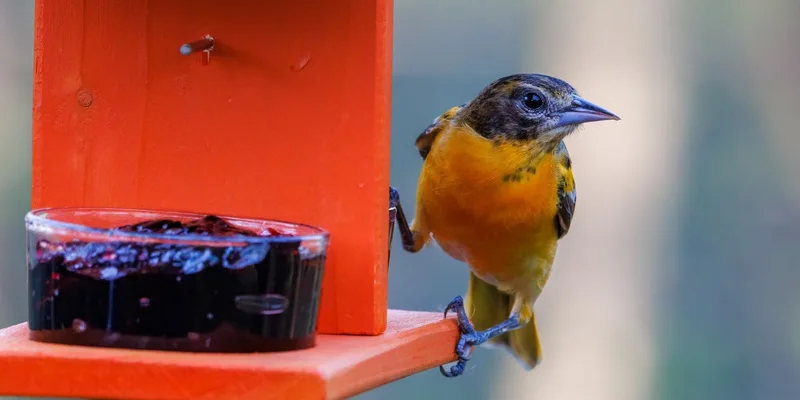
An oriole is not a seed bird, and that single fact explains why a yard full of busy sunflower feeders can go a whole spring without one. Orioles come in for fruit, for jelly and for sugar water, and the feeder that holds those three things looks nothing like the tube on your shepherd hook. It is orange, it is open, and it has a wide landing surface, because an oriole is a good deal bigger than a finch and will not hover to eat.
The other thing that catches people out is timing. Orioles move through in a fairly narrow window in spring, and a feeder that goes up two weeks after the first birds passed your street often sits untouched all summer. This guide covers what an oriole feeder actually needs to hold, which style suits which yard, and how to set it up so the birds find it in the days that matter.
This article contains affiliate links. If you buy through them, we may earn a commission at no extra cost to you. Learn more.
Quick Answer
What should an oriole feeder have?
- Somewhere to put fruit, usually two spikes that hold orange halves cut side up.
- A shallow jelly dish or cup, kept small on purpose rather than filled to the brim.
- Nectar ports that are wide enough for an oriole bill, not hummingbird sized pinholes.
- A perch or a rim the bird can stand on, since orioles feed sitting down and do not hover.
Bottom line: buy the combination feeder that takes fruit, jelly and nectar, then hang it early and out in the open where a passing bird can see the color.
What an Oriole Feeder Has to Do
It has to serve food an oriole recognizes, in a shape an oriole can use. The Cornell Lab of Ornithology suggests cutting oranges in half and hanging them out, offering small amounts of jelly, and using an oriole feeder filled with sugar water to supplement the flower nectar these birds already gather. A feeder that does all three keeps the setup on one hook.
The physical differences from a hummingbird feeder are real. Oriole feeders sit on larger reservoirs with wider ports, they carry perches instead of assuming the bird will hover, and they are almost always orange, which is a marketing decision as much as a biological one but does no harm. If you already own a hummingbird feeder, do not expect an oriole to work it comfortably.
Jelly, Fruit and Nectar: What the Sources Say
Cornell’s All About Birds account for the Baltimore Oriole is the practical reference here. It recommends cutting oranges in half and hanging them from trees, and it recommends putting out small amounts of jelly, with the specific caution not to put out so much that it risks soiling the birds’ feathers. That caution is the reason good jelly dishes are small and shallow.
For the nectar side, use the published recipe from Audubon or Cornell rather than a version you improvise for orioles. The sugar water in an oriole feeder is the same simple sugar solution those sources set out for hummingbirds, without dye and without substitutes, and we go through it in full in our nectar recipe guide.
The Jelly Question People Keep Asking
Grape jelly is the one that gets recommended everywhere, and the honest version of the advice is that the amount matters more than the brand. Keep the dish shallow, refill it in small servings, and clean it out rather than topping up over a fermenting layer. Our separate piece on jelly for orioles covers the serving side in detail.
Oriole Feeders by Situation
Best All Around: The Three in One Feeder
For most yards the sensible buy is the combination unit: a nectar reservoir underneath, a jelly cup or two on top, and spikes on the sides for orange halves. It puts everything an oriole wants in one place, and one place is easier to keep clean than three scattered dishes.

When You Only Want the Nectar Side
If ants and wasps have already ruined jelly for you, or you simply want less to clean, a dedicated oriole nectar feeder with wide ports and a proper perch is the cleaner setup. It also travels better between a spring hook and a summer one, since there is nothing sticky in it.

For a Yard Where Jelly Is the Main Draw
Some yards get orioles that ignore the nectar and work the jelly all season. A feeder with removable jelly cups is the one to own there, because the cups come out for washing instead of you scraping a molded well with a bottle brush every few days.

Rain, Sun and a Feeder That Sits in the Open
Oriole food spoils faster than seed, and a roof over the dish buys you time between refills. A hanging model with a wide overhanging cover keeps rain out of the jelly and shade over the nectar, which matters because these feeders are meant to hang somewhere exposed rather than tucked under a branch.

If Ants Get There First
Anything sweet on a hook attracts ants, and the fix is a moat rather than a spray or a grease line. A feeder with a built in moat, or a separate moat hung above the feeder, uses plain water as the barrier and keeps the setup harmless to everything involved.

Comparing the Common Oriole Feeder Styles
Three variables decide which one suits you: what the feeder holds, how easy it is to take apart, and whether it has a roof. Here is how the usual styles behave once the weather warms up.
| Style | What it holds | Cleaning | Best suited to |
|---|---|---|---|
| Three in one combination | Nectar, jelly and orange halves | Most parts, but all reachable | The default first oriole feeder |
| Nectar only, wide ports | Sugar water | Easiest, nothing sticky | Yards fighting ants and wasps |
| Jelly dish feeder | Jelly, sometimes fruit | Simple if the cups lift out | Yards where jelly is the draw |
| Fruit spike or tray | Orange and other fruit halves | Rinse and refill | A cheap second station in a tree |
Timing: Hang It Before You See One
The single most common reason an oriole feeder fails is that it went up too late. Orioles pass through on migration in spring, and a bird that finds nothing on its way north has no reason to check your yard again. Put the feeder out before the first arrivals in your area rather than in response to seeing one.
For a practical date, watch the arrival maps on eBird, which the Cornell Lab runs, or ask a local Audubon chapter when the first birds usually show up in your county. Both beat a national rule of thumb, because the same species reaches the Gulf coast weeks before it reaches the upper Midwest.
East, West and Which Oriole You Actually Get
Which oriole turns up depends on where you live. Cornell’s range maps put the Baltimore Oriole across the eastern and central states and Bullock’s Oriole through much of the West, with other species in the Southwest and along the southern border. The feeder is the same in every case, so buy on features and let the range maps tell you which bird to expect.
Where the Setup Goes Wrong
The most common mistake is hiding the feeder. Orioles find food by sight while moving through, so a bright feeder tucked under an eave or inside a shrub is invisible from the air. Hang it out in the open, high enough to be seen, and move it closer to a window only after the birds are coming reliably.
The second mistake is letting the food go over. Fruit dries out, jelly ferments and nectar clouds in heat, and a spoiled station teaches birds to skip it. Refill in small amounts more often instead of filling everything to the top once a week.
Frequently Asked Questions
What is the best feeder for orioles? The combination feeder that takes nectar, jelly and orange halves at once. It matches the three foods Cornell’s All About Birds account suggests offering, and it keeps the whole station on one hook where you can see and clean it.
Can orioles use a hummingbird feeder? Not comfortably. Hummingbird ports are sized for a much smaller bill and most designs assume the bird hovers. Oriole feeders use wider ports and real perches, which is why the two are sold separately even though the sugar water is the same.
How much jelly should I put out? Small servings in a shallow dish. Cornell’s guidance on orioles is to offer small amounts of jelly and not so much that it risks soiling the birds’ feathers, so a dish you refill often beats a well you fill to the rim.
When should I put my oriole feeder out? Before the first birds arrive in your area rather than after. Check the eBird arrival maps from the Cornell Lab or ask a local Audubon chapter, since arrival timing shifts by several weeks between the Gulf states and the northern tier.
Why did the orioles stop coming in summer? Usually because natural food took over. Once insects and wild fruit are abundant, feeder visits drop off even in a yard that had birds daily in May. Keep the station clean and lightly stocked and the visits often pick back up late in the season.
Do I need a special feeder for oranges? No, but spikes help. Any tray or nail that holds a half cut side up works, and a purpose built feeder simply keeps the fruit off the ground and away from the jelly. More on getting the first birds down is in our guide on attracting orioles.
The Bottom Line
Buy the feeder that holds fruit, jelly and nectar together, hang it in the open before the first migrants reach your county, and keep the servings small enough that nothing sits long enough to spoil. That covers the equipment side almost completely. The rest is timing and patience, which we go through in how to attract orioles and in the serving notes in grape jelly for orioles. If you are still working out which feeder shape suits which bird in your yard, the overview in which feeder attracts which bird lays it out in one table.