Last updated: August 21, 2026
Glass or plastic is the question people ask in the store aisle, and it is usually the wrong one. Both materials work. What actually determines whether a feeder is still in service three seasons from now is the base: the plastic collar that screws onto the reservoir, the gasket that seals it, and the ports molded into it. Those parts are plastic on almost every feeder sold, glass bottle or not.
That said, the material of the reservoir does change some real things: how it looks, how it survives being dropped on a patio, whether it clouds in the sun, and how heavy it hangs on a hook or a suction cup. This comparison sorts out which of those matter for your setup and which are marketing.
This article contains affiliate links. If you buy through them, we may earn a commission at no extra cost to you. Learn more.
Quick Answer
Should you buy a glass or a plastic hummingbird feeder?
- Glass, if you want a reservoir that stays clear and keeps its color for years and you do not mind the weight.
- Plastic, if the feeder hangs somewhere it can be knocked down, or if it mounts on a window or a thin stake.
- Either way, judge the base. The collar, gasket and ports fail long before the reservoir does.
- Plastic can cloud, craze and stain over seasons in strong sun. Glass does not.
Bottom line: buy glass for looks and longevity, plastic for weight and survivability, and both for a base that unscrews cleanly.
What the Material Actually Changes
Four things: weight, clarity over time, resistance to breaking, and how the surface responds to scrubbing. Glass is heavier, stays clear, shatters when dropped and takes abrasive cleaning without scratching. Plastic is light, can cloud and stain, survives drops and scratches under a stiff brush.
Everything else people attribute to the material, including whether birds prefer one and whether nectar spoils faster in one, is really about where the feeder hangs and how often you clean it.
The Case for Glass
Glass reservoirs stay clear. Plastic exposed to seasons of direct sun can go hazy, and a hazy reservoir makes it hard to see whether the nectar inside is fresh or starting to cloud with mold. That visibility is a genuine practical benefit, not just an aesthetic one.
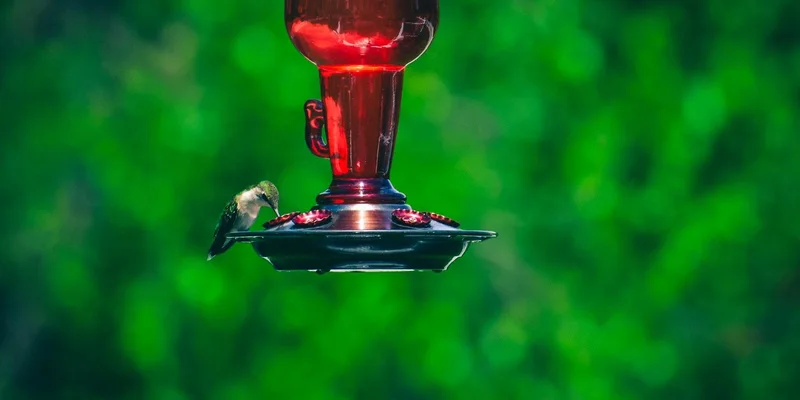
Glass also holds its color. The deep reds on blown glass bottles are in the glass rather than printed on it, so they do not fade the way a painted or dyed plastic can. If the feeder hangs somewhere you look at every day, that difference shows up within a season or two.
The Cleaning Advantage
You can attack glass with a stiff bottle brush without leaving a scratched surface behind, and scratches matter because they give residue somewhere to hold on. A plastic reservoir scrubbed hard for a few seasons develops a slightly rough interior that never looks quite clean again.
The Case for Plastic
Weight and survivability. A plastic feeder that comes off its hook in a storm bounces; a glass one goes into pieces on the patio. That single difference decides the question for anyone hanging a feeder near a hard surface, on a thin branch or from a suction cup on a window.
Plastic is also what most saucer feeders are made of, and saucers are the design that solves drips and insects. If you have decided on a saucer for practical reasons, the material question mostly answers itself.
Head to Head
The comparison below assumes an equivalent design in each material, hung in the same spot and cleaned on the same schedule.
| Factor | Glass | Plastic | Which to pick |
|---|---|---|---|
| Clarity over seasons | Stays clear and colorfast | Can haze or stain in strong sun | Glass |
| Surviving a fall | Shatters | Usually bounces | Plastic |
| Weight on the mount | Heavy, needs a solid hook | Light, suits windows and stakes | Plastic |
| Scrubbing | Takes a stiff brush without scratching | Scratches, and scratches hold residue | Glass |
Feeders by Material and Situation
Glass Where It Hangs Safely
A glass reservoir on a metal base, hung from a solid hook away from foot traffic, is the version that still looks good in year three. Check that the base unscrews from the bottle by hand and that the ports pop out for cleaning.

Plastic Where Things Get Knocked
Near a door, on a balcony, on a shepherd hook in a windy yard or anywhere a dog runs, plastic is the sensible material. Look for a reservoir that is thick rather than flimsy, since very thin plastic is what crazes first.
![Hummingbird Feeder [Set of 2] Leakproof Clear Plastic 10 oz Wide ...](https://m.media-amazon.com/images/I/419ueTPk3OL._AC_.jpg)
The Practical Middle Ground
A plastic saucer feeder sidesteps the whole debate. It is light, it does not shatter, it does not drip and the shallow tray is easy to keep genuinely clean, which is the thing that actually protects the birds. More in our saucer feeder guide.

The Part That Fails First
On both materials it is the base assembly. The collar threads wear, the gasket hardens and stops sealing, and the little flower shaped port inserts get brittle and crack. Once the gasket goes, the feeder drips regardless of what the reservoir is made of.
So the real buying question is whether replacement parts exist and whether the base comes apart at all. A base that unscrews into a collar, a gasket and separate port inserts is repairable; one that is glued or heat sealed as a single unit is disposable, which is worth knowing before you fall for the bottle on top of it.
Cleaning Either Material
The schedule does not change with the material. The Cornell Lab of Ornithology recommends cleaning hummingbird feeders at least once a week with hot water and a bottle brush, without soap or detergent, and changing the nectar more often in hot weather.
What changes is the tool. Glass tolerates a stiff brush and hot water; plastic prefers a softer brush so you are not scoring the inside. Neither material likes being left in the sun with old nectar in it, which is the failure that actually matters. See what to do about mold in a feeder.
Frequently Asked Questions
Is a glass hummingbird feeder better than plastic? Better looking and longer lasting as a reservoir, but heavier and breakable. The base is plastic on both, and that is where feeders usually fail, so the material of the bottle is not the whole story.
Do plastic feeders leach anything into the nectar? Feeders sold for this purpose use food safe plastics. The more practical concern with old plastic is scratching and clouding, which make it harder to see and to clean properly.
Why has my plastic feeder gone cloudy? Seasons of sun and repeated scrubbing. Ultraviolet light hazes the surface and a stiff brush scores it, and once the interior is rough, residue holds on. That is the point to replace it.
Does glass keep the nectar cooler? Not meaningfully. Where the feeder hangs matters far more than what it is made of, and shade for the hottest part of the afternoon is the change that keeps nectar fresher.
Do hummingbirds care about glass or plastic? No. They respond to the color of the feeder hardware, the position in the yard and whether the nectar is fresh. Material is a decision for the person cleaning it.
Which is better for a window feeder? Plastic, without much argument. Weight is what pulls a suction cup off the glass, and a broken glass feeder under a window is a worse outcome than a scuffed plastic one. See our window feeder guide.
The Bottom Line
Glass for a feeder that hangs somewhere safe and gets looked at every day, plastic for anywhere it might be knocked down, mounted on glass or hung on something thin. Then ignore the reservoir and inspect the base, because the collar, gasket and ports are what fail and what decide whether the feeder drips. Read next: our main hummingbird feeder guide, feeders that come apart and saucer or inverted bottle.