Last updated: August 21, 2026
There is no such thing as a feeder insects ignore. What there is, and what the term bee proof is really pointing at, is a feeder where the nectar sits far enough below the port that a short tongued insect standing on the outside cannot reach it. A hummingbird has a long bill and a longer tongue and gets there without trying. A bee standing on the same port does not.
Once you see it that way the shopping gets simple. You are not looking for a repellent or a clever gadget. You are looking at one dimension: the distance from the port opening down to the surface of the liquid, and whether the design keeps that distance constant as the feeder empties.
This article contains affiliate links. If you buy through them, we may earn a commission at no extra cost to you. Learn more.
Quick Answer
What makes a hummingbird feeder bee proof?
- Port depth. The nectar sits below the opening, out of reach of a short insect tongue but not of a hummingbird bill.
- A saucer or basin design, since the liquid level starts low and stays low instead of pressing up into the port.
- No drips on the underside, because a sticky feeder feeds insects whether or not they get through a port.
- Red rather than yellow hardware, since yellow accents draw wasps to the feeder in the first place.
Bottom line: buy on port geometry, not on the words on the box, and expect resistance rather than a sealed door.
Port Depth Is the Whole Trick
A hummingbird reaches nectar with a long bill and a tongue that extends beyond it. Bees and wasps have to land on the port and reach in with much less length available. Set the liquid surface deep enough below the opening and the bird still feeds normally while the insect finds nothing at the end of the reach.
That single geometric fact is why saucer feeders get recommended for insect trouble and inverted bottle feeders do not. It is not the shape people react to, it is where the liquid sits relative to the hole.
Why Bottle Feeders Struggle Here
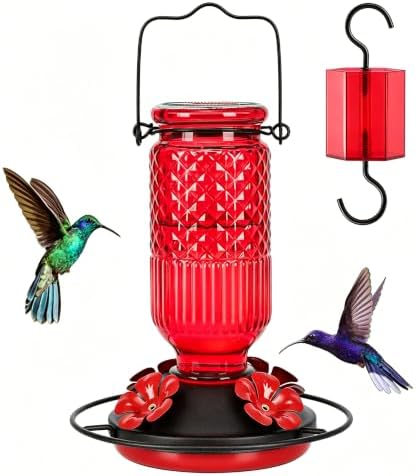
An inverted bottle feeder holds nectar in a reservoir above the base and keeps it up there with a partial vacuum. The liquid therefore presses right up to the underside of the ports, which is exactly where you do not want it if bees are the problem. Full ports and drips are two symptoms of the same design.
Heat makes it worse. Air trapped above the nectar expands through the afternoon and pushes liquid out through the ports, leaving a wet, sugary base that insects work over all day. That is the mechanism behind both the drip on your railing and the crowd of yellowjackets underneath it.
The Saucer Answer
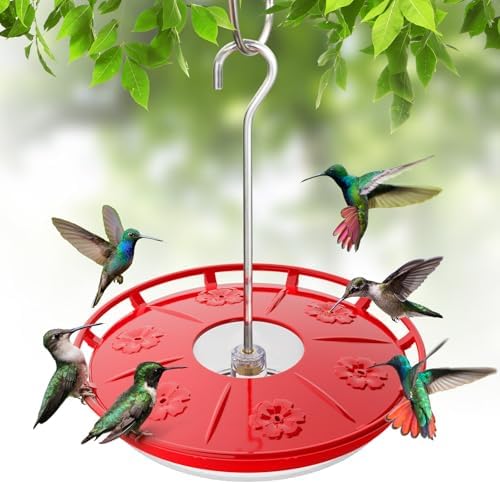
A saucer holds nectar in a shallow tray with the ports in the lid above the surface. Nothing is pressurized, nothing pushes out, and the gap between the opening and the liquid is built in. It is the same reason saucers stay dry underneath, which we cover in saucer or inverted bottle.
Bee Resistant Feeders by Situation
The Default Choice for an Insect Heavy Yard
A saucer feeder with deeply recessed ports is the most reliable setup available, and it solves drips at the same time. Look for a lid where the ports are clearly sunk rather than flush, and for a tray deep enough that you are not refilling a teaspoon of nectar every morning.

When You Want Both Barriers
Some saucer feeders also ship with bee guards clipped into the ports. That is belt and braces, and in a yard with a heavy yellowjacket season in late summer it is worth having, since wasps are more persistent than bees at working a port.
Keeping a Bottle Feeder You Like
If the glass bottle is not negotiable, the practical moves are matched guards in every port, a hanging spot in shade so the reservoir does not heat and push, and a wipe of the base whenever you refill. It reduces the problem rather than removing it.
Comparing the Designs
Insect resistance below is relative, not absolute. Any feeder with a sugar solution in it will attract interest in a bad wasp year.
| Design | Nectar position | Insect resistance | Trade off |
|---|---|---|---|
| Saucer with recessed ports | Well below the opening | Best available | Smaller capacity, no visible level |
| Saucer plus bee guards | Well below, plus a grid | Best for wasp seasons | Guards need cleaning too |
| Bottle with matched guards | Right at the port | Moderate, gaps matter | Still drips in afternoon heat |
| Bottle with open ports | Right at the port | Poor | Only workable in a cool, shaded spot |
Placement Does Half the Work
Where the feeder hangs changes the insect load as much as the design does. Full afternoon sun heats a bottle feeder into dripping and warms the nectar toward fermenting, and both attract insects. Shade for the hottest part of the day is the single most useful adjustment available for free.
Moving the feeder a short distance also breaks an established insect route without disturbing the birds much, since hummingbirds relocate a feeder far faster than a wasp colony updates its map. A few feet is often enough. Our guide on where to hang a feeder goes through the placement rules.
The Things You Should Not Do
No insecticide, no wasp spray near the feeder, and nothing aimed at a nest. The feeder is a drinking vessel for birds and anything applied to it or around it ends up in the nectar or on their feathers. That includes oils, jellies and sticky traps hung nearby, which catch hummingbirds as readily as insects.
Weakening the nectar to make it less attractive to insects is also off the table, because the mix birds are fed should follow the published recipe rather than an improvised variation. Stick to the source, and solve the insect problem with hardware and placement. See our nectar recipe guide.
Frequently Asked Questions
What is the most bee proof hummingbird feeder? A saucer feeder with recessed ports. The nectar sits well below the opening, so a short reach comes up empty while a hummingbird bill has no trouble. Add bee guards if wasps are heavy in late summer.
Why do bees swarm my hummingbird feeder? Usually because the feeder drips or because the ports let them reach the nectar directly. A hot bottle feeder pushes nectar out through the ports in the afternoon, and the sticky base underneath is what holds the crowd.
Do bee guards make a feeder bee proof? They help, but they are a filter at the port rather than a fix for where the liquid sits. Guards plus a shallow saucer is a much stronger combination than guards on a pressurized bottle.
Should I spray anything on the feeder? No. Nothing sprayed, smeared or dusted belongs on or near a feeder that birds drink from. Every workable answer here is mechanical: port depth, guards, shade and moving the feeder.
Does the color of the feeder matter for bees? Yellow parts attract wasp attention, which is why so many feeder makers moved their guards and flower inserts to red. If a feeder offers both, take red.
Will taking the feeder down for a few days help? Often, yes. Insects abandon a source that stops producing faster than hummingbirds abandon a yard, so a short pause can break the routine. Rehang it a few feet from where it was.
The Bottom Line
Bee proof is a marketing word for a real design principle: keep the nectar below the reach of an insect standing on the port. A saucer with recessed ports does that by construction, guards add a second layer, and shade plus a dry underside removes the invitation. Nothing chemical belongs in this conversation. Read next: feeders with bee guards that fit, the saucer feeder guide and keeping bees away from feeders.