Last updated: August 21, 2026
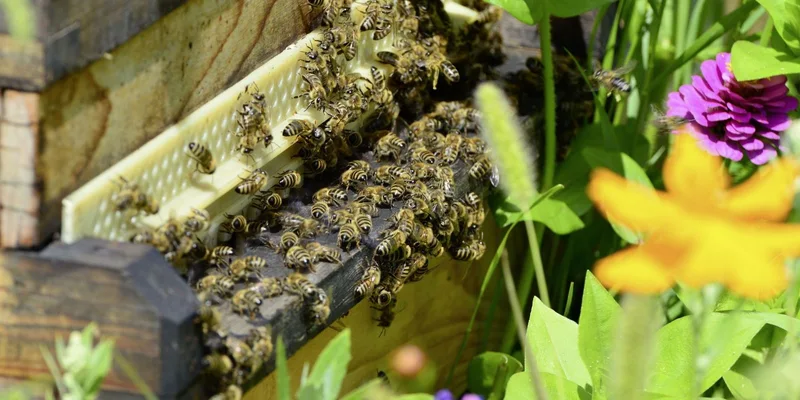
By August the feeder can look less like a hummingbird station and more like an insect convention. A dozen bees working the ports, a couple of yellowjackets patrolling above them, and a hummingbird making one nervous approach before giving up and going somewhere quieter. Nothing about the feeder changed. The season did.
This is a solvable problem and it is solvable without harming anything. The whole approach comes down to making the nectar physically hard for an insect to reach while leaving it easy for a bird with a long tongue, and to removing the spilled sugar that turns a feeder into a beacon in the first place.
This article contains affiliate links. If you buy through them, we may earn a commission at no extra cost to you. Learn more.
Quick Answer
How do you keep bees away from a hummingbird feeder?
- Use bee guards. Audubon describes them as shielding the nectar reservoir from insects, and they are the standard fix.
- Switch to a saucer feeder, where the nectar sits below the port and a short insect tongue cannot reach it.
- Keep the feeder clean. Audubon points out that guards do not help much if the feeder is covered in sugar water.
- Avoid yellow. Audubon advises against feeders with yellow decor because bees are attracted to the color.
Bottom line: put distance between the port and the nectar, keep the outside dry, and never spray or go near a nest.
Why Bees Arrive Late in the Season
Bees and wasps are not competing with hummingbirds all summer. They arrive in numbers when natural sources thin out, which in most yards means late summer and early fall, and a feeder that has been quietly hanging there for months suddenly becomes the best sugar source in the neighborhood.
That timing is useful to know because it tells you the problem is seasonal rather than permanent. The measures below are worth doing as a matter of course, but the pressure they are fighting rises and falls with what is flowering nearby.
Bee Guards: The Standard Fix
Bee guards are small caps or grids that fit over the feeding ports. Audubon describes them as less deadly than moats, shielding the nectar reservoir from the insects. The opening is small enough that a bee cannot get through it while a hummingbird’s bill and tongue pass easily.
They fit most bottle style feeders and many come supplied with the feeder, sometimes unused in the box. Check what your feeder shipped with before buying anything, since a set of guards sitting in a drawer is the cheapest solution available.

Where Guards Fall Short
A guard blocks the port and nothing else. If nectar has dripped down the outside of the feeder, or the ports are sticky from an earlier overflow, insects have a reason to stay and a surface to work. Audubon makes this point directly: the guards are not a substitute for consistent cleaning.
Saucer Feeders Solve It by Design
A saucer feeder holds nectar in a shallow basin with the ports above the liquid rather than below it. A hummingbird’s tongue reaches down through the port comfortably; a bee’s does not. That single geometric difference is why saucer feeders are the usual recommendation once insects become a recurring problem.
The second advantage is that nothing forces nectar out of the ports. Inverted bottle feeders drip when the air inside warms and expands, and every drip is an invitation. A saucer has nothing pushing on the nectar at all, which our saucer feeder guide covers in detail.

Cleaning Is Half the Answer
A clean feeder is a much less interesting feeder. Audubon suggests mopping up spills with a sponge and hot water at least once a week, and changing the filler twice per week in warm weather, which is exactly the period when insect pressure peaks.
Do not overfill either. A reservoir topped right to the brim pushes nectar out of the ports the moment it warms up, and that overflow does more to attract bees than the feeder’s color or design ever will. Our cleaning guide walks through the routine.
Color, Position and Timing
Audubon’s advice on persistent infestations is to avoid feeders with yellow decor, because bees are attracted to the sunny color. Many older feeders use yellow plastic flowers around the ports, which is precisely the wrong choice for a late summer yard.
Moving the feeder is the other lever. Insects orient to a location, so shifting the feeder even a short distance can break the pattern for long enough that the birds get some peace. It costs nothing and takes a minute, and it is worth trying before buying anything.
![Hummingbird Feeders for Outdoors - 10 oz [Set of 2] Built-in Ant ...](https://m.media-amazon.com/images/I/518rAQjpHjL._AC_.jpg)
Shade Helps More Than It Sounds Like It Should
A feeder in full afternoon sun warms up, expands, drips and ferments, and all three of those make it more attractive to insects and less pleasant for the birds. A spot with morning sun and afternoon shade addresses the drip and the spoilage together, which is one reason our placement guide keeps coming back to it.
What Not to Do
No spraying, no nest removal, no insecticide anywhere near the feeder. Audubon’s position on feeder pests is to try to maintain an insecticide free yard, noting that pesticides can injure, kill and reduce population numbers of birds, bees and other animals. Everything on this page is designed to make spraying unnecessary.
Skip the folk remedies too. Oil or grease around the ports transfers to a hummingbird’s bill and feathers, sticky traps catch birds as readily as insects, and a decoy nest is a decoration rather than a deterrent for most species. If a wasp nest near the house is genuinely a safety problem, that is a job for a licensed local professional and nothing to do with the feeder.
The Fixes Compared
The bee guard, cleaning and color rows follow what Audubon publishes on hummingbird feeder pests; the rest is practical backyard experience.
| Fix | What it targets | Effort | Note |
|---|---|---|---|
| Bee guards on the ports | Access to the nectar | One off fitting | Useless on a sticky feeder |
| Saucer feeder | Reach and drips at once | New feeder | The structural answer |
| Weekly wipe down | Spilled sugar on the outside | Minutes per week | Audubon suggests a sponge and hot water |
| Avoiding yellow parts | Visual attraction | Feeder choice | Audubon advises against yellow decor |
| Moving the feeder | Established insect habit | One minute | Try before buying anything |
| Spraying or nest removal | Nothing worth having | Not applicable | Do not, on any feeder |
Bees Versus Wasps and Yellowjackets
They behave differently at a feeder. Honeybees tend to work the ports methodically and in numbers, while yellowjackets and paper wasps are more aggressive, more likely to chase hummingbirds off, and more interested in the feeder as a place to patrol than as a place to feed quietly.
The countermeasures are the same either way, because both are defeated by the same geometry and the same cleanliness. Wasps get their own treatment in our piece on wasps at the hummingbird feeder, and the feeder choice question sits in our bee resistant feeder guide.
Frequently Asked Questions
Do bee guards actually work? Yes, on a clean feeder. Audubon describes them as shielding the nectar reservoir from insects, and adds the important caveat that they will not do much good if the feeder itself is covered in sugar water.
Are saucer feeders better for keeping bees off? Generally yes. The nectar sits below the port, so a hummingbird’s tongue reaches it and a shorter insect tongue does not, and there is no pressure inside the feeder forcing nectar out through the ports.
Does the feeder color matter? Audubon advises avoiding feeders with yellow decor if you are having trouble, since bees are attracted to the color. Older feeders often have yellow plastic flowers at the ports, which is the part to look at first.
Can I spray the bees around my feeder? No. Audubon advises trying to maintain an insecticide free yard, noting pesticides can injure, kill and reduce population numbers of birds, bees and other animals. Guards, a saucer feeder and cleaning make it unnecessary.
Should I take the feeder down for a while? Taking it down for a few days, or moving it, does break an established insect habit and can be worth trying. Clean it thoroughly before it goes back up, or the trail restarts on the same day.
Will weaker nectar keep bees away? There is no published recipe variation from Audubon or Cornell Lab’s Project FeederWatch for repelling insects, so this is folk advice rather than sourced advice. Keep the published proportion and change the hardware instead.
The Bottom Line
Put physical distance between the port and the nectar with bee guards or a saucer feeder, keep the outside of the feeder dry and clean, avoid yellow parts, and move the feeder if a habit has formed. Nothing gets sprayed, no nest gets touched, and nothing sticky goes anywhere a bird might land. Read next: our bee resistant feeder guide, the saucer feeder guide, and the feeders that ship with guards fitted.