
Last updated: August 21, 2026
There are two ways to keep a bird bath from freezing, and the search results mix them together as if they were the same product. A bird bath heater, often sold as a de-icer, is a separate element you drop into a bath you already own. A heated basin is a bath with the element built in, sold as one unit. Both keep water open; they fail and annoy you in different ways.
Which one you should buy depends less on climate than on what is already in your yard and how much you like the bath standing in it. This comparison lays out where each one wins, what the real trade is, and the situations where the answer is obvious in one direction.
This article contains affiliate links. If you buy through them, we may earn a commission at no extra cost to you. Learn more.
Quick Answer
Should you buy a bird bath heater or a heated basin?
- Buy a heater if you already own a bath you like and it survives freezing weather. Audubon describes converting a summer bath by adding a heater.
- Buy a heated basin if you are starting from nothing, or if your current bath is ceramic. Audubon advises avoiding ceramic in cold weather because it can crack.
- A heater is visible in the water and sits where birds land. A built in element is out of the way and easier to clean around.
- Both need a cord run and both should be set up according to the manufacturer’s instructions.
Bottom line: heater to save a bath you already have, heated basin to buy the problem away in one purchase.
What Each One Actually Is
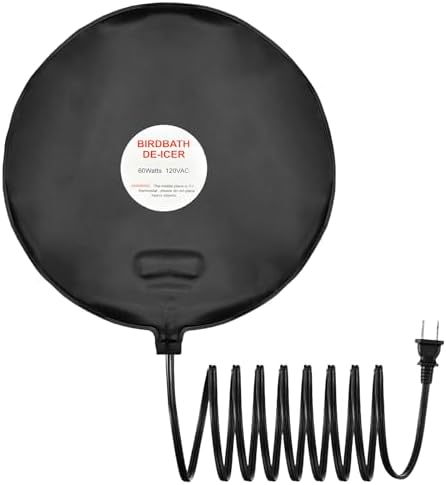
A bird bath heater is a standalone element, usually a submersible rod, a flat disc or a floating unit, that sits in the water of an existing bath and switches on when it gets cold. A heated basin is a complete bath, most often resin or metal, with the element molded into the underside of the bowl so nothing sits in the water at all.
Audubon describes both routes plainly: you can buy a plastic birdbath with a built in heater, or convert a summer birdbath by adding a heater. Neither is a compromise version of the other. They are two ways of solving the same problem from different starting points.
Where the Heater Wins
A heater wins whenever there is already a bath in the yard that you want to keep. It is the smaller purchase, it goes into a bowl you have already chosen for depth and texture, and it comes out again in spring so the bath looks like a bath for eight months of the year.
It also wins when the bath is unusual. A stone bowl, a shallow tray on a wall, a large pedestal you would rather not replace: none of those exist as heated versions, and a drop in element is the only way to keep them open through a freeze.
The Catch With a Drop In Element
The element occupies part of a basin that is supposed to be about two inches deep at the deepest point, which is what the National Audubon Society recommends. In a shallow bath, a bulky heater takes up standing room and changes where birds can put their feet. Flatter, lower profile units cause less of that problem than tall rods.
Where the Heated Basin Wins
A heated basin wins on tidiness and on cleaning. There is nothing in the water, so the bowl scrubs out like any other bath, and there is no cord looping over the rim for a bird to land on. It also wins on material, because these baths are built for the freeze and thaw cycle from the start.
That last point matters more than it sounds. Audubon advises avoiding ceramic baths in cold weather because they can crack, and adding a heater to a ceramic bowl does not remove that risk, it just gives the water something to freeze around when the power goes out. If your current bath is ceramic, the basin is the honest answer.
What You Give Up
You give up the bath you have. A heated basin is generally a plain resin or metal bowl, chosen for durability rather than looks, and it replaces the ornamental pedestal bath in the border for the whole winter. Some people run both, storing the pretty one and swapping the heated bowl in around the first frost.
Side by Side
The differences that matter in practice are about maintenance and about what is in the water, not about how well either one keeps ice off.
| Point | Bird bath heater | Heated basin | Which wins |
|---|---|---|---|
| Starting point | Uses the bath you own | Replaces it for the winter | Heater, if the bath is good |
| In the water | Element and cord are visible | Nothing in the bowl | Basin |
| Cleaning | Work around the element | Scrubs like a normal bath | Basin |
| Cold weather material | Only as tough as your bath | Built for freeze and thaw | Basin |
Depth, Texture and the Part Neither One Fixes
Neither product makes a bad bath good. The National Audubon Society recommends a maximum of about two inches at the deepest point with the basin sloping in from the rim, and a slick glazed floor is as unusable in January as in July. Heating a deep, slippery bowl gives you an unfrozen bowl birds still will not stand in.
If your bath is deeper than ideal, Audubon’s own suggestion is to add a few large pebbles or a flat stone so birds can judge the depth. That works alongside a heater as well, and our guide to stones in a bird bath covers how to do it without creating places for grime to collect.
Picking the Right Version for Your Yard
You Already Own a Resin, Metal or Stone Bath
A drop in heater is the cheaper and simpler route. Choose the lowest profile version that suits your bowl, so it does not eat the shallow standing room that small birds need, and check the listing for a thermostat so it is not drawing power on a mild day.

You Are Starting From Nothing, or Your Bath Is Ceramic
A heated basin is one purchase instead of two and gets the material question right by design. Look for a shallow, textured bowl and a thermostat, and check whether the basin lifts off its stand for cleaning. Our heated bird bath guide goes through the rest of the specification.

You Want Something You Can Lift Out in Seconds
A floating de-icer sits on the surface and comes out with one hand, which suits people who empty and refill a bath often. It keeps a hole open rather than the whole surface, which is enough for drinking and for the birds that just want a foothold at the edge.
Cleaning and Refilling Either Setup
Both setups need the same routine, and winter makes it easier to skip. Audubon notes that frequent refills are necessary in winter because water evaporates quickly in dry air, and recommends freshening the water every other day where possible. A running element speeds that evaporation up.
For the scrub, Audubon gives one part vinegar to nine parts water and advises against synthetic soaps and cleansers, because they can strip the essential oils off bird feathers. Unplug first and follow the manufacturer’s instructions for handling the element, whichever type you have bought.
Frequently Asked Questions
Is a bird bath heater the same as a de-icer? In practice yes. Both names describe a standalone element that goes into an existing bath to keep the water from freezing. Listings use the two words interchangeably, so search both when comparing options.
Can I put a heater in a concrete bird bath? Many people do, but concrete absorbs water and can crack when that water freezes inside it, so it is the material most likely to be damaged over a winter. Our guide to concrete bird baths covers what usually goes wrong.
Will a heater work in a ceramic bath? Audubon advises avoiding ceramic baths in cold weather because they can crack, and a heater does not change that. A power cut on a hard night leaves a ceramic bowl full of freezing water, which is the situation that splits it.
Do these keep the water warm? No, and they should not. The point is to hold water above freezing so it stays liquid. Warm water in cold weather is not what birds want and is not what either product is designed to produce.
How do I set up the power safely? Follow the instructions supplied with your unit. Manufacturers specify how their heaters and heated baths should be connected and protected outdoors, and that manual is the right authority rather than a general rule.
Which one do birds prefer? Neither, as long as the water is open and the basin is shallow and grippy. Birds respond to depth, texture and safe cover nearby, which are the same things they respond to in summer. See our bird bath guide for those basics.
The Bottom Line
If you own a bath that survives a freeze and you like looking at it, buy a heater and keep it. If you are starting from scratch, or your bath is ceramic, buy a heated basin and skip the second failure point. Either way the bath still has to be shallow, textured and refilled every couple of days, because that is what decides whether birds use it. Read next: the full heated bird bath guide and the main bird bath buying guide.