Last updated: August 21, 2026
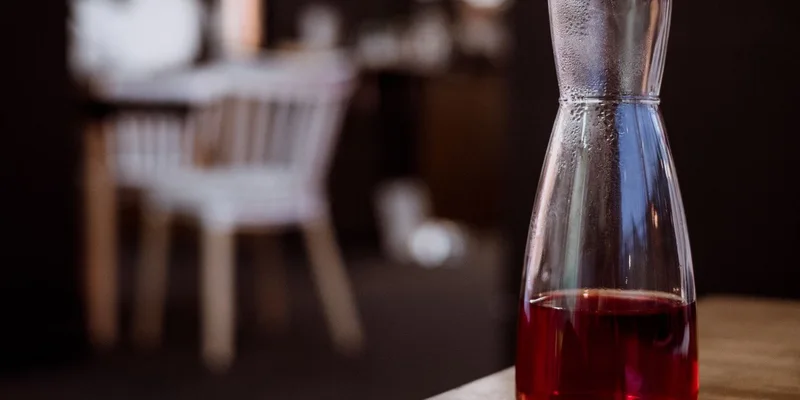
Walk into any hardware store in April and there it is on the shelf next to the feeders: a jug of bright red nectar concentrate, or a little packet of red powder that turns a pitcher of water the color of cough syrup. It looks like what hummingbirds drink. It is sold beside the thing hummingbirds drink from. So plenty of people assume the color is part of the deal.
It is not, and the two organizations most backyard feeders actually trust on this say so plainly. This article covers what Audubon and the Cornell Lab of Ornithology publish about red dye, why the idea took hold in the first place, what to do with a half used bottle of red concentrate, and what goes in the feeder instead.
This article contains affiliate links. If you buy through them, we may earn a commission at no extra cost to you. Learn more.
Quick Answer
Should you put red dye in hummingbird nectar?
- No. Audubon calls red food coloring unnecessary and says it could prove harmful to birds.
- Cornell Lab’s Project FeederWatch is blunter still: do not add red food coloring.
- The dye does no work anyway. The red on the feeder itself is what the birds spot.
- Plain white sugar and water is the whole published recipe, with nothing else stirred in.
Bottom line: the color belongs on the feeder, not in the liquid, and every source worth quoting agrees on that.
What Audubon and Cornell Actually Say
Both name red food coloring directly and both say leave it out. Audubon’s published nectar recipe warns against “red food coloring, which is not necessary and could also prove harmful to birds.” Cornell Lab’s Project FeederWatch puts it in one line: do not add red food coloring, as this is harmful to birds. There is no third opinion hiding somewhere.
Notice what neither source does. Neither one cites a body count, a study number or a mechanism, and neither should you. The honest summary is that the dye buys the birds nothing and carries an unresolved question about safety, which is more than enough reason to skip a step you did not need.
Why People Started Adding It
Because commercial nectar was red first, and the habit followed the product. Hummingbirds do key in on red, that part is real, and a manufacturer selling a powder in a paper packet had an obvious way to make the product look like what it was for. A generation of feeders grew up assuming the color came standard.
The second reason is more human. Red nectar in a glass bottle looks correct hanging on the porch. Clear sugar water looks like a jar of water, which is exactly what it is, and that offends nobody except the person who wanted the feeder to look like the picture on the box.
The Feeder Is Already the Red Part
Every mainstream hummingbird feeder is built with red where the bird looks: the ports, the base, the flowers around the holes, sometimes the whole reservoir. That is the visual signal, and it does not wash out, dilute or need replacing every three days. Coloring the liquid adds a second red behind a red plastic port.
If Your Feeder Has No Red On It
Some glass feeders are sold in blue, green or plain clear because they are decor first. If nothing on yours is red, tie a red ribbon on the hanger or set the feeder near red flowers rather than dyeing the contents. Our guide to hummingbird feeders covers which shapes put the red where a bird actually approaches.
What the Published Recipe Is Instead
Audubon’s recipe is a quarter cup of refined white sugar stirred into one cup of boiling water until it dissolves, cooled, then poured into the feeder. Cornell Lab’s Project FeederWatch states the same proportion the other way around, one part sugar to four parts boiling water, and both say no coloring goes in.
That is the entire specification from both sources, and it is worth resisting the urge to improve on it. We have a longer walkthrough in our hummingbird nectar recipe, including how much to mix at a time so you are not pouring most of it down the drain on a hot week.
What to Do With Red Concentrate You Already Bought
Stop using it and go back to sugar and water. There is no partial credit version where you use half as much dye, because the dye was never doing the job you bought it for. A jug of red concentrate is not hazardous waste, it is just a product you no longer have a use for.
If you want to salvage something from the purchase, keep the bottle for mixing and storing clear nectar in the refrigerator. The pour spout is genuinely handy on a saucer feeder with a small fill hole, which is one of the small annoyances we get into in our saucer feeder guide.
Clear Store Bought Nectar and Whether It Is Worth It
Plenty of brands now sell a clear premixed or powdered nectar with no dye in it, and there is nothing wrong with using one. You are paying for the convenience of not boiling water, and for some people with a bad back and a high feeder that trade is fine. It is not better nectar.
Read the label rather than the front of the package. If the ingredient list runs past sugar and water into preservatives, flavors or colorings, you are buying something the sources never asked for. White sugar from the same aisle costs less and matches the published recipe exactly.
The Other Things People Stir In
Dye is one of a small family of additions that get suggested every spring, and the sources handle most of them the same way: unnecessary at best. Honey gets a specific warning rather than a general one, which is why it sits at the top of the table below.
| Added to the nectar | Why people try it | What the sources say | What to do instead |
|---|---|---|---|
| Red food coloring | Thought to attract birds | Audubon: not necessary, could prove harmful. FeederWatch: do not add it | Use a feeder with red ports |
| Honey | Seems more natural than sugar | Audubon warns it can promote dangerous fungal growth | Plain white sugar only |
| Brown or raw sugar | Assumed to be healthier | Both published recipes specify refined white sugar | Plain white sugar only |
| Artificial sweetener | Idea that sugar is bad | Not in any published recipe. Sugar is the calories | Plain white sugar only |
The two source recipes behind that table are Audubon’s hummingbird nectar guidance and Cornell Lab’s Project FeederWatch feeding pages. Where a row says the sources are silent, that silence is the point: nothing else belongs in the pitcher.
Frequently Asked Questions
Is red dye in hummingbird nectar actually proven to hurt them? That is not the claim to make. Audubon says the coloring is not necessary and could prove harmful, and Project FeederWatch says not to add it. Neither publishes a proven harm figure, and neither needs to, because a step that does nothing is easy to drop.
Do hummingbirds find a clear feeder? Yes. They are cueing on the red parts of the feeder itself, which is why almost every feeder on the shelf is built with red ports or a red base. Clear nectar in a red feeder is the standard setup.
What if my feeder is all glass with no red on it? Add red on the outside rather than the inside. A ribbon on the hanger, a red plastic port kit or a spot near red flowers all work. Coloring the liquid is still not the answer.
Is store bought red nectar safe if I dilute it? Diluting does not turn dye into something the birds need. If you like premixed nectar, buy a clear version and check that the ingredients stop at sugar and water.
Will the red dye stain my feeder? It can tint the plastic over a season, especially around the ports, and that tint makes it harder to spot the black specks that mean it is time to scrub. That is a small practical reason on top of the source guidance.
Does clear nectar spoil faster than red? No. Both spoil at the same rate, which depends on heat, not color. Clear nectar simply shows you the cloudiness sooner, which is a feature rather than a fault.
The Bottom Line
Audubon calls red food coloring unnecessary and possibly harmful, Cornell Lab’s Project FeederWatch says do not add it, and the feeder in your hand is already carrying the red that matters. Mix white sugar and water, pour it clear, and put your effort into changing it often enough instead. Read next: our hummingbird feeder guide for the shapes that come apart in the sink, and the feeders that actually come apart if yours has a reservoir you cannot reach into.