Last updated: August 21, 2026
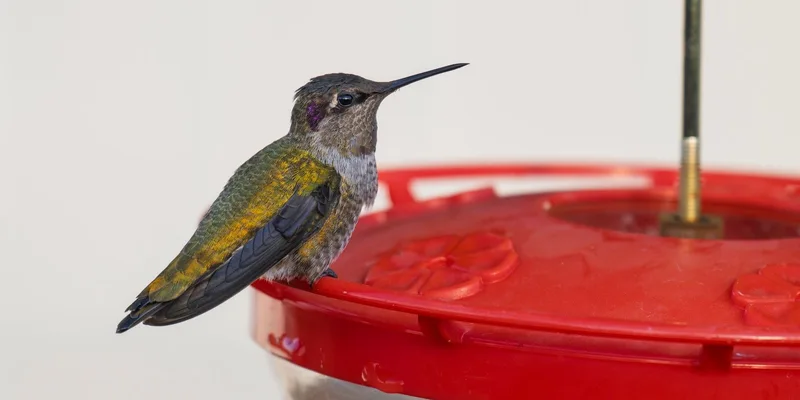
There is an old idea floating around backyard birding that hummingbird feeders should not have perches, because a hovering bird burns energy and a perched bird gets lazy. It sounds plausible and it is not how the birds behave. Hummingbirds spend a great deal of their day sitting on twigs, wires and the edges of feeders, and given the option at a feeder, they sit.
Which is good news if the point of the feeder is watching them. A hovering visit lasts a few seconds; a perched bird settles, drinks, looks around and stays long enough for you to see the throat color change as it turns its head. This guide covers what makes a perch usable, which layouts work, and what a perch changes about the rest of the feeder.
This article contains affiliate links. If you buy through them, we may earn a commission at no extra cost to you. Learn more.
Quick Answer
Should a hummingbird feeder have a perch?
- Yes, if you want to watch the birds. Perched visits last far longer than hovering ones.
- A full ring beats individual nubs, because a bird can land anywhere on it and shuffle to a port.
- The perch should sit at a comfortable distance from the port, not so close that the bird has to crane.
- Perches change nothing about the birds’ health. The old warning about lazy hummingbirds does not hold up.
Bottom line: a perch ring is the single easiest upgrade for anyone who bought the feeder to look at birds.
Do Hummingbirds Actually Use Perches?
Constantly. Hovering is expensive, and a bird that can sit while it drinks will sit. Watch a feeder with a perch ring for an afternoon and you will see birds land, feed, then stay on the ring scanning the yard for a while afterward, which is behavior a hovering feeder never shows you.
The claim that perches make hummingbirds lazy or unfit does not survive contact with how they spend their day. They perch on twigs, fence wire and clothes lines between visits regardless of what your feeder offers.
Ring, Bar or Nub
Three layouts exist. A full circular ring runs all the way around the feeder so a bird can land at any point and move to whichever port is free. Individual nubs sit at each port, which works but gives the bird one landing target per port. A straight bar appears on window and rail feeders where a ring does not fit.
The ring is the most usable of the three, and it is also the one that lets a second bird land on the far side without an immediate confrontation. On a feeder with individual nubs, the birds are effectively queuing for specific spots.
Distance From the Port
A perch set too close to the port forces an awkward posture, and one set too far means the bird hovers anyway with its feet touching. Most well designed feeders get this right, and the way to check is to look at product photos of birds actually feeding rather than at the empty feeder.
Perched Feeders by Situation
The Best Layout for Watching
A saucer feeder with a full perch ring is the most watchable combination available. The ring gives birds somewhere to land from any direction, and the saucer keeps the nectar below the ports so drips and insects do not interfere with the view.

When You Want to Fill From the Top
Top fill feeders unscrew or unclip at the lid so you pour nectar in without turning the whole thing over. Combined with a perch ring, this is the low fuss setup for a feeder you refill every couple of days in high summer.

A Perch at the Window
Window feeders with a small perch bar put a sitting hummingbird a few feet from your chair. That is the closest look most people will ever get, and the perch is what turns a two second glimpse into something worth stopping for. See our window feeder guide.

Comparing Perch Layouts
Viewing quality below means how long birds tend to stay in sight, which is the reason most people care about the perch at all.
| Layout | Landing options | Viewing quality | Found on |
|---|---|---|---|
| Full perch ring | Anywhere around the feeder | Best, birds settle and stay | Saucers and many bottle feeders |
| Individual nubs | One per port | Good, slightly more shuffling | Flower port bottle feeders |
| Straight bar | One side only | Good at close range | Window and rail mounted feeders |
| No perch | None, hovering only | Brief visits, harder to watch | Minimal and decorative designs |
What a Perch Changes About the Rest
Very little, with one exception. A perch ring gives insects somewhere to stand as well, which matters if the feeder lets nectar reach the port. On a saucer that is a non issue since the liquid sits below the opening, and on a bottle feeder it is one more reason to fit bee guards.
The other consideration is territory. A dominant hummingbird will often sit on the perch and guard the feeder rather than feed, chasing everything that approaches. If you find one bird owning the feeder all day, a second feeder around the corner usually helps more than a different perch would.
Keeping a Perched Feeder Clean
Perches collect the same residue as the rest of the feeder, and a ring joins the body at several points where a cloth does not naturally go. Check underneath the ring and around the joins when you wash it, because sticky spots there are what draw ants up over the top of the feeder.
The routine itself is not negotiable. The Cornell Lab of Ornithology recommends cleaning hummingbird feeders at least once a week with hot water and a bottle brush, no soap, and changing nectar more often in hot weather. Our guide to feeders that come apart covers which designs make that easy.
Frequently Asked Questions
Do hummingbirds need perches on feeders? They do not need them, but they use them readily. Hummingbirds perch constantly through the day, and a feeder with a ring gives them somewhere to sit while they drink instead of hovering the whole time.
Do perches make hummingbirds lazy? No. That idea circulates widely and does not match how the birds behave, since they spend much of the day perched on branches and wires anyway. A perch changes how long you get to watch, not the bird’s condition.
Is a perch ring better than nubs? For watching, yes. A ring lets a bird land at any point and move to a free port, and it lets a second bird land on the opposite side. Nubs are functional but give one landing spot per port.
Do perches attract more insects? Only indirectly. Insects stand wherever they can reach nectar, so the port design matters far more than the perch. A saucer with recessed ports keeps them off regardless, as covered in bee proof feeder design.
Can I add a perch to a feeder that has none? Not reliably. Aftermarket perch rings exist for a few specific models, but fit is model specific. If watching is the goal, replacing the feeder is usually the better route.
Why does one bird sit on the perch all day? Hummingbirds are territorial and a dominant bird will guard a feeder rather than share it. A second feeder out of sight of the first is the usual fix, covered in how many feeders you need.
The Bottom Line
If you bought a hummingbird feeder to look at hummingbirds, get one with a full perch ring. The birds use it, the visits get longer, and nothing about their health or behavior suffers for it. Pair the ring with a saucer body and you have the most watchable and the least troublesome combination on the shelf. Read next: our saucer feeder guide, main feeder guide and feeders that come apart.