Last updated: August 21, 2026
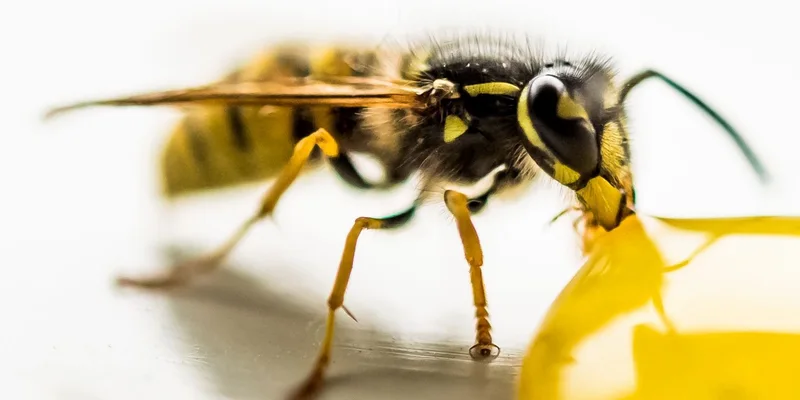
Wasps and yellow jackets do not show up in May. They show up in August, when the colony is large, the natural sugar is thinning out and a feeder full of nectar is the best thing in the neighborhood. Within a few days there are a dozen of them working the ports and the hummingbirds are watching from a branch instead of feeding.
This is a placement and hardware problem rather than a pest control problem, and treating it as pest control is how people get stung on their own porch. Everything below is about making the feeder harder to use for a wasp and easier to use for a bird, in the order you should try it.
This article contains affiliate links. If you buy through them, we may earn a commission at no extra cost to you. Learn more.
Quick Answer
How do you get wasps and yellow jackets off a hummingbird feeder?
- Clean up every drip and sticky spot first. Audubon notes bee guards do little on a feeder covered in sugar water.
- Switch to a design where the nectar sits below the ports, out of a short insect tongue’s reach.
- Fit bee guards, which Audubon describes as shielding the reservoir from insects.
- Move the feeder a short distance. Wasps re-find it slowly, hummingbirds re-find it fast.
Bottom line: no spraying, no traps, no touching a nest. You are making the feeder inconvenient, not fighting a colony.
Why They Arrive in Late Summer
Because that is when a wasp colony is at its biggest and hungriest for sugar, and when flowers are past their peak in most yards. A nectar feeder in August is a concentrated sugar source with no defenses, sitting at a convenient height in the open. Nothing about it has changed, only the competition around it.
The seasonal timing is useful to know because it tells you this ends. A feeder that is unusable in the third week of August is usually fine again once nights cool, and the measures below are about getting through the peak rather than winning permanently.
Step One: Stop the Feeder Being Sticky
A leaking or overfilled feeder feeds wasps on the outside, where no guard can help. Audubon’s guidance on feeder pests makes exactly this point about bee guards: if the feeder is covered in sugar water, barring insects from the drinking hole will not do much good. Clean before you change anything else.
Wipe the outside every refill, and stop filling to the brim. Inverted bottle feeders push nectar out through the ports as the air inside warms in the afternoon, so a bottle filled to the neck in the morning is a bottle dripping by two o’clock.
Step Two: Put the Nectar Out of Reach
A saucer feeder holds the nectar in a shallow dish below the ports, so a hummingbird reaches down through the hole with a long tongue and a wasp standing on the port cannot. That geometry is the single most effective change available, and it costs nothing in bird traffic.
It is the same argument that solves the drip problem, which is why the two fixes stack. Our saucer feeder guide covers the shapes that come apart properly, and bee proof feeders gets into why port depth is the whole trick.
Step Three: Bee Guards and Yellow Parts
Bee guards are the little plastic cages that sit over each port. Audubon describes them as shielding the nectar reservoir from insects, and treats them as the less deadly option compared with traps. They are cheap, they clip on, and on a saucer feeder they finish the job the port depth started.
Audubon adds a second, easily missed suggestion: if you are still having trouble, avoid feeders with yellow decor, because bees are attracted to the color. Plenty of feeders arrive with yellow flowers around red ports, and swapping those out is a free change. Our bee guard feeder guide covers which guards fit which ports.
Step Four: Move It
Wasps navigate to a remembered location, so moving a feeder even a short distance breaks the pattern for several days while the hummingbirds relocate it almost immediately. It feels too simple to work, and it is often the thing that finally does.
Where to Move It To
Shade over the feeder helps twice: cooler nectar drips less and spoils more slowly. If you can move it toward cover rather than into the open, the birds will use it more readily too. Placement in a tight yard is covered in where to hang a hummingbird feeder.
What Not to Do
Do not spray, do not hang wasp traps beside the feeder, and do not go near a nest. Audubon asks feeder owners to keep an insecticide free yard because pesticides injure and kill birds, bees and other animals, and a hummingbird feeder is the last place to be spraying anything at all.
Traps deserve their own line. A sugar baited trap hanging next to a sugar feeder recruits more wasps to the area than it removes, and it catches bees and other insects that were not the problem. If a nest near the house is a genuine safety issue, that is a call to a licensed local professional, and we do not have a method or a product to recommend for it.
What to Try, in Order
Work down the table rather than doing everything at once, so you know what actually fixed it.
| Tactic | What it does | Effort | Works best when |
|---|---|---|---|
| Wipe drips, fill less | Removes the outside food | Every refill | Always. Do this first |
| Saucer style feeder | Nectar sits below the ports | One purchase | You own an inverted bottle |
| Bee guards | Shields the port opening | Clip on, wash with the feeder | Ports are wide and shallow |
| Remove yellow parts | Drops a color bees favor | Minutes | Feeder has yellow flowers |
| Move the feeder | Breaks the remembered route | Minutes | A trail is already established |
The bee guard and yellow decor rows come from Audubon’s guidance on keeping hummingbird feeders free of pests. The rest is ordinary yard practice, and none of it involves killing anything.
Frequently Asked Questions
Will wasps hurt the hummingbirds? The usual damage is displacement rather than injury. Hummingbirds give way to a crowd of wasps at the ports and go elsewhere, which is why the feeder looks abandoned. Clearing the wasps normally brings the birds back within a day or two.
Do bee guards keep yellow jackets out too? They help, and they help most on a feeder where the nectar already sits below the ports. Audubon describes bee guards as shielding the reservoir from insects, and notes they do little if the outside of the feeder is coated in sugar water.
Should I hang a wasp trap near the feeder? No. A sugar baited trap next to a sugar feeder draws more insects into the same corner of the yard and catches bees that were not the problem. Change the feeder and move it instead.
Can I put anything in the nectar to repel wasps? Nothing goes in the nectar except sugar and water. Audubon and Cornell Lab’s Project FeederWatch both publish a two ingredient recipe, and every repellent idea for the reservoir is an addition neither source supports.
Why did they only appear in August? Colonies are largest and most sugar hungry in late summer, and natural nectar is thinning at the same time. It is a seasonal peak, not a permanent change to your yard.
What if the nest is under my deck? That is a safety question rather than a feeder question. Contact a licensed local professional or your state wildlife agency for advice on the situation, and leave the nest alone in the meantime.
The Bottom Line
Clean the outside, put the nectar below the ports, fit bee guards, lose the yellow parts and move the feeder a few feet. Those five moves handle the August peak without spray, traps or a trip near a nest. Read next: our bee proof feeder guide on why port depth decides this, and the feeders with bee guards that fit if yours came without them.