Last updated: August 21, 2026
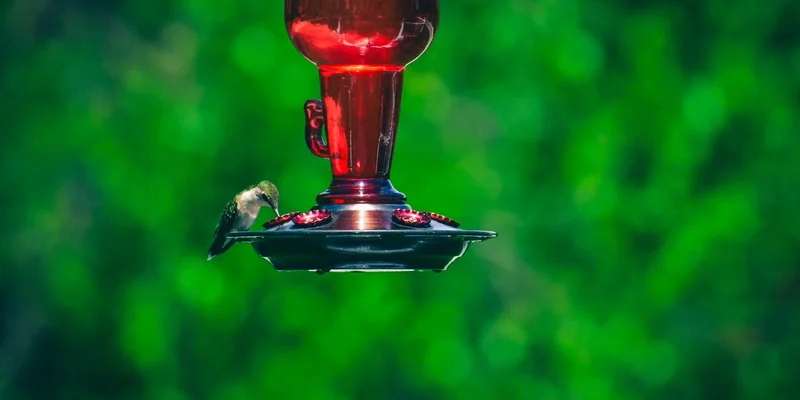
Perky-Pet is the brand most Americans have already owned a piece of without particularly deciding to. The pinch waist glass bottle with the red base and the little flower ports is one of those objects that has been hanging on porches for decades, and it turns up in hardware stores, garden centers and online listings in half a dozen variations.
That ubiquity is worth being honest about. Perky-Pet makes solid, inexpensive, widely available feeders with parts you can still find, and it also makes designs that carry every weakness of the inverted bottle format. This review sorts the range by model so you can tell which is which before you order.
This article contains affiliate links. If you buy through them, we may earn a commission at no extra cost to you. Learn more.
Quick Answer
Which Perky Pet hummingbird feeder should you buy?
- The Favored pinch waist glass model, if you want the classic look with an ant moat and bee guards already fitted.
- The Popular pinch waist glass model, if you want the same bottle with a full circle perch and a simpler base.
- A Grand Master style plastic feeder, if capacity and a wide fill mouth matter more than glass.
- Skip the range entirely if drips and insects are your main complaint, since these are inverted bottle designs.
Bottom line: good value classics with real parts availability, and the drip behavior that comes with the format.
Who Perky Pet Is
Perky-Pet is a long established American bird feeding brand, best known for hummingbird feeders and now part of a larger garden products group. Its feeders are sold through its own site, through big box and garden retailers and through Amazon, and the model numbers on the box carry across all of them.
That last point is the practical one. Because the model codes are consistent, you can identify exactly which version a listing is describing and find matching replacement parts, which is not true of most of the marketplace brands in this category.
The Pinch Waist Glass Models
The pinch waist bottle is the shape everyone pictures. Two versions dominate the listings: the Popular, model 210P, a sixteen ounce glass bottle with four ports and a full circle perch, and the Favored, model 204CP-4, a sixteen ounce glass bottle with five ports, U shaped perches, and an ant moat and bee guards built into the base.
The Favored is the one to take if you have a choice, because the built in moat and the fitted guards are exactly the two accessories most people end up buying separately. The Popular is the plainer, slightly cheaper sibling with the same bottle.
What the Format Costs You
Both are inverted bottle feeders, which means a partial vacuum holds the nectar above the ports. In afternoon sun the air above the nectar expands and pushes liquid out, so expect drips and a sticky base unless the feeder hangs in shade. That is the format, not a fault in these particular models.
Perky Pet Models by Situation
The Classic With the Problems Solved
The Favored pinch waist glass feeder ships with the ant moat and bee guards already part of the base, which is the sensible starting point for anyone who wants the traditional look. The glass bottle keeps its color and takes a stiff brush without scratching.

Same Bottle, Full Circle Perch
The Popular pinch waist glass model puts a continuous perch ring around the base so birds land anywhere and shuffle to a free port. If watching the birds sit is the point, the ring is worth more than the extra port count on the Favored.

When You Want More Capacity
The larger plastic models in the range, including the Grand Master style with its wide mouth and six ports, hold considerably more nectar and are far lighter on a hook. The trade is plastic that can haze over seasons and a lot of nectar to throw away at each change.

Parts Rather Than a New Feeder
Because the range is consistent, replacement bee guards, port inserts and base gaskets are findable, which is genuinely unusual in this category. If your feeder drips at the base, a fresh gasket is usually the fix rather than a new purchase.

The Range at a Glance
Specifications below come from the manufacturer’s own product listings. Port counts and capacities vary between versions of the same family, so check the model code on the listing you are looking at.
| Model | Material | Ports and perch | Built in extras |
|---|---|---|---|
| Favored pinch waist, 204CP-4 | Glass bottle, plastic base | Five ports, U shaped perches | Ant moat and bee guards |
| Popular pinch waist, 210P | Glass bottle, plastic base | Four ports, full circle perch | None listed |
| Elegant Copper glass | Glass bottle, metal accents | Ports with perch | Decorative finish |
| Grand Master style, 220-6 | Shatter resistant plastic | Six ports, wide mouth | Large capacity |
Where the Range Falls Short
Two places. First, the format: these are inverted bottle feeders and they behave like inverted bottle feeders, so if drips, ants and wasps are your recurring complaints, a saucer design solves the problem at the root rather than patching it with accessories. Our saucer feeder guide covers the alternative.
Second, the base assembly is where wear shows. The gasket hardens, the collar threads get sticky with dried nectar, and the small port inserts get brittle over seasons in the sun. None of that is unusual at this price, and the parts availability makes it a repair rather than a replacement.
Cleaning a Perky Pet Feeder
The pinch waist bottle needs a bottle brush that reaches through the neck, and the port inserts should come out to be washed separately. Budget a couple of minutes rather than the twenty seconds a saucer takes, and keep a small port brush with the bottle brush.
The schedule is the same as for any nectar feeder. The Cornell Lab of Ornithology recommends cleaning hummingbird feeders at least once a week with hot water and a bottle brush, without soap, and changing nectar more often in hot weather. Fill the mix by the published recipe, which is covered in our nectar recipe guide.
Frequently Asked Questions
Are Perky Pet hummingbird feeders any good? Yes, for what they are: inexpensive, widely available classics with consistent model codes and findable replacement parts. They carry the drip behavior of the inverted bottle format, which is a design characteristic rather than a defect.
Which Perky Pet model has an ant moat? The Favored pinch waist glass feeder, model 204CP-4, lists a built in ant moat and bee guards. On models without one, a separate hanging moat above the feeder does the same job.
Why does my Perky Pet feeder leak? Usually heat, sometimes the gasket. Air above the nectar expands in the sun and pushes liquid out through the ports, so move the feeder into afternoon shade and fill the bottle right up. If it drips at the base seam, replace the gasket.
Can I get replacement parts? Yes, and that is one of the brand’s real advantages. Bee guards, port inserts and base gaskets are sold separately, so a worn feeder is often a repair rather than a replacement.
Glass or plastic in this range? Glass keeps its clarity and color and takes a stiff brush; plastic is lighter, holds more in the larger models and can haze in strong sun. We break the choice down in glass or plastic hummingbird feeders.
Is a Perky Pet better than a saucer feeder? Not for drips or insects. A saucer keeps nectar below the ports and has no vacuum to push it out. Choose Perky-Pet for the look, the capacity and the parts availability, and a saucer for the practical problems.
The Bottom Line
Perky-Pet sits at the sensible end of the traditional hummingbird feeder market: the pinch waist glass models look right, cost little, and can be repaired instead of replaced. Take the Favored if you want the ant moat and bee guards fitted, the Popular if you want the full perch ring, and a plastic model if capacity matters more than glass. If drips and insects are your real complaint, the format itself is the thing to change. Read next: our main hummingbird feeder guide, glass or plastic and the saucer feeder guide.