Last updated: August 21, 2026
Every hummingbird feeder is easy to clean for the first month. The test comes in August, when the nectar has been sitting in afternoon heat, there is a grey film on the inside of the reservoir and a dark ring where the base meets the bottle, and you are standing at the sink with a feeder that has one narrow opening and a decorative collar that will not budge.
The feeders worth owning are the ones that come apart into pieces you can see into. That is a design property you can check before buying, and it matters more than capacity, more than material and more than how the thing looks on the hook, because a feeder that is a chore to wash gets washed less often than it should.
This article contains affiliate links. If you buy through them, we may earn a commission at no extra cost to you. Learn more.
Quick Answer
Which hummingbird feeders are actually easy to clean?
- Saucer feeders. Two pieces, both open shapes, nothing a cloth cannot reach.
- Top fill designs, where the lid comes off wide enough to get a hand or a full sized brush inside.
- Feeders with removable port inserts, since the ports are where residue hides on every design.
- Anything with a wide mouth rather than a narrow bottle neck, whatever the reservoir is made of.
Bottom line: count the pieces and look for a corner a brush cannot reach. That is the whole test.
Why Cleaning Is the Deciding Feature
Sugar water in warm weather grows mold and ferments, and a feeder that is hard to open is a feeder that gets a rinse instead of a scrub. The Cornell Lab of Ornithology recommends cleaning hummingbird feeders at least once a week with hot water and a bottle brush, without soap, and changing the nectar more often in hot weather.
That schedule is only realistic if the feeder cooperates. Which is why the pieces a feeder breaks into is a more useful spec than anything printed on the box, and why so many long term hummingbird feeders end up on saucer designs.
The Four Places Residue Hides
The bottle neck, where a standard brush does not fit. The underside of the port collars, which are shaped to catch drips and therefore catch everything else. The gasket groove where the base seals to the reservoir. And the moat cup, if the feeder has one built into the lid.
Look at any feeder you are considering and find those four spots. If all four are visible and reachable with the feeder apart, it is a design that will still be in service in three years. If two of them are inside a sealed assembly, it is not.
The Removable Port Test
Ports that lift or pop out are worth looking for specifically. A fixed flower shaped port with a narrow throat is nearly impossible to clean properly, and it is the part in direct contact with a bird’s bill. Some feeders come with a small port brush for exactly this reason.
Easy Clean Feeders by Situation
The Easiest Design There Is
A saucer feeder is two pieces: a tray and a lid. Both are open shapes, both go in hot water, and there is no neck, no reservoir insert and no hidden gasket groove. If cleaning is what has put you off feeding hummingbirds before, this is the design that fixes it.

When You Want Capacity Without the Neck
Top fill feeders open at the top with a wide lid, so you pour nectar in without inverting the feeder and you get a hand or a full sized brush inside for washing. That combination gets you a larger reservoir without the classic bottle neck problem.

If You Are Keeping a Bottle Feeder
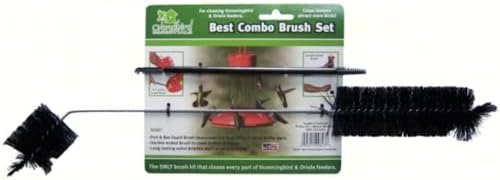
A glass bottle feeder is perfectly manageable with the right brush set, which usually means a long bottle brush plus a small port brush. Buy the brushes at the same time as the feeder, because the improvised alternatives never quite reach.
Where Dishwasher Safe Actually Matters
Some parts are marked dishwasher safe on the top rack, which is genuinely useful for the lid and the ports even when the reservoir has to be done by hand. Check the listing rather than assuming, since heat can warp thin plastic parts.

Comparing Designs on Cleanability
Pieces below means how many parts the feeder separates into for washing, which is the most honest single measure of how easy it will be.
| Design | Pieces | Hard to reach spots | Tools needed |
|---|---|---|---|
| Saucer with lift off lid | Two, plus ports on some | Port collars, moat cup | Cloth, small brush |
| Top fill bottle | Three or four | Gasket groove | Wide brush |
| Classic inverted bottle | Two or three | Neck, port throats, gasket | Bottle brush plus port brush |
| Decorative sealed body | One or two | Most of the interior | More than it is worth |
What to Wash With
Hot water and a brush is the standard, and Cornell Lab of Ornithology guidance for hummingbird feeders specifically says to skip soap and detergent. For a feeder that has developed a film, the same guidance allows a dilute bleach solution followed by a thorough rinse and complete air drying before refilling.
Never refill over old nectar and never top up a feeder that has a film on the inside. If the interior has gone rough or stained in a way that will not come clean, replacing it is the honest answer. Our article on black mold in a feeder covers where that line sits.
Making the Routine Stick
Two things make a weekly wash actually happen. Owning two feeders, so a clean one goes up while the other soaks, and filling smaller volumes so a change never feels like throwing away a lot of nectar. Both remove the friction that turns a five minute job into next weekend’s job.
Keeping the brush by the sink rather than in a shed helps more than it sounds. So does hanging the feeder somewhere you can reach without a ladder, which is a placement decision made months earlier. See where to hang a hummingbird feeder.
Frequently Asked Questions
What is the easiest hummingbird feeder to clean? A saucer feeder. It separates into a tray and a lid, both open shapes with no neck or hidden reservoir, and the whole wash takes about a minute with hot water and a cloth.
Are top fill hummingbird feeders easier to clean? Usually yes, because the wide top opening lets a full sized brush or a hand inside. They also fill without inverting the feeder, which cuts the spillage that draws ants.
Should I use soap on a hummingbird feeder? Cornell Lab of Ornithology guidance says to clean hummingbird feeders with hot water and a bottle brush and not to use soap or detergent. A dilute bleach solution is allowed for stubborn film, with a thorough rinse and full air drying afterward.
Can hummingbird feeders go in the dishwasher? Some parts can, on the top rack, if the listing says so. Do not assume it, since heat can warp thin plastic ports and lids. Hand washing is the safe default.
How often does a hummingbird feeder need cleaning? At least weekly according to Cornell Lab of Ornithology, and more often in hot weather, along with more frequent nectar changes. Timing detail is in changing nectar in summer heat.
When should I just replace the feeder? When the interior is scratched, permanently stained or crazed, or when the gasket no longer seals and the feeder drips regardless of how it is assembled. At that point cleaning is not the problem any more.
The Bottom Line
Buy the feeder you can take apart in one motion and see inside. Saucers win this outright, top fill designs are the compromise if you want capacity, and a classic bottle is fine as long as you buy the brushes with it. The weekly wash is the part of hummingbird feeding that actually matters, so make it easy on yourself at the point of purchase. Read next: how to clean a hummingbird feeder, black mold in a feeder and our saucer feeder guide.